



The industrial landscape is undergoing a radical transformation as the traditional boundaries between hardware-centric robotics and software-driven intelligence begin to dissolve entirely. Manufacturers today are navigating a complex intersection where the need for rapid scalability meets the constraints of aging infrastructure and a shrinking pool of skilled labor. To address this, the partnership between Comau and Aptiv focuses on a co-development model designed to lower the barriers to entry for advanced automation. By merging Comau’s extensive domain expertise in large-scale manufacturing with Aptiv’s advanced software and perception capabilities, the two firms are building a foundation for systems that can operate with minimal oversight. This transition is not merely about replacing human labor with machines, but rather about creating a symbiotic environment where intelligent systems can perceive their surroundings and respond to dynamic changes with a level of precision that was once impossible for large machinery.
Synergistic Engineering: Bridging Software and Hardware
A significant portion of this collaboration centers on the integration of Aptiv’s sophisticated perception systems and edge computing platforms into Comau’s robotic hardware. Specifically, the utilization of the Wind River software platform provides a robust environment for managing complex data streams from the shop floor directly at the source. This is complemented by Pulse sensor technology, which allows machines to observe their workspace with high-resolution clarity. By moving the heavy lifting of data processing from a centralized cloud server to the edge of the network, the partnership enables industrial robots to make decisions in milliseconds. This localized intelligence is crucial for operations that require high levels of synchronization and safety, such as multi-robot assembly lines or high-speed logistics sorting. The result is a system that “thinks” while it moves, significantly reducing the latency that often plagues traditional automated setups and hinders overall productivity.
Building on this technical foundation, the shift toward decentralized intelligence represents a fundamental change in how industrial lifecycle management is approached. Rather than relying on a singular, vulnerable control unit, the new architecture distributes processing power across individual nodes, ensuring that a localized failure does not bring an entire production facility to a standstill. This modularity allows for greater flexibility when upgrading or expanding facilities, as new autonomous units can be integrated into the existing network without a complete system overhaul. The collaboration also emphasizes the role of machine learning in refining these processes over time. As these robots gather more environmental data, they optimize their trajectories and energy consumption patterns, leading to more sustainable manufacturing practices. This continuous improvement cycle is a hallmark of the new industrial autonomy, where the software evolves alongside the hardware to meet the increasingly complex demands of global supply chains.
Optimized Architectures: Safety and Warehouse Logistics
The partnership addresses the practical challenges of modern logistics through four distinct focus areas, beginning with the development of reference architectures for autonomous mobile robots and collaborative systems. These designs leverage Aptiv’s compute solutions to ensure that robots can navigate busy factory floors while working alongside human employees without the need for physical barriers. In the realm of warehousing, the integration of cloud and edge technologies into Comau’s Automha software has created a more responsive logistics framework. This software is now capable of managing vast inventories with real-time accuracy, adapting to sudden shifts in order volume or inventory placement. By grounding these advancements in a unified software architecture, the two companies provide a scalable solution that can be tailored to specific industrial needs. This allows companies to deploy highly specialized robots that still share a common communication protocol, simplifying maintenance and daily operations.
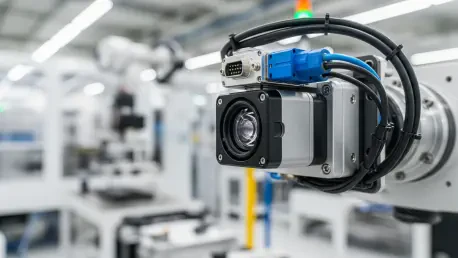
Beyond software and high-level navigation, the collaboration also focuses on the physical and safety aspects of industrial environments through ruggedized hardware and deterministic compute. Engineers have designed high-performance interconnects, including modular connectors and durable cabling, that can withstand the intense vibrations and temperature fluctuations common in heavy manufacturing. These components are critical for maintaining data integrity between sensors and processors in demanding robotic applications. Furthermore, the implementation of radar and vision-based safety architectures provides a more comprehensive monitoring system than traditional light curtains. These systems utilize deterministic compute to define multiple safety zones, allowing a robot to slow down when a worker is nearby and stop only when absolutely necessary. This nuanced approach to worker protection minimizes downtime while maximizing safety, proving that industrial autonomy does not have to come at the expense of human well-being or system complexity.
Strategic Trajectories: Establishing a Framework for Progress
The long-standing relationship between Comau and Aptiv has reached a point where their combined portfolios offer a comprehensive roadmap for industrial productivity. By synthesizing their strengths, they have created a unified framework that simplifies the deployment of AI-powered robotics across various sectors, from automotive assembly to pharmaceutical packaging. This collaboration reflects a broader industry consensus that the next phase of growth will be defined by how well companies can integrate disparate technologies into a cohesive operational strategy. The move toward autonomy is not just a technological trend but a strategic necessity for businesses looking to remain competitive in a landscape defined by volatility. The work being done today sets a precedent for how specialized firms can cooperate to solve systemic challenges. By modernizing operations and accelerating the adoption of artificial intelligence, these initiatives provide the tools necessary for a future where intelligent machines are a fundamental component of the economy.
The integration of these advanced technologies focused on establishing a more accessible and resilient industrial ecosystem through the lens of decentralized intelligence. Decision-makers evaluated the success of these initiatives by looking at the reduction in integration time and the significant improvements in safety metrics across automated facilities. By prioritizing a modular approach, the collaboration provided a blueprint for organizations to scale their autonomous capabilities without incurring prohibitive upfront costs. The implementation of ruggedized hardware and deterministic safety protocols ensured that the transition to more complex systems remained grounded in physical reliability. Ultimately, the partnership demonstrated that the path toward full industrial autonomy relied on a balanced combination of high-level perception and robust mechanical execution. These advancements allowed industrial leaders to reconsider their long-term infrastructure investments, shifting focus toward software-defined manufacturing as the primary driver of value in an increasingly automated and interconnected global marketplace.







