
Linking design decisions to physical execution through data-driven automation reduces the time and effort needed to scale new AI hardware. This strategic shift is occurring as the global demand for advanced data center infrastructure reaches unprecedented levels, straining traditional manufacturing methods. Teradyne Inc. has recognized this bottleneck, initiating a significant investment in Bright Machines to merge established industrial testing expertise with modern software-defined manufacturing platforms. By combining decades of robotics experience with cutting-edge intelligence, the partnership addresses the physical limitations of current production environments. The industry is rapidly adopting a model known as Physical AI, where the logic used to design complex silicon is mirrored in the machines that assemble and test it. This ensures that the massive growth seen in the sector over the last five quarters translates into actual operational capacity. As hyperscalers demand faster turnarounds, this unified approach becomes essential for maintaining a competitive edge in a crowded market.
Bridging the Gap in High-Tech Production
Synergy Between Robotics and Testing Systems
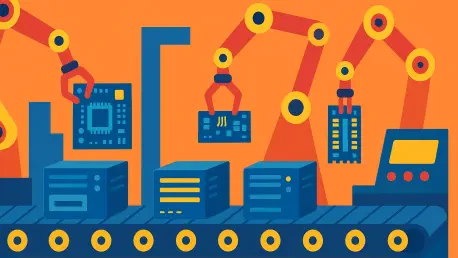
Integrating specialized hardware like Universal Robots’ cobots directly into automated environments represents a significant leap for precision electronics. These collaborative robots work alongside advanced board test systems to handle the delicate components found in AI servers. Unlike older manual processes, this robotic assembly ensures high-level consistency while managing autonomous material handling throughout the facility. The automated loading of test equipment further eliminates human error, which is often the primary cause of yield fluctuations in high-density hardware manufacturing. By embedding Teradyne’s testing sensors within the assembly sequence, manufacturers detect faults the moment a component is placed, rather than waiting for the end of the line. This proactive monitoring allows for immediate adjustments, ensuring that every unit meets the stringent quality requirements of modern data centers. Such precision is no longer optional given the escalating complexity of the hardware being produced today.
Transitioning to Software-Defined Environments
A software-defined approach to manufacturing allows for the seamless reconfiguration of assembly lines without the need for extensive manual intervention. Central to this strategy is the Physical AI framework, which bridges the gap between virtual design models and the physical execution on the factory floor. By utilizing a common software interface, engineers update production parameters in real-time, effectively treating the manufacturing line as a programmable asset. This flexibility proved vital for dealing with the short product lifecycles common in the AI sector, where hardware specifications often changed mid-cycle. The ability to push software updates to robotic cells meant that production could pivot to new designs in hours rather than weeks. This level of agility provides a major competitive advantage for silicon providers and original equipment manufacturers. Ultimately, the shift toward software-controlled hardware integration simplifies the complexities inherent in building the next generation of AI chips and modules.
Scaling Infrastructure for the Next Generation
Establishing a Complete Production Data Thread
Establishing a complete production data thread allows manufacturers to link design decisions with assembly execution and electrical performance in a single, continuous loop. This connectivity means that every piece of data generated during the assembly of an AI server is captured and analyzed to improve future output. When a specific board test reveals a recurring electrical issue, the system traces the problem back to the exact robotic movement or material batch responsible. This level of transparency transforms the factory into a self-correcting organism that optimizes itself based on real-world performance metrics. For hyperscalers managing massive infrastructure rollouts, this data-driven visibility is crucial for maintaining uptime and reliability. By consolidating robotics and autonomous material handling into a coordinated system, the partnership eliminates the data silos that previously hindered operational efficiency. The result is a more resilient supply chain capable of meeting the rigorous standards of high-performance computing environments.
Strategic Integration of Manufacturing Intelligence
The successful integration of these technologies highlighted the necessity of a unified strategy for the global electronics buildout. Organizations looking to scale their AI hardware production prioritized the adoption of modular, software-defined platforms that could evolve alongside their product designs. It was observed that companies investing in end-to-end automation reached market readiness significantly faster than those relying on fragmented, legacy systems. Future considerations for the industry included the expansion of autonomous material handling and the deeper integration of diagnostic tools within the assembly process itself. By focusing on the synergy between robotics and real-time data analytics, manufacturers ensured their facilities remained flexible enough to handle the rapid innovation cycles of the AI era. The collaboration proved that the physical infrastructure supporting artificial intelligence must be as intelligent as the models it hosts. Consequently, the focus shifted toward reducing manual engineering overhead to maintain the pace of technological advancement.