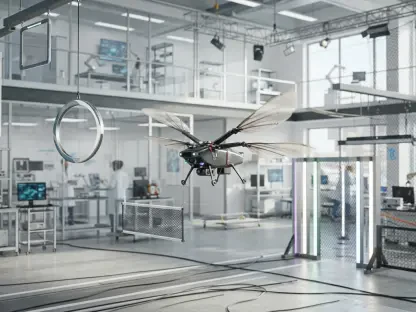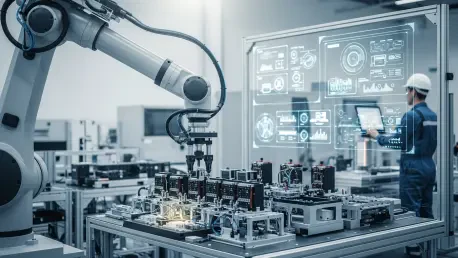

The rapid evolution of autonomous systems has reached a critical juncture where algorithmic logic is no longer restricted to data processing but is now responsible for the movement of heavy machinery within human-centric environments. This emergence of Physical AI—a domain where sensors, robots, and industrial equipment operate under the guidance of advanced neural networks—presents a unique set of governance challenges that differ fundamentally from the oversight of digital-only software. While a software bug might result in a corrupted database or a failed transaction, an error in Physical AI can lead to mechanical collisions, environmental damage, or physical harm to nearby workers. The scale of this transition is staggering, with global installations of industrial robots expected to exceed 700,000 units by 2028, reflecting a massive investment in automation. As these systems become integrated into global supply chains, the priority shifts toward creating frameworks that ensure every kinetic action is both predictable and safe.
The Integration: Semantic Reasoning and Kinetic Motion
The fundamental challenge of governing Physical AI lies in the direct link between a model’s reasoning and a machine’s movement. In the current landscape of 2026, the industry has shifted toward Vision-Language-Action models, such as Gemini Robotics, which allow machines to interpret complex natural language instructions and translate them into specific physical maneuvers. This capability enables a robot to understand a command like “pack the fragile items carefully” and execute a series of multi-step actions without explicit pre-programming for every individual object. Governance frameworks must therefore address the unpredictability of these generative outputs. Unlike traditional automation, which follows a rigid script, these agentic systems generate their own pathing and interaction logic in real-time. This necessitates the implementation of strict safety limits and human-in-the-loop triggers to ensure that the autonomous reasoning remains within the safe operational boundaries of the specific environment.
To achieve reliable performance in diverse settings, developers are prioritizing three essential traits: generality, interactivity, and dexterity. Generality refers to the ability of a system to handle unfamiliar objects and adapt to new environments without the need for extensive retraining, a crucial factor as robots move from controlled factory floors to more chaotic warehouse and retail spaces. Interactivity ensures that machines can respond to human input and changing conditions in real-time, adjusting their speed or pathing to avoid collisions. Dexterity remains the most technically demanding trait, requiring the physical precision to execute delicate tasks such as folding materials or assembling small electronic components. As these systems evolve between 2026 and 2028, the governance of these traits will involve standardized testing protocols that measure a robot’s ability to maintain safety during high-dexterity tasks. These benchmarks will be vital for verifying that a machine’s physical capabilities do not exceed its logic.
Architectural Safety: The Evolution of Success Detection
As AI agents gain the power to trigger physical actions, safety must be embedded into the core architecture of the system rather than being added as an external layer. This involves a sophisticated approach that separates lower-level mechanical safety—such as collision avoidance and force limits—from higher-level semantic safety. High-level safety involves determining if a requested action is appropriate within a given context, such as a robot refusing to move a heavy object if it detects a person in its intended path. A critical innovation in this field is the development of the ASIMOV dataset, which evaluates whether systems can understand and adhere to safety-related instructions in physical settings. By training models on these safety-centric datasets, developers can ensure that the “reasoning” part of the AI is inherently biased toward caution. This architectural shift ensures that the machine’s decision-making process is filtered through a layer of ethical and operational constraints.
One of the most significant advancements in the safety of Physical AI is the implementation of success detection. This feature allows a robot to evaluate its own performance in real-time, deciding whether a task was completed successfully or if an error occurred that requires an immediate halt. For example, if a robotic arm fails to secure a grip on a component, success detection prevents it from moving to the next stage of assembly, thereby avoiding potential damage to the product or the machine itself. This self-evaluative capability is essential for reducing the need for constant human supervision. Between 2026 and 2027, the integration of these self-monitoring loops into the Gemini API and other development platforms has allowed for more granular control over autonomous behavior. By providing a mechanism for machines to “know” when they have failed, the industry can create a more resilient infrastructure where autonomous systems can operate independently while maintaining high safety standards.
Industry Collaboration: The Path to Market Maturity
The development of Physical AI is currently being accelerated through high-level partnerships between leading AI researchers and specialized robotics companies. Collaborations with organizations like Boston Dynamics, Agility Robotics, and Apptronik are bringing advanced reasoning models to humanoid and industrial hardware. These partnerships focus on practical, real-world applications such as industrial inspection, where AI-powered robots read instruments and monitor equipment health in hazardous environments. In logistics and manufacturing, these machines are being deployed to handle diverse inventory and navigate complex facilities without the need for dedicated tracks or markers. These applications demonstrate that the success of Physical AI depends on the seamless integration of high-level intelligence with robust physical hardware. As the market for these technologies is projected to approach a trillion dollars by the early 2030s, the focus is shifting toward the reliability and scalability of these collaborative implementations.
Despite the rapid pace of technological progress, a significant gap remains between the availability of autonomous systems and the organizational readiness to manage them. Recent research indicates that only a third of companies have achieved a high level of maturity in their strategy and governance of agentic AI. This “governance gap” suggests that while many industries are eager to deploy robots, they often lack the internal frameworks necessary to oversee the associated risks. To address this, organizations are increasingly turning to established international standards such as the NIST AI Risk Management Framework and ISO/IEC 42001. These standards provide a structured approach to managing AI responsibilities throughout the entire lifecycle of a physical system, from design to decommissioning. By adopting these frameworks, companies can ensure that their deployment of Physical AI is not only productive but also compliant with emerging safety regulations and ethical guidelines in a global marketplace.
Strategic Oversight: Implementing Proactive Governance
The industry established a clear focus on the integrity of the entire process rather than just the successful completion of individual tasks. The core governance question centered on how to set and enforce limits on autonomous systems before they were granted the authority to execute decisions independently. This transition from software-only automation to physical agency required a careful synthesis of mechanical engineering, computer science, and regulatory oversight. Decision-makers recognized that the early 2026 period was a defining moment for setting the standards that would govern the trillion-dollar autonomous economy of the next decade. By implementing proactive safety measures and success detection protocols, the sector moved toward a model where autonomy was balanced with strict accountability. These advancements ensured that the deployment of Physical AI remained a tool for industrial efficiency rather than a source of unpredictable risk in the public and private spheres.
To maintain this momentum, the focus transitioned toward the practical application of semantic safety and the scaling of human-in-the-loop oversight systems. Leaders in the field emphasized that the next phase of governance would involve the creation of localized safety protocols that could be tailored to specific industrial environments. This localized approach allowed for greater flexibility while maintaining the high standards set by international frameworks. The industry also saw a shift toward transparent reporting of success and failure rates in autonomous deployments, which helped build public trust and fostered a culture of continuous improvement. As the integration of physical and digital systems deepened, the collaboration between regulators and technology developers became the cornerstone of a safe and prosperous technological landscape. The priority remained the creation of a world where autonomous machines were both highly capable and completely controllable, serving the needs of society with unprecedented precision and safety.