


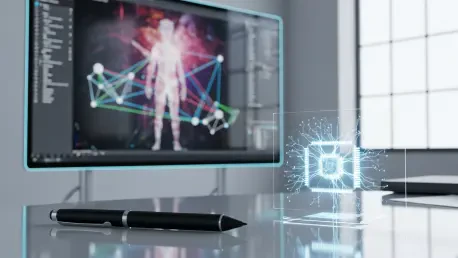

The delicate balance between traditional hand-drawn aesthetics and the raw computational power of generative models has reached a critical tipping point in the modern animation industry. For decades, the grueling process of in-betweening and rotoscoping demanded thousands of man-hours, often limiting the creative scope of independent creators who lacked the massive budgets of major studios. However, the emergence of human-centric artificial intelligence has fundamentally altered this landscape, offering a middle ground where the artist remains the primary architect of the visual style. Instead of relying on automated “black box” generation, contemporary animators are utilizing refined neural networks to amplify their unique brushstrokes rather than replacing them. This transition suggests a move away from the cold, sterile perfection often associated with purely digital renders, favoring a more textured, idiosyncratic approach that preserves the human touch across thousands of frames with unprecedented efficiency.
The Intersection of Manual Craft and Algorithmic Precision
Modern workflows are increasingly defined by tools that prioritize spatial consistency and artistic intent over randomized generation. Software like EbSynth and custom-trained ControlNet modules for Stable Diffusion have allowed creators to transform a single hand-painted keyframe into a fully realized animated sequence. This process effectively bridges the gap between the high-fidelity detail of oil painting or charcoal sketching and the fluid motion required for cinematic storytelling. By using a “human-centric” approach, the AI does not choose the colors, the lighting, or the character designs; instead, it acts as a highly sophisticated interpolation engine that understands the geometric relationships between pixels. This allows a lead animator to establish the visual “soul” of a project in just a few frames, while the neural network handles the labor-intensive task of propagating those specific stylistic choices across thousands of subsequent images without the traditional drift or flickering.
Beyond mere efficiency, the focus on human-centric AI addresses the long-standing issue of the “uncanny valley” that often plagues fully automated 3D or synthetic renders. When an artist maintains control over the underlying motion capture data or the specific weighting of a model’s output, the resulting animation retains the intentional imperfections that make hand-drawn work feel alive. This collaborative dynamic has fostered a new era of “hybridized” content where the line between live-action, 2D, and 3D animation becomes virtually indistinguishable. Technical directors now spend more time refining the parameters of latent space to match a director’s specific vision rather than fixing broken rigs or manually correcting artifacts. Consequently, the role of the animator has evolved from being a technician of movement to becoming a curator of style, where the primary challenge is no longer the physical act of drawing, but the conceptual act of defining the aesthetic boundaries for the machine to inhabit.
Strategic Integration and Future-Proofing Creative Pipelines
The economic implications of this technological shift are profound, particularly for mid-sized studios and independent creators who can now compete with global conglomerates. In the period from 2026 to 2028, the industry is expected to see a significant surge in high-quality, stylistically diverse features that would have previously been financially impossible to produce. By utilizing human-centric AI to manage the “grunt work” of clean-up and coloring, production budgets can be redistributed toward script development, voice acting, and experimental art direction. This democratization of high-end animation tools means that a small team can achieve the same visual density as a production with hundreds of artists. Furthermore, the ability to train localized models on a studio’s proprietary art style ensures that the output remains unique and legally defensible, avoiding the pitfalls of generic, copyright-infringing datasets that have hindered earlier adoption of generative technologies in professional settings.
The successful integration of these technologies required a fundamental shift in how creative professionals approached their daily pipelines and long-term skill development. Studios that flourished during this transition moved away from fearing automation and instead invested in cross-disciplinary training that blended traditional art theory with advanced prompt engineering and dataset curation. This proactive stance empowered artists to treat neural networks as digital apprentices, which ultimately preserved the integrity of the creative voice while dramatically increasing output capacity. Actionable strategies involved the creation of internal “style bibles” that served as training data, ensuring that every frame produced was a direct extension of the director’s original vision rather than an approximation. By prioritizing the human element as the guiding force, the industry solved the problem of creative stagnation, ensuring that the next generation of animation remained a deeply personal and expressive medium despite the underlying digital complexity.







