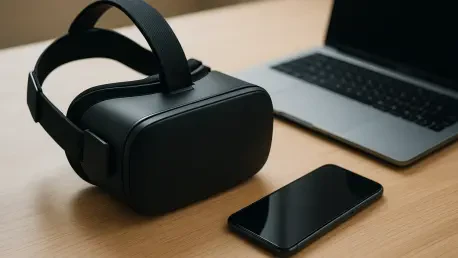

Google has officially integrated XR devices into the Android Enterprise framework, allowing IT departments to manage headsets with the same security protocols as corporate smartphones. This milestone marks a definitive shift in the corporate technology environment, which is currently undergoing a fundamental transformation in how extended reality—comprising virtual, augmented, and mixed reality—is integrated into daily operations. For a long time, these tools were restricted to experimental pilots and niche training sessions, often viewed as interesting novelties rather than essential equipment for a productive workforce. However, the current landscape of 2026 demonstrates that the market has moved past the aesthetic appeal of hardware to focus on the robust underlying systems required for enterprise-scale functionality. The industry is now prioritizing the operational stack, a critical layer consisting of artificial intelligence, data privacy governance, and endpoint management that allows a technology to survive the rigors of a professional workplace.
The Foundation of Utility and Privacy
Strategic Implementations: Logistics and Frontline Efficiency
Amazon’s recent deployment of smart delivery glasses serves as a primary indicator of this shift toward utility-driven extended reality within the logistics sector. Unlike consumer-focused wearables designed for entertainment or social media sharing, these devices are engineered for specific, high-stakes tasks: assisting delivery associates with turn-by-turn navigation and precise package identification. Having already tested the technology with over 500 associates across a staggering 275,000 deliveries, the company is demonstrating that immersive tools can solve real-world efficiency problems in a way that traditional handheld devices cannot. This implementation proves that the value of XR is no longer theoretical but is being realized in the movement of goods across global supply chains.
The significance of this rollout lies in its massive scale and the commitment to permanent integration rather than temporary testing. With active plans to expand the fleet to 20,000 devices by 2027, this initiative represents one of the largest professional wearable deployments in history. It signals to the broader market that XR is no longer a small-scale experiment but a core component of global logistics integration that can be scaled effectively. By focusing on reducing the cognitive load on delivery drivers and improving safety through hands-free interaction, the industry is seeing a transition where the hardware serves as a seamless extension of the worker’s existing toolkit, rather than a bulky distraction that complicates the job.
The Privacy Paradigm: Balancing Data and Ethics
A key takeaway from these large-scale deployments is the absolute prioritization of privacy governance as a prerequisite for adoption. High-profile rollouts have shown that productivity gains alone are not enough to justify the use of camera-equipped wearables; they must be accompanied by rigorous safety frameworks that protect both the user and the surrounding public. In response, current standards involve implementing strict protocols such as physical privacy switches that allow users to mechanically disable sensors and the automated blurring of identifying imagery of bystanders. These measures ensure that the capture of visual data is purposeful and restricted to professional needs, maintaining the social license required for these devices to operate in public and semi-public spaces.
For any modern organization, privacy is no longer an afterthought or a compliance checkbox but a core requirement for any wearable technology strategy. This proactive approach to data ethics is essential for building trust among employees who may be skeptical of increased surveillance in the workplace. By making participation in wearable programs voluntary and ensuring that data is processed locally whenever possible, companies are navigating the complex intersection of efficiency and individual rights. The consensus among technology leaders is that the long-term viability of the XR operational stack depends entirely on the transparency of these data practices, as any perceived breach of privacy could lead to significant legal and reputational setbacks for the enterprise.
Building the Infrastructure of Innovation
Spatial Intelligence: The Evolution of Content Development
While some companies focus on end-user applications, others like AMD are building the heavy infrastructure that powers these immersive environments from the ground up. AMD’s significant investment in “Spatial AI” through the high-value acquisition of World Labs highlights a critical need for systems that can interpret and generate three-dimensional spaces with unprecedented efficiency. This move addresses the ongoing “arms race” for XR dominance by shifting the focus from the physical headset to the sophisticated AI models that create the worlds these devices inhabit. Spatial intelligence allows for the rapid creation of digital twins and industrial simulations that were previously too expensive or complex for most businesses to maintain.
The ability to generate 3D environments from simple text or image inputs is fundamentally changing the economics of virtual reality. Historically, creating a high-fidelity digital twin of a factory or a retail space required months of manual labor by specialized 3D artists. Today, generative models are automating this process, allowing companies to create persistent, interactive environments in a fraction of the time. This shift is democratizing access to high-end simulations, enabling smaller firms to leverage the same training and visualization tools that were once the exclusive domain of global corporations. As these AI models become more integrated into the hardware itself, the barrier to entry for spatial computing continues to drop, making it a standard part of industrial design and planning.
AI-Assisted Authoring: Solving the Content Bottleneck
A persistent “content desert” has plagued the XR industry for years, as the difficulty of creating high-quality training modules often outpaced the benefits of the technology. However, new AI-assisted authoring tools are now emerging to solve this bottleneck by converting standard operating procedures directly into editable virtual modules. Platforms like VRseBuilder utilize advanced language models and the Model Context Protocol to bridge the gap between written instructions and interactive experiences. By drastically reducing development time—in some cases by over 90%—these tools allow organizations to update their training materials as quickly as their real-world procedures change, ensuring that the digital workforce is always in sync with physical operations.
This agility is particularly important in fast-moving industries where safety protocols or technical specifications change frequently. When a company updates a piece of machinery on the assembly line, the corresponding virtual training module can now be updated almost instantly through AI-driven content generation. This makes immersive learning a far more agile and economically viable option for the modern workforce compared to traditional video or classroom sessions. By removing the need for a deep bench of software developers to maintain every virtual lesson, companies can focus their resources on the quality of the information being taught, rather than the technical hurdles of the medium itself.
Standardizing Management and Hardware
Integration: The Enterprise IT Ecosystem
For any technology to be truly “enterprise-ready,” it must be manageable by a standard IT department using existing infrastructure and governance models. In the past, XR headsets often existed as “shadow IT,” purchased by individual departments and operating outside the standard security and update protocols of the corporation. The current integration of XR devices into the Android Enterprise framework is a major step toward the normalization of these tools. This allows IT leaders to use familiar management providers like Microsoft Intune or Samsung Knox to secure, update, and monitor devices alongside smartphones and laptops. The ability to perform zero-touch enrollment and manage applications through a central portal removes one of the greatest friction points for large-scale adoption.
By treating a VR headset or AR glasses as just another endpoint in the corporate network, organizations can ensure that data remains secure and that devices are always running the latest firmware and security patches. This standardization is crucial for compliance in regulated industries such as healthcare or finance, where the uncontrolled use of data-capturing devices would be a significant liability. Furthermore, it allows for a more unified support structure, as IT staff do not need to learn entirely new systems to troubleshoot hardware issues or deploy specialized software. This alignment with existing Enterprise Mobility Management systems signals that the “wild west” era of unmanaged headsets is over, replaced by a disciplined, corporate-standard approach.
Contextual Computing: Connectivity and Site Security
There is a growing trend toward hardware pragmatism, acknowledging that high-immersion headsets are not always the appropriate tool for every professional environment. Companies like Snap are bridging the gap between hardware and business software through partnerships with Salesforce and AWS to provide “contextual computing.” This approach focuses on delivering hands-free access to real-time data exactly when a worker needs it, directly within their field of view. For a field technician or a warehouse picker, this means seeing inventory levels or repair instructions without having to stop work to check a tablet. This integration proves that XR is most effective when it functions as a seamless extension of existing professional software ecosystems.
Furthermore, the hardware market is diversifying to include more specialized and site-secure options, such as audio-only glasses or camera-free wearables. These designs are particularly important for high-security environments like research labs or manufacturing plants where cameras are strictly prohibited due to trade secrets or safety regulations. By offering devices that provide AI-voice assistance and communication without visual sensors, manufacturers are ensuring that the benefits of the operational stack can reach every corner of the enterprise. This flexibility in design shows a consensus that for immersive technology to succeed, it must be adaptable enough to meet the unique constraints and security demands of a wide range of industrial and corporate settings.
Establishing the Mature Operational Stack
A Framework: The Layers of Modern Adoption
When the recent developments in hardware, software, and governance are viewed together, a cohesive narrative of a maturing market emerges. The industry is adopting a “stack” approach that closely mirrors the development of the smartphone and cloud computing industries. This stack includes the hardware layer, focusing on comfort and specialization; the management layer, providing IT control; the AI infrastructure layer, automating content creation; the application layer, delivering specific business value; and the essential governance layer, ensuring privacy and compliance. This structured framework provides a clear roadmap for how immersive technology can be integrated into the existing operational fabric of any modern company without causing disruption.
As the industry moved through these developmental phases, it became clear that the success of XR in the workplace no longer depended on a single breakthrough in display resolution or battery life. Instead, the focus shifted to how well these technologies could solve specific, high-value problems while remaining invisible to the broader IT infrastructure. Organizations that succeeded in this transition were those that looked beyond the “wow factor” of the devices and invested in the underlying data pipelines and management systems. By viewing XR as a fundamental part of the enterprise stack rather than a standalone accessory, these companies secured a significant competitive advantage in training speed, operational efficiency, and data-driven decision-making.
Actionable Progress: Moving Toward Persistent Systems
The transition from temporary technical demonstrations to permanent operational tools has now reached a critical mass, leaving the experimental phase of the past behind. Business leaders who observed this evolution recognized that the burden of proof had shifted from the technology itself to the organizations’ ability to manage it. To capitalize on this mature landscape, successful firms established rigorous governance policies for data capture and utilized standard Enterprise Mobility Management tools to maintain security. They prioritized specific use cases where hands-free access to information provided immediate ROI, such as in complex assembly or remote field maintenance, rather than attempting to force XR into every aspect of the office environment.
Looking forward, the focus remained on the long-term sustainability of immersive programs, particularly through the use of AI-assisted authoring to keep training content relevant and cost-effective. The integration of Spatial AI and standardized management protocols created a stable environment where XR could finally function as a reliable tool of the trade. Organizations that built their strategies around these five layers of the operational stack avoided the pitfalls of “pilot purgatory” and successfully transitioned into a new era of contextual computing. By treating immersive technology with the same discipline as any other mission-critical system, the enterprise world effectively turned the promise of extended reality into a daily, functional reality that continued to drive innovation across all sectors.