


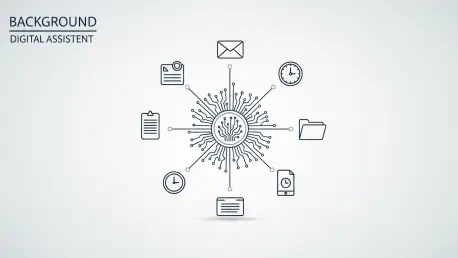

The announcement of Microsoft Scout at the annual Build conference marks a pivotal moment in the evolution of corporate digital environments as it introduces the concept of a persistent, autonomous agent that moves beyond the limitations of standard chatbots. While previous iterations of AI required a human to initiate every action through a specific prompt, Scout is engineered to function as an independent autopilot that monitors and manages professional workflows within the Microsoft 365 suite without constant manual intervention. This transition from reactive assistance to proactive agency reflects a fundamental shift in how organizations conceptualize human-computer interaction, prioritizing background task execution and long-term project management over simple inquiry-response cycles. By integrating this technology directly into the core of the operating system and cloud applications, Microsoft aims to alleviate the cognitive load on employees, allowing them to focus on high-level strategy while their digital counterpart handles the logistical nuances of modern office life.
Origins and Technical Identity: The Evolution of Autonomous Systems
The technical genealogy of Scout begins with the OpenClaw initiative, a viral open-source project that first demonstrated the potential for large language models to manage complex, real-world tasks like inbox triaging and calendar coordination. This experimental framework proved that AI could do more than just generate text; it could interact with digital interfaces to execute multi-step operations. Recognizing the disruptive potential of this technology, Microsoft integrated the core logic of OpenClaw into its own ecosystem after the project’s lead architect joined the development team at OpenAI. However, the move from an open-source experiment to an enterprise-grade product required the addition of significant governance and safety layers. Microsoft spent the last year refining these protocols to ensure that the agent operates with the reliability and security expected by Fortune 500 companies. This refinement process transformed an unpredictable tool into a sophisticated engine capable of managing sensitive business data securely.
Beyond its origins, Scout distinguishes itself through its unique digital identity, which allows it to function as a persistent entity rather than a session-based assistant. This autonomous agent operates continuously across various platforms, including Microsoft Teams, Outlook, and SharePoint, acting as the connective tissue that binds disparate applications together. By synthesizing information from diverse sources, Scout maintains a holistic view of a user’s professional obligations, enabling it to anticipate needs before they are explicitly voiced. For instance, if a project deadline is approaching in SharePoint, the agent can automatically gather relevant documents and draft a status update for the project team in Teams. This persistent background operation is what defines the Autopilot category, as the system does not wait for a user to open a specific application window to begin working. Instead, it maintains a constant presence, ensuring that routine administrative tasks are handled in real-time.
Intelligence and Infrastructure: Work IQ and Hardware Acceleration
The intelligence driving Scout’s decision-making is a specialized layer known as Work IQ, which is designed to observe and learn from a user’s digital footprint to understand their unique professional priorities. By monitoring signals such as email response times, meeting attendance, and file collaboration patterns, Work IQ creates what Microsoft describes as an investment loop. In this model, the agent becomes increasingly effective the longer it is used, as it refines its understanding of a user’s preferred communication style and task urgency. This level of personalization ensures that Scout does not simply follow a generic template but adapts to the specific nuances of an individual’s workflow. Furthermore, Work IQ allows the agent to recognize the importance of specific stakeholders, ensuring that requests from a supervisor or a key client are prioritized over routine internal announcements. This contextual awareness is critical for maintaining professional relationships with accuracy.
To facilitate this high-level intelligence without compromising system performance or data privacy, Scout is optimized to leverage local hardware acceleration on both Windows and macOS devices. Specifically, the agent utilizes the dedicated Neural Processing Units found in modern hardware like the Surface Pro 12 to process sensitive information on-device rather than sending everything to the cloud. This hybrid approach allows for low-latency responses and ensures that personal communication data remains within the local environment whenever possible. By offloading complex reasoning tasks to the NPU, the system minimizes the impact on the main processor, allowing users to continue their work without experiencing performance lag. This hardware integration represents a significant step forward in the development of AI-native PCs, where the operating system and the AI agent are deeply intertwined. It also addresses the growing demand for privacy-first AI solutions in sectors such as finance.
Governance and Ecosystem Synergy: Balancing Control and Productivity
A central concern for any autonomous system is the maintenance of organizational boundaries, which Microsoft addresses through a rigorous policy conformance framework integrated directly into Scout. Every action initiated by the agent is cross-referenced against the organization’s existing sensitivity labels and Data Loss Prevention protocols to ensure that data does not leak across unauthorized channels. Operating under a governed Entra identity, Scout leaves a transparent and immutable audit trail for every decision it makes, providing IT administrators with the ability to review the reasoning behind its actions. This transparency is vital for establishing trust within an enterprise environment, as it allows for the granular monitoring of how the agent interacts with proprietary information. If the agent attempts to share a confidential file with an external party, the policy conformance system automatically intervenes, preventing the action and notifying the relevant security personnel.
The introduction of Scout also clarifies the functional distinction between different tools within the Microsoft productivity ecosystem, particularly in relation to the existing Microsoft 365 Copilot. While Copilot remains a reactive tool that assists users with drafting documents or summarizing email threads upon request, Scout is designed to take the initiative on broader, multi-step workflows. A user might still rely on Copilot to refine the tone of a specific memo, but Scout is the entity that has already organized the project folder and scheduled the follow-up meetings required to launch that memo’s initiative. This strategic complementarity ensures that the two tools do not compete for the same role but instead work together to cover both the micro-tasks of document creation and the macro-tasks of project management. By delegating the administrative heavy lifting to Scout, users can engage with Copilot more effectively, using the time saved to focus on the creative aspects of their work.
Strategic Vision and Global Rollout: The Future of Enterprise Intelligence
Supporting the wide-scale deployment of autonomous agents is the new Agent 365 management platform, which provides organizations with a centralized interface to oversee their growing digital workforce. As companies begin to deploy hundreds or even thousands of these entities, the need for a robust orchestration layer becomes paramount to ensure operational efficiency and consistency. Agent 365 allows IT managers to set global permissions, monitor the collective performance of agents, and identify areas where automation is providing the most value. Microsoft anticipates a future where these digital entities are ubiquitous, with internal projections suggesting that over a billion agents could be automating routine office tasks globally within the next few years. This platform is designed to handle that scale, providing the infrastructure necessary for agents to communicate with each other and collaborate on cross-departmental projects as they navigate a highly competitive global market.
The transition to Scout required IT departments to reevaluate their internal data permissions to prevent the agent from overstepping its intended boundaries during the initial deployment phase. Organizations that successfully piloted the technology recognized that clear data labeling was the most critical factor in achieving high-accuracy automation. These early adopters established specialized internal councils to oversee agent behavior, ensuring that the autonomous actions aligned with corporate ethics and regional compliance mandates throughout the rollout. Looking ahead, the focus shifted from simple task completion toward the orchestration of entire departments, where multiple agents worked in concert to manage complex logistics. Companies found that the most effective strategy involved a gradual integration, starting with low-risk administrative tasks before allowing the system to handle client-facing communications. This period of adjustment proved that the primary value of autonomous AI lay in its ability to reclaim time.







