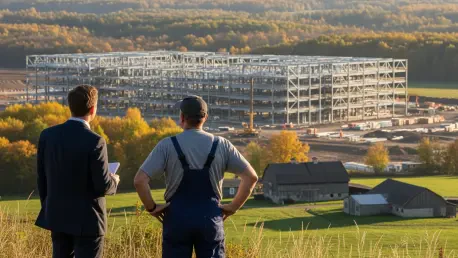

The peaceful morning silence of Houston County, Minnesota, is increasingly interrupted by the conceptual hum of high-performance computing as the physical footprint of artificial intelligence stretches across the American heartland. While the digital revolution once seemed confined to glass towers in Silicon Valley or urban hubs, it has now firmly planted its stakes in the fertile soil of agricultural communities where tradition and technology are colliding with unprecedented force. This geographical expansion is driven by a relentless hunger for land and infrastructure, turning quiet farm towns into the new frontlines of a global technological arms race. For the residents of these rural areas, the arrival of massive data centers is often perceived as a monumental wave that threatens to erode their cultural heritage and deplete the natural resources that have sustained their families for generations. The conflict is not merely about construction or zoning; it represents a fundamental clash between a federal mandate for technological dominance and the sovereign desire of local citizens to protect their way of life. As these gargantuan facilities begin to rise above the green ridges of the Midwest, they serve as a physical manifestation of an AI boom that is outstripping the social and regulatory frameworks designed to manage it.
Resource Exhaustion: The Impact on Power and Water Grids
Modern artificial intelligence operations are significantly more resource-intensive than traditional digital platforms, requiring an immense amount of energy to process complex machine-learning models at scale. A single query within an advanced AI interface can consume up to fifteen times the electricity of a standard search engine interaction, placing an unprecedented burden on regional power grids that were never designed for such loads. New facilities specifically engineered for generative AI are projected to demand ten to forty times the power of data centers constructed just a few years ago. This spike in consumption forces utility companies to rethink their long-term capacity plans, often at the expense of residential stability. As the total number of data centers in the United States is expected to double between 2026 and 2030, the sheer volume of electricity required is threatening to overwhelm existing energy infrastructure, potentially leading to higher costs for local consumers and increased reliance on aging power plants that were slated for decommissioning.
Beyond the massive electricity requirements, these centers require vast quantities of water to cool high-performance computer chips that generate extreme heat during processing cycles. In many rural communities, water is not just a utility but a vital and finite resource essential for both large-scale agriculture and domestic consumption. The cooling systems for a single large-scale facility can evaporate millions of gallons of water daily, creating a critical point of contention during periods of drought or seasonal scarcity. This creates an direct competition for resources between the tech giants managing these facilities and the farmers who rely on local aquifers to sustain their crops and livestock. As more of these industrial complexes appear on the horizon, the long-term sustainability of local water tables has become a primary driver of environmental concern. Community members frequently question whether the temporary economic gains of hosting a data center are worth the potential permanent depletion of the natural resources that define their region’s agricultural viability.
Societal Resistance: Preserving the Heart of Rural America
Public sentiment regarding these technological projects is increasingly characterized by deep skepticism and a growing sense of alienation among rural populations. Recent polling indicates that a large majority of Americans currently oppose the construction of massive data centers in their own immediate communities, preferring even the prospect of a local nuclear power plant over an AI facility. This distrust has fueled a groundswell of local activism, with hundreds of citizens attending town hall meetings in places like Dubuque County, Iowa, to protest the industrialization of their countryside. For many residents, the primary issue is the loss of rural identity and the visual transformation of the landscape. They see the conversion of rolling hills and fertile soil into sprawling “gray boxes” as an irreversible damage to the character of their homes. This movement has evolved from localized complaints into a coordinated effort that leverages social media and public advocacy to demand that local governments prioritize community preservation over corporate expansion and short-term tax incentives.
Multi-generational farmers often view the encroachment of these industrial sites as a direct threat to their way of life and the heritage they intend to pass down to future generations. The psychological impact of seeing a quiet agricultural ridge replaced by a high-security industrial complex is profound, leading to a sense of displacement within one’s own town. This resistance is not merely about noise or traffic; it is about the fundamental definition of what a rural community should be in the modern age. Activists have become increasingly sophisticated in their tactics, challenging zoning variances and demanding comprehensive environmental impact studies that include the social costs of industrialization. This coordinated defense of rural identity has forced many developers to reconsider their site selection processes, though the pressure to expand remains high. The friction highlights a growing divide between the urban-centric vision of a high-tech future and the lived reality of those who reside in the areas chosen to host the physical infrastructure of that future.
Financial Gains: Navigating the Economic Divide
The economic narrative surrounding the AI boom is deeply split between the promise of substantial tax revenue and the persistent fear of human obsolescence in the labor market. On the positive side, projects like the multi-billion dollar developments pioneered by Meta and other tech giants can provide massive windfalls for local government coffers. These funds are often utilized to improve public infrastructure, build new schools, or provide significant bonuses for public employees in counties that have historically struggled with stagnant budgets. Proponents of these projects argue that capital-intensive developments offer a financial lifeline to small counties that would otherwise lack the tax base to fund essential services or modernize their facilities. In this view, the data center is a modern industrial anchor that brings wealth to areas that have been overlooked by other sectors of the economy for decades. The immediate influx of construction jobs and the long-term property tax commitments are powerful incentives for local officials seeking to revitalize their jurisdictions.
Conversely, there is a profound dystopian fear among the local workforce regarding the impact of artificial intelligence on the broader labor market. Research suggests that millions of American jobs could be eliminated or fundamentally altered by AI technologies within the next five years, leading many residents to view nearby data centers as the physical architecture of their own economic displacement. This creates a psychological barrier that makes it difficult for developers to sell the benefits of tax revenue when the community feels its very livelihood is being actively undermined by the technology produced within those walls. Unlike traditional manufacturing plants, data centers require relatively few permanent employees once construction is completed, meaning they do not offer the same level of long-term job security for the local population. This imbalance between the massive scale of the facility and the small number of local residents it employs further fuels the perception that these projects are extractive rather than collaborative, taking local resources while providing little in return for the average worker.
National Security: Balancing Growth and Oversight
The debate over the expansion of data centers is further complicated by national security interests and the pressure of global technological competition. Federal policymakers and AI advocates argue that rapidly expanding this infrastructure is essential for maintaining the military and economic advantage of the United States over global rivals. Some officials have even raised concerns that foreign adversaries might be intentionally manipulating or amplifying local opposition to slow down American technological progress. This adds a layer of geopolitical tension to local zoning board meetings, where a simple discussion about land use can suddenly be framed as a matter of national importance. Advocates for the industry suggest that every delay in construction represents a loss of ground in the race to develop the most advanced AI models, which are increasingly seen as the backbone of future defense and economic stability. This high-stakes environment puts immense pressure on local regulators to approve projects quickly, often before the full impact of the development can be assessed.
In response to this breakneck speed of development, over one hundred jurisdictions across the country have considered or implemented moratoriums on new data center projects. These regulatory pauses, notably seen in states like Maryland and Wisconsin, allowed local officials to update antiquated zoning laws and conduct the necessary due diligence required for such massive projects. The primary goal of these moratoriums was to ensure that the long-term environmental and social impacts were fully understood before allowing permanent changes to the rural landscape. By hitting the pause button, local governments were able to negotiate better terms for resource usage and demand higher standards for architectural integration and energy efficiency. These pauses served as a necessary correction to a development cycle that had outpaced the ability of local residents to provide meaningful input. This regulatory shift signaled a move toward a more balanced approach where technological necessity no longer automatically overrode the concerns of the people living on the ground.
Future Pathways: Lessons from the Regulatory Shift
Stakeholders eventually recognized that the path forward required a delicate balance between national innovation and the preservation of local autonomy. Local governments implemented comprehensive impact assessments that moved beyond simple economic projections to include long-term hydrological modeling and energy grid stress tests. Developers who succeeded were those that prioritized transparency and invested in community-led conservation projects to offset the industrial footprint. This shift in strategy ensured that technological growth did not come at the expense of rural viability, creating a precedent for future infrastructure projects across the nation. By 2028, the dialogue transitioned from one of resistance to one of mutual negotiation, where the benefits of the digital age were more equitably distributed among the communities hosting its core infrastructure. Public officials learned to demand specific concessions, such as the construction of renewable energy sites to power the facilities, which mitigated the strain on the existing grid and provided clean energy for the broader community.
The resolution of these conflicts also saw the rise of new architectural standards that favored low-profile designs and noise-mitigation technologies to better blend facilities into the rural environment. This approach addressed the aesthetic concerns of residents while still allowing for the necessary expansion of computing power. Furthermore, tech companies began partnering with local vocational schools to create specialized training programs, ensuring that the small number of high-tech jobs created by the centers were accessible to the local population. These actions helped to dissolve the perception of data centers as alien monoliths, reframing them instead as integrated components of a modernized rural economy. The lessons learned during this period of friction highlighted the necessity of proactive planning and honest communication between corporate entities and the citizens they impact. Ultimately, the integration of AI infrastructure into the American landscape required a commitment to shared prosperity and a profound respect for the heritage of the land it occupies.