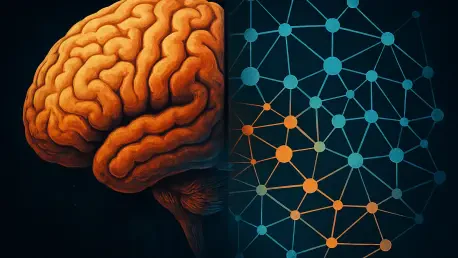

The realization that artificial intelligence can mirror biological cognitive processes has shifted from a theoretical curiosity into a rigorous framework for deciphering the intricate mechanics of the human mind. Recent breakthroughs in recurrent neural networks and transformer architectures have enabled researchers to observe how synthetic systems organize information when faced with complex recall tasks. These computational models do not merely mimic known patterns; instead, they often stumble upon organizational strategies that were previously unidentified in human psychology. By subjecting these digital architectures to the same constraints as biological brains, such as limited working memory and the need for rapid retrieval, scientists are uncovering a universal grammar of information storage. This evolution in neurobiology suggests that our traditional understanding of memory as a static filing system is fundamentally flawed. Instead, memory operates as a dynamic, generative process where the network constantly recalibrates its internal representations to optimize for utility.
The Convergence: Synthetic and Biological Architectures
Contemporary experiments utilizing long short-term memory networks have demonstrated that these systems prioritize relational data over raw facts, echoing the way the human hippocampus functions. When tasked with navigating virtual environments, these neural networks develop internal maps that are not based on literal coordinates but on the relative significance of landmarks. This discovery implies that the human brain might utilize a similar hierarchical approach to navigate abstract conceptual spaces, not just physical ones. By analyzing the activation patterns within these artificial layers, researchers have found that the networks spontaneously create contextual anchors to stabilize volatile information. This mechanism prevents the corruption of older memories when new data is ingested, a phenomenon known as interference in humans. The ability of a machine to independently derive this protective strategy provides a powerful lens through which we can examine the robustness of cognitive resilience in a biological context.
Beyond simple navigation, the application of large-scale linguistic models has revealed that the way we cluster words is far more computationally efficient than previously hypothesized. In studies conducted throughout 2026, neural networks trained on massive datasets began to organize concepts into multidimensional manifolds that align with human reaction times in word-association tests. This alignment suggests that our brains are not searching through a linear list of definitions but are instead traversing a sophisticated geometric landscape of meaning. The discovery of these semantic clouds within artificial intelligence architectures offers a blueprint for understanding how neurological disorders might disrupt the connectivity of the mental lexicon. If a neural network loses its ability to maintain these clusters, it exhibits errors strikingly similar to those seen in patients with certain forms of aphasia. These models serve as a predictive playground for testing how various interventions might restore the structural integrity of the human memory.
Strategic Implementation: Cognitive Health and Education
The principle of predictive coding has emerged as a central theme in both artificial intelligence and neuroscience, suggesting that the brain is essentially a prediction machine. Neural networks designed to minimize prediction error naturally develop a strategy of efficient encoding, where only the deviations from expected patterns are stored in long-term memory. This explains why humans often forget the mundane details of a daily commute but vividly remember a minor traffic accident; the brain ignores the predictable and prioritizes the anomalous. Digital models that employ this specific error-minimization strategy show a significant increase in processing speed and a reduction in energy consumption, mirroring the metabolic efficiency of the human cortex. By observing how these networks filter out noise, scientists are gaining insights into the filters used by the human sensory system. This research indicates that memory is less about recording the past and more about preparing for the most probable versions of the future.
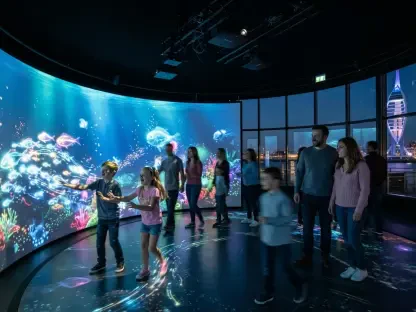
The discovery of these novel memory strategies necessitated a fundamental reassessment of how educational frameworks and cognitive health protocols were designed. Professionals in the field of neurobiology focused on implementing these insights into personalized learning algorithms that adapted to the unique habits of individual students. This transition allowed for the creation of immersive digital environments where information was presented in a manner that aligned with the brain’s natural geometric storage patterns. Meanwhile, the healthcare sector prioritized the development of diagnostic tools that utilized neural networks to detect subtle shifts in semantic clustering before clinical symptoms appeared. These proactive measures encouraged a shift from treating memory loss to preserving cognitive vitality through targeted mental exercises. By embracing the computational logic of the mind, society moved toward a world where human potential was no longer strictly limited by inevitable biological decay and memory loss.