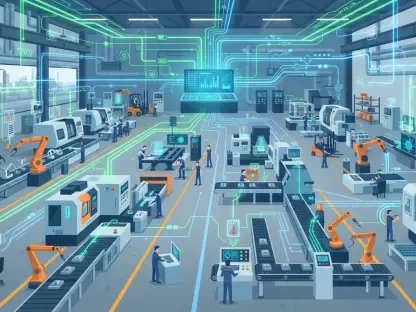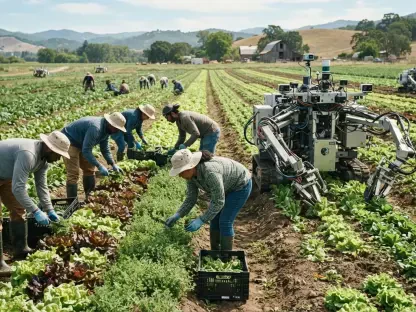

The MARVEL-AI project aims to replicate the success of Google’s Project GNoME by using advanced algorithms to predict material properties at speeds that traditional trial-and-error experimentation cannot match. This flagship endeavor was unveiled during the 2026 Singapore Week of Innovation and Technology, signaling a definitive shift in the nation’s economic strategy. By moving artificial intelligence from controlled laboratory environments into the operational core of the city-state, the government is establishing a blueprint for a post-digital-transformation society. The current framework aligns with the established National AI Missions, which prioritize advancements in manufacturing, finance, and healthcare to ensure Singapore remains a leader in the global tech race. This initiative represents more than just a technological update; it is a fundamental restructuring of how value is created. By bridging the gap between theoretical research and industrial application, Singapore is positioning itself as a resilient and inclusive economy that leverages automation and intelligence as its primary engines for sustainable innovation.
Cultivating Corporate Leadership: The Champions of AI Programme
The Champions of AI programme, led by Enterprise Singapore, serves as a cornerstone for this national strategy by targeting the most influential players in the market. By partnering with 24 major organizations, including financial leaders like DBS and UOB along with industrial powerhouses like ST Engineering and Singapore Airlines, the initiative aims to facilitate deep, enterprise-wide integration of advanced technologies. Rather than distributing generic grants that often lead to fragmented projects, the programme provides customized roadmaps tailored to the specific operational needs of each market leader. This bespoke approach allows these champions to move beyond pilot projects and implement AI at scale, fundamentally transforming their business models to meet global demand. By offering direct access to specialized expertise and high-level tech deployment strategies, the government is ensuring that the largest employers in the region are equipped to navigate the complexities of a machine-augmented global economy with precision and long-term vision.
Beyond the installation of technical infrastructure, this initiative places a heavy emphasis on human capital and systematic change management within these large organizations. The government recognizes that the success of any technological leap depends heavily on the workforce that interacts with it every day. Consequently, the programme assists participating companies in redesigning specific job roles and implementing comprehensive upskilling programs for their staff. This strategic focus ensures that the introduction of sophisticated algorithms leads to the creation of higher-value positions rather than simple job displacement. By fostering a culture of continuous learning and adaptation, Singapore’s largest employers are preparing their teams to thrive in a collaborative environment where human intuition and machine efficiency work in tandem. This commitment to the workforce not only stabilizes the labor market during periods of rapid change but also enhances the overall competitiveness of the nation’s human resources on the international stage, making it a hub for skilled talent.
Empowering Small Businesses: Democratizing Agentic AI Tools
To prevent a widening digital divide, the current strategy includes a dedicated effort to democratize sophisticated technology for small and medium-sized enterprises and micro-entrepreneurs. Central to this effort is the promotion of agentic AI, which refers to systems capable of making autonomous decisions and achieving complex goals with minimal human oversight. Through hands-on workshops, business owners are learning how to apply these autonomous tools to solve real-time operational problems that were previously too costly to address. These systems allow smaller entities to automate repetitive customer service tasks, optimize sales cycles, and streamline marketing efforts with a level of sophistication previously reserved for major corporations. By lowering the barrier to entry for high-end automation, the government is providing local businesses with the tools needed to enhance their productivity without requiring massive capital outlays, ensuring that the benefits of the AI revolution are felt by every segment of the local business community and economy.
The success of initial pilot programs, which supported over 280 businesses across various sectors, has paved the way for a much larger national rollout. Starting in late 2026 and scaling significantly throughout 2027, the government plans to expand these workshops to reach thousands of additional entrepreneurs. This scaling effort is critical for maintaining economic diversity and ensuring that local shops and service providers are not left behind as larger competitors modernize. The workshops focus on practical implementation, guiding business owners through the process of selecting the right models and integrating them into existing workflows. This inclusive approach recognizes that the backbone of the economy is built on these small enterprises, and their ability to adapt to new technological realities will dictate the nation’s overall economic health. By providing direct training and support, the state is fostering a technologically literate business community that is capable of independent growth and innovation, further cementing the region’s reputation as a tech-forward hub.
Synthesizing Industrial Innovation: Future Strategies and Material Science
The third pillar of the strategy involves the Catalytic AI Solutions initiative, which focuses on solving industrial bottlenecks within the manufacturing, trade, and logistics sectors. In the trade sector, AI is being used by rice importers to refine procurement strategies, which directly impacts food security and price stability. Parallel to this, the $150 million MARVEL-AI project was launched to revolutionize material science through rapid discovery. Traditionally, discovering new materials involves years of expensive trial-and-error, but this new project utilizes predictive models to identify alloys, polymers, and composites at unprecedented speeds. By automating the testing process within specialized A*STAR laboratories, Singapore is positioning itself to lead the production of next-generation materials essential for the semiconductor and green energy industries. This initiative represents a high-stakes bet on the future of physical manufacturing, moving beyond software into the tangible components of modern technology.
The strategic rollout of these initiatives provided a clear framework for how businesses successfully integrated intelligence into their core operations throughout the year. Leaders who prioritized the development of proprietary data sets and focused on upskilling their workforce saw the most significant gains in productivity and market resilience. The implementation of agentic tools demonstrated that autonomous systems could handle complex decision-making, allowing human staff to focus on high-level strategy and creative problem-solving. For organizations looking to replicate this success, the primary takeaway involved the necessity of aligning technological adoption with specific industrial bottlenecks rather than pursuing generic digital upgrades. By fostering a collaborative ecosystem between the public and private sectors, the nation successfully established a sustainable model for long-term growth. Future considerations focused on maintaining this momentum through continuous investment in specialized research and the ethical oversight of automated systems.