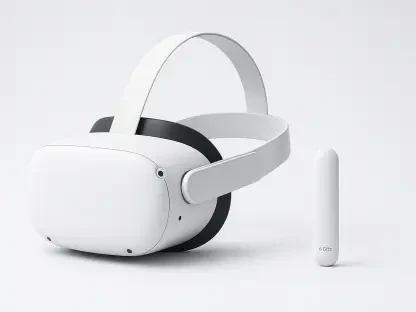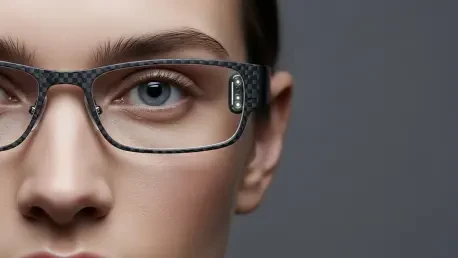

The long-standing dream of replacing handheld screens with lightweight, intelligent eyewear has finally crossed the threshold from experimental novelty into a functional daily reality for millions of users worldwide. As of 2026, the augmented reality industry has effectively shed its reputation for producing clunky, socially awkward hardware in favor of sophisticated frames that integrate seamlessly with professional and personal lifestyles. This transition was not triggered by a single breakthrough but rather by a perfect storm of miniaturized processing power, advanced optics, and a shift in consumer expectations toward hands-free digital interaction. The current market landscape demonstrates that users are no longer satisfied with mere notification mirroring; they demand contextual intelligence that anticipates their needs while maintaining the aesthetics of traditional eyewear. Consequently, the industry is witnessing a massive surge in adoption rates as major tech giants and specialized startups alike refine their offerings to meet these rigorous standards for the modern consumer.
Strategic Partnerships and Technological Convergence
The Snap and Qualcomm Alliance: Powering Mobility
The collaboration between Snap and Qualcomm represents a pivotal moment in the hardware evolution of augmented reality, specifically through the optimization of specialized silicon for the “Specs” lineup. By moving away from generic mobile chips and toward dedicated AR platforms, these companies have managed to cram smartphone-level performance into frames that weigh only slightly more than standard sunglasses. This technical feat relies on offloading heavy computational tasks to localized processing hubs while maintaining a low-latency connection for real-time digital overlays. The result is a device capable of rendering complex three-dimensional objects without the thermal throttling issues that plagued earlier iterations. This partnership has effectively democratized high-end AR by ensuring that the underlying infrastructure is robust enough to support developer ambitions while remaining power-efficient for all-day wear. Such advancements suggest that the bottleneck of hardware performance is no longer the primary hurdle for mainstream adoption in the global market.
Beyond raw hardware specifications, the integration of generative AI chatbots within the Snap ecosystem has fundamentally changed how users interact with their environments in 2026. These intelligent assistants use the cameras integrated into the frames to perceive the world alongside the user, providing real-time translations, navigation cues, and contextual information without requiring a single touch. The shift toward voice and gesture-based control has made the smartphone feel increasingly like a secondary peripheral rather than the primary interface for digital life. As Qualcomm continues to refine its neural processing units, the ability for these glasses to perform on-device AI inference ensures user privacy while maintaining lightning-fast response times. This synergy between software intelligence and hardware portability is the catalyst driving the current mass-market appeal. For consumers, the value proposition is no longer about the novelty of seeing digital icons in the air but about the practical utility of an assistant that lives on their face.
The Xreal Influence: Breaking the Price Barrier
While technical sophistication is essential, the rapid democratization of augmented reality can be largely attributed to the aggressive pricing strategies spearheaded by manufacturers like Xreal. By launching the One Pro model at a competitive price point of $599, the company has effectively disrupted the market hierarchy and forced established players to reconsider their profit margins. This “price squeeze” has moved AR glasses out of the realm of luxury tech enthusiasts and into the category of accessible consumer electronics, comparable in cost to a mid-range smartphone or a high-end gaming console. The psychological impact of breaking the thousand-dollar barrier cannot be overstated, as it transforms a high-risk investment into a justifiable purchase for a much broader demographic. Consequently, competitors have been forced to streamline their supply chains and focus on manufacturing efficiencies to remain relevant in a market that now prioritizes affordability alongside performance. This trend has led to a diversified landscape.
This focus on affordability has not come at the expense of quality, as modern manufacturing techniques have allowed for the inclusion of high-resolution micro-OLED displays even in budget-friendly models. Xreal’s success has demonstrated that a significant portion of the consumer base is willing to trade some high-end features, such as advanced spatial mapping, for a polished and reliable “screen-in-front-of-the-eyes” experience. This pragmatic approach addresses the most immediate consumer needs: private media consumption, expanded digital workspaces, and immersive gaming on the go. By focusing on these core use cases, the industry has managed to build a solid foundation of daily active users who rely on their glasses for productivity and entertainment. The market response indicates that accessibility is the strongest driver of mainstream momentum, proving that the best technology is the one people can actually afford to use. As other brands follow this lead, the expectation for what a $600 device can achieve continues to rise.
Design Philosophies and Ecosystem Dynamics
Apple’s Aesthetic Benchmark: Form Factor as the Final Frontier
Apple’s entry into the smart-glass arena has traditionally focused more on the intersection of fashion and technology than on sheer technical dominance. Reports from current production cycles indicate that the company is actively testing four distinct prototypes, each designed to cater to different aesthetic preferences ranging from minimalist wireframes to more substantial, hybrid designs. This emphasis on form factor is crucial because, unlike smartphones or laptops, AR glasses are wearable accessories that reflect the user’s personal style. By prioritizing comfort, weight distribution, and visual appeal, Apple aims to overcome the social friction that often accompanies wearing technology on the face. Their strategy involves creating a device that is indistinguishable from high-end fashion eyewear until the digital features are activated. This approach leverages their existing ecosystem of services, ensuring that the glasses act as a seamless extension of the iPhone, Mac, and the Apple Watch.
Furthermore, the brand’s focus on software polish and user experience ensures that even their first-generation consumer glasses offer a level of refinement that competitors struggle to match. By focusing on spatial computing rather than just augmented reality, the company creates a cohesive environment where digital windows feel anchored in the real world with perfect stability. This level of precision is achieved through custom-designed sensors and chips that handle spatial awareness with minimal power consumption. While other manufacturers may offer higher refresh rates or wider fields of view, the Apple philosophy bets on the idea that a beautiful, easy-to-use device will always find a larger audience than a powerful but cumbersome one. This focus on the human element of technology is expected to set the industry benchmark for the next few years, influencing how all other brands approach industrial design and user interface. As these devices become more common, the distinction between tech and apparel will continue to blur.
High-Performance Niches: The Professional and Gaming Sector
While the general consumer market moves toward lightweight daily-wear glasses, a distinct segment of the industry is catering to the high-performance demands of gamers and creative professionals. Strategic collaborations between established PC gaming brands like Asus/ROG and specialized AR optics firms have resulted in a new class of vision-centric hardware. These devices prioritize visual fluidity above all else, offering refresh rates of up to 240Hz to eliminate motion blur and input lag during fast-paced gameplay. For professionals in fields like video editing or 3D modeling, these glasses provide a portable multi-monitor setup that can be deployed anywhere, from a cramped airplane seat to a coffee shop. The ability to maintain a massive virtual workspace without the physical bulk of traditional monitors has become a significant productivity booster in the modern remote-work era. This high-end niche proves that there is a tiered market for AR, where users are willing to accept slightly larger frames.
The evolution of augmented reality throughout the mid-2020s demonstrated that mainstream success was never about a single application but about the convergence of comfort, price, and utility. By the end of 2026, the industry successfully navigated the transition from bulky prototypes to sleek, functional accessories that serve diverse needs across the global market. Manufacturers learned that prioritizing the user experience and ergonomic design was the key to moving beyond a niche audience of early adopters. The establishment of clear market tiers—ranging from affordable daily wearables to high-performance professional rigs—provided consumers with the flexibility to choose devices that fit their specific lifestyles. Looking ahead, the next logical steps for the industry involved further refining battery density and expanding cross-platform compatibility to ensure that these glasses remain central to the digital experience. The lessons learned during this period provided a solid foundation for a future where digital realities were intertwined.