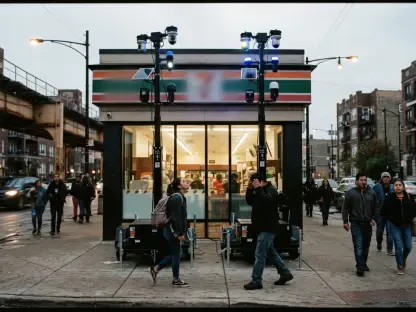

Physical AI in South Korea has shifted from lab demos to city services that answer for uptime, safety, and integration. The center of gravity is constrained autonomy that works within tight geofences when conditions are known.Kakao Mobility’s strategy converts ride-hailing muscle into Level 4 operations, embedding autonomous trips inside familiar flows. Gangnam serves as the showcase: late-night hours, mapped corridors, and dispatch through Kakao T.
Who’s Building the Future: Key Segments, Tech Stacks, and Domestic-Global Players
Automakers, AV startups, platform operators, and city partners now divide responsibilities by strengths. Vehicle redundancy and sensing meet mapping, routing, and customer access at the platform layer.Global suppliers bring sensors, compute, and toolchains, while domestic players localize ODDs, maps, and service ops. The result is a hybrid stack tuned for Korean streets and regulations.
Infrastructure as a Catalyst: Maps, Connectivity, and City Partnerships Shaping Adoption
High-definition maps and resilient connectivity are becoming public‑private utilities for autonomy. Cities that co‑manage curb space, data sharing, and incident response move faster.Kakao Mobility’s approach links HD maps and dispatch APIs with municipal support, creating a fabric where vehicles, apps, and control rooms operate as one system.
Signals of Takeoff: Trends, Proof Points, and the Business Case for Level 4
Trends Steering the Market: Physical AI Convergence, Geofenced Pragmatism, and Platform Leverage
The market favors Level 4 inside defined domains instead of unconstrained dreams. Safety-by-design and visibility tools now sit alongside machine learning.Platform leverage compresses go‑to‑market time by reusing payments, identity, and routing. That shortens feedback loops and anchors autonomy to existing demand.
Metrics that Matter: Ride Volume, Safety Records, Fleet Growth, and Forecasts for Korean AV Services
By February 2026, Gangnam’s autonomous service logged 7,754 rides with no incidents attributed to the stack. The service also shifted from free pilot to paid trips.The active fleet rose from three to seven vehicles, with reserves staged for continuity. These signals point to unit‑economics progress as utilization and trust rise.
Engineering for Reliability: The Hard Problems of Level 4 and Kakao Mobility’s Answers
The Three-Pillar Tech Stack: Perception/Planning/Control, Vehicle Redundancy, and Hybrid Validation
Perception fuses sensors for detection and tracking; planning converts scene understanding into maneuvers; control executes precisely under ODD constraints.Redundant compute, power, and actuation prevent single‑point failures, while mixed simulation and road data accelerate edge‑case discovery and model fixes.
Making Safety Visible: 3D Visualizer, 24/7 Control, and Vision-Language Anomaly Detection
A 3D visualizer shares what the vehicle “sees,” shrinking the gap between system intent and rider perception. It narrates context to reduce uncertainty.A round‑the‑clock control center monitors operations, with multimodal models flagging anomalies and prompting remote support where permitted.
Operating Within Constraints: ODD Design, Edge-Case Coverage, and Fleet Readiness at Scale
Kakao Mobility frames ODDs by road class, time window, weather, and construction patterns. That containment improves predictability and service quality.Edge‑case libraries feed training and policy updates, while playbooks for maintenance and recovery keep vehicles service‑ready at scale.
Open-Ecosystem Advantage: Shared Datasets, HD Maps, APIs, and On-Site Response to Cut Barriers
Selective data, maps, and fleet tools are offered to partners to avoid rebuilding common plumbing. That unlocks specialization on top of shared rails.On‑site response teams and platform integration lower deployment friction, aligning incentives across startups, suppliers, and cities.
Rules, Standards, and Trust: The Regulatory Framework Shaping Urban Autonomy
Licensing, Safety Cases, and Compliance Pathways for Commercial Level 4
Commercial service depends on documented safety cases that match the ODD and vehicle design. Authorities expect evidence that failure modes are contained.Kakao Mobility’s redundancy, validation results, and monitoring procedures map to compliance checkpoints and operational permits.
Data Governance and Cybersecurity: Protecting Riders, Vehicles, and City Infrastructure
Privacy controls and secure telemetry guard rider identity and vehicle integrity. Threat models now include sensor spoofing and OTA risks.Segmented networks, signed updates, and audit trails reduce attack surfaces, while retention policies align with local data rules.
Transparency and Accountability: Reporting, Oversight, and Human-in-the-Loop Requirements
Routine reporting on incidents, disengagements, and ODD updates sustains trust. Human oversight remains the backstop for ambiguity.Clear escalation paths and explainability tools help regulators, riders, and operators assess system behavior in real time.
The Road Ahead: Expansion Playbooks, Emerging Tech, and Market Disruptors
Scaling Beyond Gangnam: New ODDs, Time Windows, and Multi-City Rollouts
Expansion favors adjacent routes, slightly broader hours, and similar traffic patterns. Each step extends the validated domain without overreach.Multi‑city play demands local maps, partner alignment, and calibrated service promises so reliability holds as geography grows.
Tech on the Horizon: Foundation Models for Driving, V2X Integration, and Next-Gen Sensors
Foundation models promise broader generalization across scenes, while V2X adds foresight at intersections and work zones.Sensor progress improves range and weather robustness, tightening control margins and smoothing rides.
Consumer Adoption and Service Design: Pricing, Experience, and Blended Human-AI Operations
Transparent pricing and predictable ETAs set expectations, while the visualizer and support options build comfort.Blended operations—autonomous where ready, human where needed—optimize coverage and protect the brand.
Partnership Economics: Automakers, Insurers, Cities, and Platform Integrations
Automakers deliver safety‑ready platforms; insurers price risk with real data; cities supply access; platforms orchestrate demand.Shared upside and clear SLAs convert pilots into services that carry their own weight.
What Gangnam Proves: Strategic Takeaways, Recommendations, and Investment Outlook
Synthesis of Findings: Reliability, Safety-by-Design, and Platform-Led Adoption
Gangnam demonstrates that Level 4 can be dependable when ODDs are tight, safety is engineered end‑to‑end, and platform rails compress adoption frictions.The path shows autonomy thriving as a service, not a gadget, with transparency tools turning trust into repeat use.
Recommendations for Stakeholders: Builders, Policymakers, and Ecosystem Partners
Builders should prioritize explainability, redundancy, and hybrid validation to meet commercial thresholds. Policymakers should align permits with ODD clarity and reporting discipline.Partners should lean on shared datasets, maps, and APIs to speed differentiation, while planning joint incident response from day one.
Outlook and Milestones: From Paid Pilots to Profitable Autonomy in Defined Domains
Profitability hinged on steady utilization, clean safety records, and incremental ODD growth. Capital flowed where platform demand and city access met readiness.Gangnam’s arc—from pilot to paid rides with expanding fleets—had pointed to a repeatable playbook for scaling Level 4 services city by city.