
The once-distinct boundary between the human hand that guides the architectural brush and the digital engine that processes the underlying pixels has finally dissolved into a new paradigm of autonomous creative collaboration. Adobe has officially pivoted its technological trajectory, transitioning from the era of simple text-to-image generation toward a sophisticated ecosystem of “agentic AI” workflows. This movement signals a departure from the first wave of artificial intelligence, which functioned primarily as a novel generator of flat media. Today, the focus is on the “creative agent”—a functional assistant integrated within the flagship Creative Cloud suite and the Firefly AI studio that executes complex production tasks by interacting directly with professional software APIs.
This transition marks a fundamental shift in the identity of the digital artist, moving from a manual executor of technical tasks to a high-level orchestrator. The release of the public beta provides a first look at how Firefly is evolving into a comprehensive production layer that manages the labor-intensive aspects of the creative process. Instead of spending hours on file preparation or basic masking, designers are now empowered to delegate technical drudgery to autonomous software. This evolution ensures that the primary role of the professional remains centered on creative vision while the AI handles the programmatic execution across multiple steps and platforms.
From Pixel Pushers to Creative Directors: Redefining the Designer’s Role
The contemporary creative environment is undergoing a transformation that redefines how professionals interact with their tools. For decades, the industry standard involved a labor-intensive process where designers manually manipulated every anchor point, layer mask, and keyframe. The introduction of agentic AI changes this dynamic by allowing users to operate at a higher level of abstraction. No longer restricted to being “pixel pushers,” creators are assuming the role of creative directors who manage a fleet of specialized AI assistants. These agents are designed to understand the nuance of a request, moving beyond the interpretation of simple prompts to the execution of functional outcomes that align with professional standards.
The deployment of the public beta has demonstrated that Firefly is no longer just a standalone image generator; it is becoming a foundational production layer embedded within the software itself. This shift allows for a more fluid interaction between the user’s intent and the software’s output. By utilizing professional software APIs, these agents can perform tasks that were previously impossible for a standard generative model, such as maintaining the structural integrity of a complex vector file while applying stylistic changes. This capability ensures that the final output is not just a visual approximation but a technically sound file ready for immediate use in professional environments.
As this orchestration layer becomes more prevalent, the focus of design education and professional development is likely to shift. The value of a designer is increasingly tied to their ability to define aesthetic craft and conceptual depth rather than their speed at performing repetitive digital tasks. The transition to agentic workflows provides a solution to the burnout often associated with high-volume asset production, as the software begins to take on the burden of technical execution. Consequently, the industry is witnessing a democratization of high-fidelity production, where the barrier to entry for complex technical workflows is lowered while the premium on unique human creativity is simultaneously raised.
The Evolution Beyond Generative MediWhy Persistence and Context Matter
One of the most persistent challenges in the early stages of generative AI was the “drift” problem, where visual consistency was lost during iterative changes or across different media formats. Standard generative models often failed to meet the rigorous requirements of global brands because they lacked the ability to remember specific visual parameters or stylistic nuances. Adobe has addressed this deficiency by prioritizing contextual memory within its new agentic architecture. By ensuring that an AI agent understands the historical context of a project, the software can maintain a consistent visual identity across an entire campaign, regardless of how many individual assets are being produced.
In a professional creative environment, the necessity of visual persistence cannot be overstated. Marketing teams and agencies working for global brands require a high degree of precision to ensure that every asset—from a social media post to a large-scale billboard—remains faithful to the established brand guidelines. The new agentic workflows bridge the gap between creative vision and the mathematical precision required for professional publishing. This is achieved through a deeper understanding of the brand’s visual vocabulary, allowing the agent to apply consistent colors, fonts, and character designs across diverse digital and print media without manual intervention for every iteration.
Furthermore, the introduction of persistent session history allows teams to manage high-volume asset production with unprecedented efficiency. When a creator resumes a complex task, the agent recalls the previous decisions, prompts, and assets used in the project. This contextual awareness prevents the common frustration of having to rebuild a creative context from scratch every time a project is reopened. The result is a more stable production environment where the AI functions as a reliable partner that understands the long-term goals of a creative team, rather than a fleeting tool that provides isolated outputs without regard for the broader project scope.
The Architecture of Agency: Contextual Memory and Deep Software Manipulation
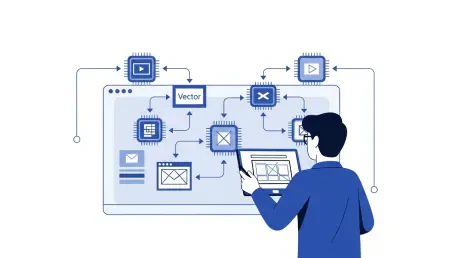
The core of Adobe’s agentic strategy lies in the creation of two specific layers: “Elements” and “Projects.” Elements act as a library of visual variables, allowing users to define specific assets—such as a recurring character or a branded product—to ensure they remain identical throughout different generations. This technological foundation provides the necessary stability for professional workflows that require exact replication. On the other hand, the Projects layer functions as the memory bank for the agent, storing session history and asset relationships. This architecture allows the software to navigate the complex Document Object Model (DOM) of applications like Photoshop and Illustrator, manipulating layers and vectors with the same logic a human designer would use.
This deep software manipulation is what distinguishes a creative agent from a standard chatbot or image generator. Instead of simply generating a new layer of pixels on top of an image, the agent can programmatically interact with the existing structure of a file. It can identify specific vector paths, adjust layer hierarchies, and modify timelines in Premiere Pro based on natural language instructions. This capability allows for a more sophisticated level of automation, where the AI doesn’t just guess what the user wants but executes precise commands within the software’s own framework. This programmatic interaction ensures that the output is non-destructive and fully editable by the human professional.
The utility of these agents extends beyond individual Adobe applications through a robust ecosystem of connectivity. Adobe has integrated its agents into major enterprise tools, including Microsoft 365 Copilot, Slack, and ChatGPT, allowing workflows to be triggered from primary communication platforms. This connectivity means that a marketing manager can initiate a localized version of a campaign directly from a Slack channel, with the Adobe agent handling the technical resizing and brand compliance checks in the background. By tailoring AI logic for the specific demands of each application while maintaining cross-platform utility, Adobe has built a framework that integrates seamlessly into the modern corporate infrastructure.
Balancing Automation with Authority: The Human-in-the-Loop Consensus
As automation becomes more pervasive, the global creator community has expressed a clear mandate regarding the role of artificial intelligence in the creative process. A survey of 16,000 professionals revealed that while a significant majority have adopted AI as an essential component of their production pipeline, 85% believe that human oversight must remain the non-negotiable standard for final decisions. This “human-in-the-loop” approach is central to Adobe’s development philosophy. The software is designed to handle the logistical “tasks” while the human professional retains control over the “taste.” This distinction ensures that the final output is not a generic machine-generated image but a refined piece of work that reflects human intentionality and craft.
From an enterprise perspective, the shift toward agentic AI also brings critical considerations regarding data governance and security. Large organizations require strict control over their proprietary brand assets and need assurances that their data is being handled according to rigorous security protocols. Adobe has responded by building agents that operate within role-based permission frameworks, ensuring that sensitive information is only accessible to authorized users. This focus on governance is essential for enterprise adoption, as it allows companies to scale their creative output without compromising the integrity of their intellectual property or violating internal compliance standards.
Moreover, the integration of agentic workflows helps to standardize creative quality across large, distributed teams. By delegating brand compliance and technical checks to an AI agent, agencies can ensure that every piece of content meets the required specifications before it reaches a human supervisor. This reduces the time spent on “pre-flight” corrections and allows creative directors to focus their energy on the strategic and conceptual elements of a campaign. The result is a more balanced workflow where the machine acts as a guardian of brand standards and technical accuracy, providing a solid foundation upon which human creators can build more ambitious and nuanced work.
A Framework for Modern Production: Scaling High-Fidelity Creative Output
The implementation of agentic AI transformed the foundational mechanics of digital production, providing teams with a scalable solution for high-fidelity output. In the video production sector, agents streamlined the traditionally slow process of media organization within Premiere Pro by automatically sorting raw footage and identifying key content segments. This automation allowed editors to bypass the manual labor of batch-renaming clips and assembling basic sequences, moving directly to the refinement of a functional “rough cut.” The ability of the agent to analyze hours of interview footage and extract specific dialogue enabled a faster turnaround for time-sensitive marketing campaigns and documentary projects.
Technical precision in vector design reached new levels of efficiency as AI agents took over the burden of repetitive geometric tasks in Illustrator. Professionals utilized these agents to perform automated pre-flight checks, identifying color profile errors and alignment issues before files were sent to print. The agents also handled the complex task of randomizing properties across thousands of vector shapes, a process that previously required custom scripting or hours of manual clicking. These advancements ensured that the final production files were mathematically perfect and fully compliant with the rigorous technical standards of modern digital and physical publishing.
Large-scale publishing workflows in InDesign saw a similar transformation, where brand-wide updates were applied across multi-page layouts through single-trigger commands. Teams leveraged the “Adobe for creativity connectors” to initiate these workflows from within their existing project management tools, drastically reducing the time required to update global assets. This shift solidified a new production framework where speed and scale no longer came at the expense of quality. As the industry moved forward, the focus remained on the synergy between human judgment and agentic execution, ensuring that the next generation of creative tools prioritized the intent of the artist above all else.