



Market realities have pushed the next iteration of the Vision Pro headset to a tentative 2028 release while the company focuses on miniaturizing technology into wearable glasses. As the tech giant moves through 2026, it has finalized a restructuring plan involving the reduction of approximately 200 positions across specialized engineering sectors. This reallocation of talent is not merely a cost-cutting measure but a fundamental shift in how the organization conceptualizes the future of personal computing. The transition away from high-resource spatial hardware toward a more agile, AI-driven framework signals a realization that the previous trajectory lacked the scalability required for mass-market adoption. By streamlining the Siri and software engineering divisions, the company aims to rectify the perception that its internal intelligence layers have fallen behind more aggressive competitors. This strategic pivot ensures that the focus remains on integrating generative intelligence directly into the core user experience rather than relying solely on bulky peripherals.
Scaling Back the Spatial Computing Ambitions
The recent reorganization marks a significant retrenchment for the mixed-reality initiative, which initially launched with the promise of fundamentally altering how humans interact with digital environments. However, the economic reality of a high-priced consumer product has forced a tactical retreat from the “spatial computing at any cost” philosophy. Apple has encountered a classic chicken-and-egg problem where the narrow user base, restricted by the hardware’s premium entry cost, has made third-party developers hesitant to invest in bespoke content. To mitigate this ongoing financial risk, the company is shifting its internal focus from being a primary content creator to acting as a robust platform provider. This means scaling back expensive internal projects, such as specialized immersive video production and proprietary gaming studios, in favor of a model that incentivizes external partners to populate the ecosystem. This leaner approach allows for a reduction in immediate overhead while preserving the technological foundation for the future.
Despite these reductions, the organization is not abandoning its spatial computing roadmap; instead, it is refining the device’s role within the broader hardware portfolio. The Vision Pro is being repositioned as a high-end tool specifically designed for developers, industrial designers, and niche professional sectors rather than a broad consumer entertainment device. This “cooling off” period is strategic, allowing the company to maintain its technological edge while waiting for component costs to decrease and battery efficiency to increase. By delaying a mass-market successor until 2028, the engineering teams can focus on solving the ergonomic challenges that have historically limited prolonged usage. The goal is to ensure that when a successor finally arrives, the market will be more receptive and the software ecosystem more mature. This shift reflects a pragmatic understanding that revolutionary hardware requires a slow build rather than an immediate, universal takeover of the consumer electronics market.
Modernizing Siri for the Generative Intelligence Landscape
The layoffs within the Siri and software teams represent a profound technical overhaul rather than a simple divestment from voice-activated assistance. Leadership has determined that the legacy, rule-based systems that once defined the assistant are no longer sufficient in an era dominated by large language models. This transition necessitates a different set of engineering skills, leading the company to swap general software roles for specialists who focus on neural networks and deep learning. The objective is to transform the assistant from a basic, command-triggered tool into a sophisticated, proactive partner capable of complex reasoning and context-aware interactions. This rebuilding process involves gutting the old architecture to make way for a more flexible framework that can process natural language with significantly higher accuracy. By prioritizing these new capabilities, the company is positioning its voice interface to serve as the primary navigator for a complex, AI-powered operating system.
This technical evolution is orchestrated by the Intelligent Systems Experience team, which is now tasked with embedding generative features into every aspect of the software environment. Whether a user is managing a calendar, editing photos, or drafting complex professional correspondence, the goal is to provide a seamless, invisible layer of intelligence that anticipates needs before they are explicitly stated. By streamlining these engineering teams, the company is addressing the urgent competitive pressure from entities like Google and OpenAI, who have rapidly advanced the state of generative models. The integration of these features across the entire device ecosystem ensures that the massive existing hardware footprint is finally supported by a modern and capable intelligence layer. This focus on “ambient” intelligence suggests a future where technology works silently in the background, reducing the cognitive load on the user while increasing the utility of every interaction within the ecosystem.
Transitioning to Lightweight Augmented Reality Wearables
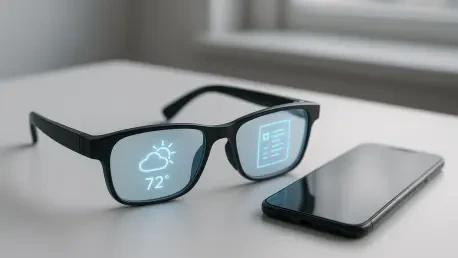
As the hardware roadmap adjusts, the company is placing an increased priority on the development of lightweight smart glasses that offer a more integrated experience than bulky headsets. Unlike the current mixed-reality offerings, which can feel isolating and restrictive, smart glasses are being designed to blend digital information into the user’s daily life through a socially acceptable and ergonomic form factor. Leadership views this “glasses” model as having a much higher ceiling for mass-market adoption because these devices are intended to function as intuitive extensions of the iPhone and Apple Watch. By leveraging the processing power of existing devices, the glasses can remain thin and light, focusing on heads-up displays and subtle notifications rather than full-world immersion. This transition confirms a strategic bet on augmented reality as a utilitarian tool rather than just a medium for entertainment, catering to users who want digital assistance without losing touch with their physical surroundings.
The development of these smart glasses, which are currently being targeted for a potential 2027 release, emphasizes utility and daily convenience over cinematic immersion. Engineering efforts are focused on creating high-resolution AR overlays that provide navigation, real-time translation, and contextually relevant data without obstructing the wearer’s view. This direction favors a design that people can wear all day in a variety of professional and social settings, moving away from the “event-based” usage of larger VR headsets. By prioritizing a device that fits the traditional aesthetic of eyewear, the company is attempting to lower the barrier to entry for wearable computing. This evolution highlights a future where digital information is layered onto the real world in a subtle, helpful manner, enhancing the user’s environment rather than replacing it. The focus on miniaturization and thermal efficiency in this project is currently drawing resources from the more experimental wings of the visionOS department.
Developing a Strategic Blueprint for Long-Term Innovation
Ultimately, the recent restructuring reveals a consensus that the organization is adopting a much more pragmatic approach to long-term innovation. By reallocating capital from high-cost hardware content to generative intelligence engineering, the company is ensuring that every structural change serves the ultimate goal of faster platform integration. The focus has shifted from sheer headcount growth to efficiency and the development of high-impact projects that can be deployed across hundreds of millions of devices. This evolution ensures that the remaining teams are focused on the most critical technologies that will define the next decade of personal electronics, rather than chasing speculative trends with no clear path to profitability. The move signals a maturing of the corporate strategy, where the ambition to create new product categories is balanced against the necessity of maintaining a cohesive and intelligent software ecosystem that provides immediate value to a global user base.
The transition from a solitary innovator of hardware to a refined infrastructure provider defined the success of this restructuring phase. Apple applied the lessons learned from the initial spatial computing experiments to a new generation of products that favored miniaturization and deep intelligence integration. This strategic evolution marked the beginning of a balanced, AI-first chapter where the interface between humans and computers became more natural, invisible, and woven into the fabric of everyday life. By focusing on smart glasses and large language models, the company successfully bridged the gap between its world-class hardware and the cutting-edge software capabilities demanded by modern users. The decision to prioritize utility and wearability over immersion paved the way for a more sustainable hardware cycle. Developers eventually found a more stable environment for creation, while consumers benefitted from a suite of devices that enhanced their daily routines through subtle, proactive assistance.







