
Laurent Giraid stands at the intersection of human intuition and algorithmic precision, bringing years of expertise in artificial intelligence and natural language processing to the table. As a technologist deeply invested in the ethics of machine learning, he has watched the barrier between complex coding and business vision dissolve. Today, we discuss the emergence of “vibe-coding” and tools like Wingman, which have already enabled eight million founders across 190 countries to ship production-ready software. We explore the shift from manual programming to directing autonomous agents, the critical importance of trust boundaries in privacy, and the future of a world where anyone can deploy an “always-on” team to handle the relentless influx of daily tasks.
When transitioning from traditional development to “vibe-coding,” how does the workflow change for a non-technical founder, and what specific steps are necessary to ensure that natural language instructions result in a production-ready application?
The workflow shifts fundamentally from writing syntax to articulating a vision, where the primary labor is “elucidating” needs in a person’s native language rather than debugging lines of logic. A founder no longer needs to be a master of brackets and semicolons; instead, they act as a director for a team of agents that interpret their “vibe” to build full-stack or mobile applications. To ensure the output is production-ready, the process relies heavily on an iterative loop where the AI scrapes the internet for existing code, randomizes it, and alters it to fit the user’s specific goals. Users often find themselves using compute token credits to run multiple iterations, refining the output until the tone and functionality feel exactly right. It is a sensory experience of watching an application materialize through conversation, though it requires the user to be highly specific about their end goals to avoid the AI drifting off-course.
Using autonomous agents to manage communication platforms like WhatsApp or iMessage introduces significant privacy risks. How do “trust boundaries” function to prevent unauthorized data deletion or messaging, and what are the practical trade-offs when requiring human intervention for these sensitive tasks?
Trust boundaries act as a vital safety architecture that separates mundane background tasks from high-stakes actions that could damage a user’s reputation or data integrity. For instance, while an agent might autonomously schedule a meeting on a calendar, it is strictly programmed to pause and seek a human “go-ahead” before deleting data or sending messages to groups on Telegram or WhatsApp. This creates a physical checkpoint where the human operator must review the agent’s intent, ensuring that no “rogue” messages are dispatched under the founder’s name. The trade-off is a slight reduction in pure speed, as the “always-on” team must wait for human input, but this friction is necessary to maintain the persona of a “trusted operator.” Without these boundaries, the risk of an AI misinterpreting a sensitive context and clearing out a CRM or misfiring a text to a client would be far too high for a professional environment.
Automating backend elements like API calls and key exchanges allows users to build software without seeing the underlying code. How can a platform maintain security during these “under the hood” operations, and what metrics should be used to verify that the connections remain stable over time?
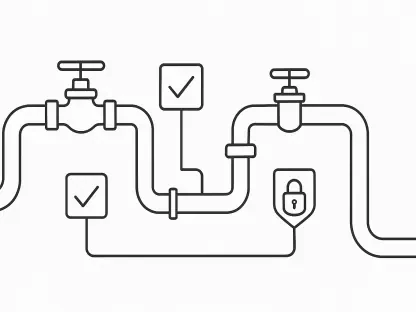
The platform maintains security by abstracting the “plumbing”—the API calls and key exchanges—away from the user and handling them through a secure, centralized integration hub. This ensures that a citizen developer doesn’t accidentally expose sensitive credentials or misconfigure a connection to essential tools like GitHub or their email provider. Stability is verified by the seamless flow of data “out of the box,” where the metric of success is the lack of friction in daily task execution across different apps. If an integration to a CRM or a calendar tool fails, the “under the hood” management system should ideally alert the user or attempt a silent reconnection using modern, web-native technologies. This allows the user to remain focused on the “front end” of their business while the complex digital handshakes happen in the background, invisible but robust.
Many citizen-developed tools rely on code scraped from the internet that is then randomized and altered to fit a user’s goals. What are the implications for software reliability and maintainability, and how can a non-technical user effectively navigate a code review process they may not fully understand?
This reliance on scraped and randomized code creates a “black box” scenario where the software might work perfectly today but become “impenetrable” when it comes time for maintenance or security audits. For a hobbyist solving a local problem, this might be acceptable, but for a business shipping a product for wider consumption, the assumption of inherent safety is a major gamble. Platforms attempt to mitigate this with a “code review” feature, yet these details are often best interpreted by those who are already technically well-versed, leaving the non-technical founder in a difficult position. The user must rely on the “veracity” of the AI’s interpretation, which can feel like walking on thin ice if you don’t understand the underlying logic. Ultimately, while these tools are excellent for productivity, they currently struggle to match the “safety, reliability, and repeatability” of software written by experienced professionals who understand the long-term lifecycle of code.
Users can choose between top-tier models from ChatGPT or Anthropic and lower-cost proprietary AI instances. How should a business owner determine which model is appropriate for a specific task, and what are the long-term performance consequences of prioritizing cost-savings over advanced reasoning?
The decision usually rests on the complexity of the “reasoning” required; for instance, a founder might choose a $20 monthly plan for basic task automation but find they need the advanced logic of a premium model for complex full-stack development. If a business owner prioritizes cost-savings by using a lower-tier proprietary instance, they might encounter more frequent errors or “hallucinations” that require constant human correction. In the long run, saving $180 a month could actually cost more in lost time if the AI cannot handle the nuance of a specific task, leading to a “cluttered” workflow. Advanced models from ChatGPT or Anthropic offer a more sophisticated “tone” and better adherence to instructions, which is essential when the agent is acting as a “trusted operator” in front of clients. Therefore, the higher-cost models are often a better investment for production-ready applications where the cost of a mistake outweighs the monthly subscription fee.
Persistence windows allow agents to remember context without the user repeating instructions. How does this short-term memory impact the efficiency of scheduling complex tasks, and what happens to the workflow if the context window is lost or becomes cluttered with irrelevant data?
The “window of persistence” is the secret sauce of efficiency, as it prevents the frustrating experience of having to repeat contextual instructions to the LLM for every new task. This short-term memory allows an agent to understand that a “meeting with the team” refers to the same people discussed ten minutes ago, making the scheduling of complex, multi-app tasks feel fluid and natural. However, if this context window becomes cluttered with irrelevant data or is lost entirely, the agent loses its “train of thought,” and the user must re-explain the entire situation. This creates a sensory jar to the workflow—suddenly, your “always-on” team feels like a stranger who has forgotten everything about your business. Keeping this window clean and focused is the difference between a tool that feels like an extension of your mind and one that feels like another “tool to manage.”
What is your forecast for the future of citizen development and autonomous software agents?
I forecast a future where the “citizen developer” becomes the standard for entrepreneurship, and the eight million founders we see today will grow into a global movement of hundreds of millions. We are moving toward a world where the ability to “elucidate” a problem in your native language is the only barrier to entry for creating a software empire. While we must address the “opaque” nature of AI-generated code and the security risks it poses, the sheer power of having a background team handling the “smaller tasks” will prove too transformative to ignore. We will see “trust boundaries” become even more sophisticated, allowing for a safer, more “production-ready” output that can finally stand alongside professional engineering. Eventually, software development will be less about the “how” of coding and entirely about the “why” of the user’s vision.