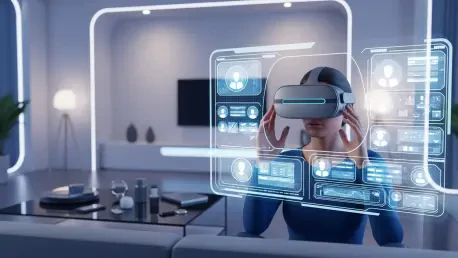

The rapid proliferation of standalone virtual reality headsets across the United States has fundamentally altered the way millions of Americans engage with digital content on a daily basis. This shift is not merely a change in display technology but represents a total migration of the human experience into spatial computing environments that prioritize presence over observation. While previous years saw VR as a secondary peripheral, the landscape in 2026 reveals a market where high-fidelity, wireless devices are as ubiquitous as traditional consoles. The integration of advanced haptic feedback and eye-tracking technology has allowed developers to create experiences that respond intuitively to user behavior, blurring the lines between physical reality and digital simulation. As a result, the entertainment industry is witnessing a decline in traditional flat-screen gaming engagement in favor of immersive worlds that offer social connectivity and physical movement. This transformation is driven by a massive surge in investment from major tech conglomerates, aiming to capture the growing audience of spatial media consumers.
Evolution of Hardware: Redefining the User Interface
The current technological landscape is defined by the widespread adoption of Micro-OLED displays and Wi-Fi 7 connectivity, which have effectively eliminated the latency and resolution issues that previously hindered immersion. High-performance chipsets, such as the latest Snapdragon XR series, enable mobile headsets to deliver graphical fidelity that rivals high-end gaming PCs from just a few years ago. By removing the need for external sensors or cumbersome cables, manufacturers have lowered the barrier to entry for the average consumer, making VR a staple in American living rooms. Furthermore, the development of pancake optics has significantly reduced the weight and bulk of headsets, allowing for extended play sessions without physical discomfort. This ergonomic evolution is crucial for the mainstreaming of the medium, as it caters to a broader demographic beyond the hardcore gaming community. The result is a more inclusive digital environment where diverse age groups can interact with complex virtual systems through natural gestures rather than convoluted button combinations.
Beyond visual clarity, the focus has shifted toward total sensory engagement through sophisticated haptic feedback systems and spatial audio algorithms. Modern wearable peripherals, including haptic vests and gloves, provide users with physical sensations that correspond to their virtual interactions, such as the recoil of a weapon or the texture of a digital surface. These advancements are complemented by AI-driven spatial audio that accurately mimics how sound waves travel in the real world, grounding the user in a three-dimensional acoustic space. This holistic approach to immersion ensures that the brain accepts the virtual environment as a tangible reality, increasing the emotional impact of narrative storytelling. As these hardware components become more affordable between 2026 and 2028, the industry anticipates a transition from simple visual entertainment to full-body experiential media. This movement is supported by standardizing APIs across different platforms, which allows for more seamless integration of third-party peripherals into a wide variety of software titles.
Socioeconomic Shifts: The Path to Immersive Integration
The transformation of digital entertainment is most evident in the evolution of social interaction, where static profiles are being replaced by dynamic avatars in persistent virtual hubs. Platforms like Horizon Worlds and VRChat have transitioned from experimental playgrounds into primary social outlets where users host live events, attend virtual concerts, and conduct business meetings. This shift toward spatial social media allows for a level of non-verbal communication that was previously impossible. Alongside this social migration, the emergence of a robust creator economy allows individuals to design and sell virtual assets, creating new revenue streams for artists and developers. This decentralized marketplace is supported by secure transaction protocols that ensure the authenticity of digital goods, encouraging users to invest in their virtual identities. Brands have recognized this potential, launching virtual storefronts that offer exclusive digital versions of physical products, effectively bridging the gap between the two worlds.
The period leading up to 2026 proved that the success of immersive entertainment relied heavily on the synergy between intuitive hardware and high-quality, diverse content. Industry leaders recognized that technical specifications alone were insufficient to maintain long-term user engagement; instead, they focused on creating meaningful social and emotional connections within virtual spaces. Developers who prioritized cross-platform compatibility and accessible user interfaces captured the largest market share, as they lowered the friction for new participants. Looking toward the horizon between 2026 and 2028, the next logical step involved the integration of augmented reality features into standard VR headsets to create truly hybrid experiences. Stakeholders sought to refine the spatial operating system, ensuring that users could transition seamlessly between work, play, and social interaction without removing their devices. To stay competitive, creators invested in spatial audio design and haptic integration as foundational elements of the development process.