


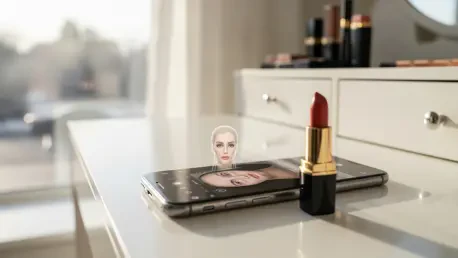

When a user swipes through a digital interface to find the perfect shade of crimson lipstick, they are no longer just browsing a catalog but engaging with a sophisticated neural network designed to understand human aesthetics. At the VivaTech conference, L’Oréal and OpenAI unveiled a strategic partnership that transforms ChatGPT from a simple chatbot into a sophisticated virtual beauty consultant. By integrating ModiFace augmented reality technology directly into the ChatGPT conversational interface, Maybelline New York now allows nearly a billion weekly active users to test products digitally before making a purchase.
This shift represents more than just a new feature; it is the moment beauty moved from physical application to algorithmic precision. While high-end department stores were once the primary destination for personalized beauty advice, the focal point of the industry has shifted to the digital interface. By embedding these tools within a platform that consumers already visit for daily tasks, the barrier between curiosity and commerce is effectively dismantled, making professional-grade consultation accessible to anyone with a smartphone.
Redefining the Makeup Counter in the Age of 900 Million Users
The transition toward digital-first consultations reflects a broader move to meet consumers where they spend the majority of their time. By utilizing OpenAI’s expansive infrastructure, L’Oréal is able to scale its ModiFace technology to a global audience, providing high-fidelity virtual try-ons that were previously limited to standalone apps or specific websites. This integration ensures that the recommendation engine understands not only the visual data of a user’s face but also the context of their specific requests and beauty concerns.
Furthermore, this collaboration turns a passive search for beauty products into an interactive dialogue. Instead of scrolling through static images, shoppers can ask the AI for suggestions that complement their skin tone or current fashion trends. This level of engagement mimics the experience of speaking with a professional makeup artist, providing a sense of personalized care that was once difficult to replicate at scale in the digital realm.
The Digital Pivot: Why Personalized AI Is Reshaping the Global Beauty Market
The necessity for this collaboration is rooted in a fundamental shift in consumer behavior, where e-commerce now accounts for over 30% of L’Oréal’s total sales. Traditional online shopping often lacks the tactile reassurance of trying on a lipstick or testing a foundation shade, leading to high return rates and consumer hesitation. By leveraging OpenAI’s massive scale and reasoning capabilities, L’Oréal is addressing these pain points head-on to bridge the gap between digital convenience and physical certainty.
This partnership reflects a broader trend where beauty brands must evolve into tech-first companies to maintain relevance in a market that values instant, hyper-personalized digital experiences. As consumers demand higher levels of customization, the ability to provide accurate, real-time recommendations becomes a critical competitive advantage. The integration of advanced AI ensures that every interaction is tailored to the specific profile of the individual user, reducing the friction typically associated with finding the right cosmetic match.
A Multifaceted Collaboration: Merging Consumer Tools With Deep Science
The scope of this partnership extends far beyond virtual try-ons, touching every layer of the beauty value chain from marketing to microbiology. On the consumer side, brands like Lancôme and Kérastase are optimizing their presence within ChatGPT to capture searches at the moment of intent, while SkinCeuticals and CeraVe pilot AI-native advertising. These tools allow the company to provide relevant advice exactly when a user expresses a need, creating a seamless path from an initial inquiry to a verified solution.
Behind the scenes, the collaboration enters the laboratory through GPT-Rosalind, a specialized reasoning model used to map the skin microbiome for La Roche-Posay. This scientific push is further bolstered by partnerships with IBM and NVIDIA, creating a tech stack that supports everything from predictive product formulation to high-fidelity 3D rendering. This convergence allows the company to accelerate the research cycle, bringing more effective products to market with greater speed than traditional methods allowed.
Scientific Rigor and Strategic Insights From the Frontlines of Innovation
Asmita Dubey, L’Oréal’s Chief Digital and Marketing Officer, notes that these initiatives are designed to create a unified ecosystem where AI supports both the consumer journey and internal daily operations. This vision is grounded in tangible data, such as the successful deployment of “CreAItech,” a platform that ensures brand-consistent content production at scale. By grounding AI development in peer-reviewed scientific research—specifically targeting beneficial bacteria for skincare—the partnership moves beyond novelty territory and into the realm of evidence-based beauty.
This fusion of OpenAI’s processing power with L’Oréal’s historical database of skin profiles provides a level of precision previously unavailable to the industry. The ability to cross-reference millions of data points allows the AI to offer insights that are not only personalized but also scientifically sound. This strategic alignment ensures that every digital innovation serves a dual purpose: enhancing the customer experience while simultaneously refining the internal research and development capabilities of the organization.
Building an AI-Native Ecosystem: Lessons From L’Oréal’s Digital Playbook
For organizations looking to replicate this success, the L’Oréal model provided a clear framework for large-scale digital integration. The company upskilled 73,000 employees in generative AI, ensuring that the technology was not just a tool for the executive suite but a foundational skill for the entire workforce. This strategy prioritized the deployment of internal tools like L’OréalGPT to streamline workflows while simultaneously running external pilots to capture real-time consumer data and feedback.
By balancing internal cultural transformation with high-visibility technological partnerships, L’Oréal demonstrated that the future of beauty lay in the ability to harmonize human creativity with machine intelligence. This approach established a blueprint for how legacy brands could navigate the transition into an AI-native world without losing their heritage. Moving forward, the focus shifted toward refining these algorithms to ensure ethical standards and inclusivity remained at the heart of digital beauty, setting a new standard for the industry at large.







