


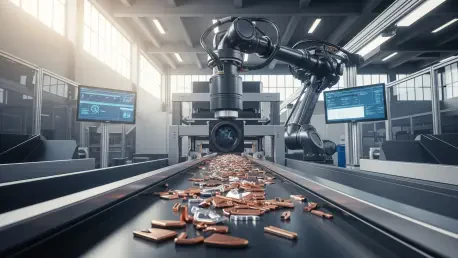

The global metal recycling industry faces a daunting reality where manual sorting processes often fail to keep pace with the massive influx of complex electronic and industrial waste. Traditional methods rely heavily on human labor and magnetic separation, which struggle to distinguish between various non-ferrous alloys with the precision required for high-grade manufacturing. At Millikin University, a cohort of ambitious MBA students has stepped into this technological gap, developing a sophisticated artificial intelligence framework designed to revolutionize how scrap facilities identify and categorize materials. Their project addresses a critical bottleneck in the supply chain by integrating computer vision algorithms that can analyze surface textures, spectral signatures, and historical pricing data in real time. This initiative serves as a bridge between academic theory and industrial application, proving that advanced data science can significantly reduce contamination rates while boosting the profitability of local recycling centers within the current economic climate. By leveraging deep learning models, these students are creating a blueprint for a more efficient and sustainable approach to resource recovery.
Bridging the Gap: Integrating Machine Learning Into Scrap Management
The core of the Millikin project involves a multi-layered neural network trained on thousands of images representing different stages of metal degradation and various alloy compositions. Unlike standard automated systems that might only differentiate between ferrous and non-ferrous metals, this AI-driven solution utilizes high-resolution cameras to detect subtle differences in color, shape, and oxidation levels. The students worked closely with regional scrap yards to gather data, ensuring the model reflects the actual conditions of dusty, outdoor environments where traditional sensors often fail. This robust dataset allows the system to achieve an accuracy rate that rivals experienced human sorters but at a fraction of the time and cost. Furthermore, the integration of edge computing means that the processing happens locally on the equipment, minimizing latency and allowing for instantaneous sorting decisions. This technological leap ensures that materials are routed to the correct processing stream immediately, preventing the expensive down-cycling of high-value aluminum and copper.
Beyond the technical specifications, the business logic embedded within the software allows recycling managers to make data-driven decisions regarding inventory and market fluctuations. The student-led team developed a dashboard that syncs the sorting data with global commodity prices, enabling facilities to prioritize the processing of metals that are currently seeing a surge in demand. This dynamic approach transforms a traditionally reactive industry into a proactive one, where operational flow is dictated by real-time economic indicators rather than guesswork. Moreover, the system provides detailed analytics on the quality of incoming scrap from various suppliers, allowing businesses to negotiate better rates based on historical purity levels. By automating the documentation process, the AI reduces the administrative burden on facility staff, allowing them to focus on safety and higher-level maintenance tasks. This holistic integration of artificial intelligence does not merely replace manual labor but rather augments the entire business structure of the recycling plant.
Overcoming Obstacles: Industrial Resistance and Technical Hurdles
Transitioning a theoretical model into a harsh industrial environment required the students to account for variables that are rarely present in a controlled laboratory setting. Dust, varying light conditions, and the sheer physical vibration of heavy machinery posed significant threats to the sensitive optical equipment used by the AI system. To counter these issues, the Millikin team engineered specialized protective housing and implemented image-enhancement algorithms that can see through debris and poor lighting. These adaptations were crucial for gaining the trust of facility operators who were initially skeptical of how delicate software would perform alongside hydraulic shears and industrial shredders. The project also had to address the compatibility of new AI software with legacy hardware that has been in service for decades. This necessitated the development of custom APIs that could bridge the gap between 2026-era computing power and the aging mechanical controllers found in many mid-sized recycling centers. By solving these practical problems, the students demonstrated that modernization does not always require a total replacement of existing infrastructure.
Stakeholders in the metal industry recognized that the successful pilot program provided a clear path forward for those seeking to modernize their operations through artificial intelligence. The Millikin MBA students established a framework that prioritized small-scale testing before proceeding to full-system integration, a strategy that minimized risk and allowed for iterative improvements based on field performance. Industry leaders were encouraged to invest in modular AI solutions that could be retrofitted onto existing machinery rather than waiting for entirely new facilities to be built. It was discovered that the primary factor in a successful rollout was the commitment to employee retraining, ensuring that the human element remained central to the technological transition. Moving forward, the focus shifted toward establishing industry-wide data standards to facilitate better communication between different AI platforms. By focusing on these practical applications, the academic project transitioned into a viable commercial model that redefined the intersection of business education and industrial innovation for the current era.







