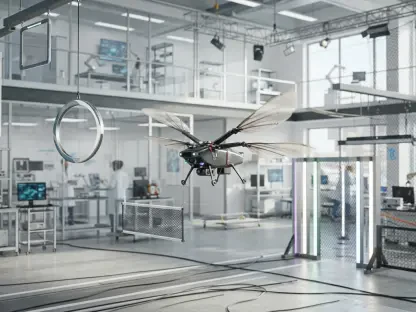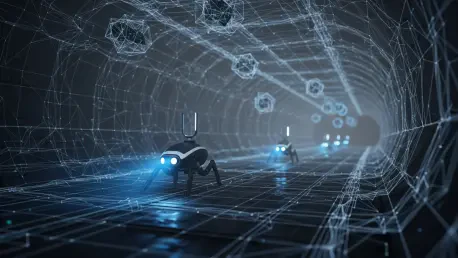

A palm-sized drone navigating through the dark, twisted corridors of a collapsed industrial site requires an internal map that is both incredibly detailed and remarkably energy-efficient. For years, the dream of deploying truly autonomous, insect-scale robots has been grounded by the immense power required for 3D spatial awareness. However, a breakthrough from the Massachusetts Institute of Technology has introduced a new silicon architecture called Gleanmer. This system-on-a-chip allows miniature machines to reconstruct their surroundings in three dimensions while consuming less power than a single small LED.
The 6-milliwatt milestone achieved by the Gleanmer chip marks a radical departure from existing robotic hardware. By operating at such an incredibly low energy threshold, the chip enables robots to maintain a persistent, high-fidelity model of their environment without draining their tiny batteries in seconds. This advancement shifts the paradigm of robotic design away from heavy, power-hungry processors and toward a future where fully autonomous machines can fit in the palm of a hand. These miniature explorers are now capable of visual navigation in real-time, opening the door for complex missions in environments previously inaccessible to larger drones.
The transition to ultra-low-power mapping is not merely a hardware upgrade but a fundamental shift in how machines perceive space. In the current landscape of robotics, the ability to “see” and “remember” an environment is the most significant hurdle for miniaturization. When a robot can process spatial data locally at such a low cost, it gains a level of independence that was previously reserved for much larger platforms. This move toward decentralized, on-board intelligence ensures that even the smallest machines can operate reliably without a constant tether to more powerful external computers.
The Energy Barrier: Why Miniature Robots Struggle to See in 3D
The primary obstacle preventing tiny robots from achieving true autonomy has always been the prohibitive computational cost of spatial awareness. Traditional 3D mapping systems require a massive amount of data processing to convert sensor inputs into a coherent digital environment. For a robot to navigate safely, it must constantly identify walls, obstacles, and empty spaces, a task that typically necessitates high-performance GPUs or specialized processors. For a miniature drone, the weight of a battery large enough to support such hardware would make flight impossible, creating a “catch-22” for roboticists.
Battery constraints dictate every aspect of miniature drone design, from the torque of the motors to the efficiency of the sensors. When a processor consumes dozens of watts, the operational window of a small drone shrinks to a few minutes, which is insufficient for any practical application. Consequently, most tiny robots have been relegated to simple, reactive movements or teleoperation. The lack of on-board spatial intelligence means these machines cannot perform the sophisticated reasoning needed to navigate through complex, unpredictable terrains like disaster zones or intricate industrial piping.
The real-world implications of this energy barrier are felt most acutely in sectors like industrial safety and search-and-rescue. In a scenario where a hazardous gas leak occurs in a dense refinery, a fleet of small drones could theoretically identify the source of the leak much faster than a human team. However, without the ability to build and navigate a 3D map locally, these drones would likely crash or lose connection with their controllers. Solving the energy problem for 3D mapping is therefore a prerequisite for the next generation of life-saving autonomous technologies.
From Voxels to Gaussians: Reimagining Digital Geometry for Efficiency
To overcome these hurdles, the MIT researchers identified a major source of memory waste in traditional 3D mapping: the voxel. Traditional systems represent the world using voxels, which are essentially 3D pixels shaped like cubes. While voxels provide a clear visualization of an environment, they are incredibly rigid and memory-intensive. Storing the state of millions of tiny cubes, most of which represent empty air or the interior of solid objects, requires significant storage and constant data movement, both of which consume electricity at a high rate.
In a clever departure from this method, the Gleanmer chip utilizes ellipsoid Gaussians to represent geometry. Instead of filling space with cubes, the system represents surfaces as flexible, stretched blobs. This mathematical shift allows the robot to describe complex surfaces with a fraction of the data required by voxels. A single, well-placed Gaussian can represent a long stretch of a flat wall or the curve of a pipe, whereas the same area would require thousands of individual voxels. By utilizing these flexible geometric shapes, the digital mapping footprint is drastically reduced, allowing the entire environment to be stored in a very small memory space.
This reimagined geometry does more than just save memory; it simplifies the way the robot interacts with the world. Because the Gaussians are defined by mathematical parameters rather than a fixed grid, the chip can update the map much faster as the robot moves. This efficiency is critical for maintaining high speeds during flight. Moreover, the Gaussian approach allows for a smoother representation of surfaces, which helps the robot’s planning software identify clear paths through narrow openings with greater precision and less computational effort.
Efficiency Through Single-Pass Processing and Unified Chip Architecture
The hardware behind this innovation is a testament to the power of strategic co-design. The researchers developed the GMMap algorithm to work in perfect harmony with the Gleanmer chip. One of the most energy-intensive parts of mapping is “multi-pass” processing, where a system must scan the same data multiple times to refine its accuracy. In contrast, the GMMap algorithm performs real-time pixel processing in a single pass. As the robot’s sensors capture new information, the chip immediately integrates it into the Gaussian model, discarding the raw sensor data almost instantly to prevent memory bottlenecks.
Strategic hardware-software co-design minimized energy waste by eliminating the need for frequent data transfers between the processor and external memory. In standard computing architectures, moving data back and forth is often more expensive than the actual computation itself. The Gleanmer chip keeps data local by utilizing specialized on-chip memory banks that sit directly adjacent to the processing cores. This unified architecture ensures that the most relevant mapping data is always within reach, slashing the power consumption associated with data retrieval and storage.
By keeping the process entirely on-chip, the system avoids the latencies and power spikes associated with traditional memory buses. This “local-first” approach is essential for Edge AI, where the goal is to perform all necessary logic at the point of data collection. The result is a mapping system that functions as a streamlined pipeline: sensor data enters, the 3D model is updated in a single pass, and the unnecessary raw information is purged. This fluid architecture allows the robot to remain responsive to its environment without the lag that typically plagues complex autonomous systems.
Analyzing the DatHow Gleanmer Achieved a 97.5% Power Reduction
The core research findings from Professors Vivienne Sze and Sertac Karaman revealed just how transformative the Gleanmer chip is compared to previous standards. In empirical benchmarks, the chip demonstrated its ability to reconstruct diverse 3D environments while consuming only about 6 milliwatts. When compared to the current industry standards for high-performance mapping chips, this represented a staggering 97.5% reduction in power. This level of efficiency means that 3D mapping, once the most taxing part of a robot’s operation, is now one of the least demanding tasks.
Beyond the mapping itself, the Gleanmer chip provided secondary benefits that significantly boosted the robot’s overall performance. Because the Gaussian-based maps are so compact and mathematically efficient, the robot was able to reuse this data for path planning with minimal overhead. The researchers found that calculating a safe trajectory through a Gaussian map required 80% less energy than planning a path through a traditional voxel-based map. This compound efficiency ensured that the robot saved power at every stage of the navigation process, from perception to movement.
The validation of these results involved testing the system against a wide range of indoor and outdoor datasets. In every scenario, the Gleanmer architecture maintained high accuracy while staying well within its micro-watt power budget. This reliability proved that the chip was not just a laboratory curiosity but a practical solution for real-world deployment. By demonstrating that high-fidelity 3D awareness could be achieved on such a slim budget, the MIT team established a new baseline for what is possible in the field of low-power embedded systems.
Practical Applications for Edge AI in Drones and Lightweight Wearables
The deployment of tiny unmanned aerial vehicles (UAVs) equipped with Gleanmer technology could revolutionize several industries. For instance, in the field of industrial maintenance, these small drones could be used for autonomous inspections of hazardous sites, such as offshore oil rigs or chemical plants. Their ability to zip through tight spaces and detect industrial leaks without human intervention would drastically reduce the risk to personnel. Because they can map their own way, they do not require a GPS signal, making them ideal for underground or indoor environments where satellite signals are blocked.
Another promising application lies in the world of augmented reality (AR) and lightweight wearables. One of the biggest challenges for AR glasses is the weight and heat generated by the processors needed for spatial awareness. By integrating Gleanmer’s low-power mapping technology, manufacturers could extend the battery life of these devices while making them much more comfortable for all-day wear. The glasses could maintain a perfect understanding of the user’s room and furniture using very little energy, allowing for more immersive and stable digital overlays without the need for a bulky battery pack.
The development of this chip also provided a framework for integrating spatial intelligence into the next generation of miniature robotics, from medical nanobots to smart home sensors. As the technology matured, the research team looked toward moving the processing units even closer to the sensors to further reduce data transfer delays. The Gleanmer chip represented a critical step toward making spatial awareness a “free” resource for small machines. By solving the energy equation for 3D mapping, the MIT team successfully cleared the path for a new era of autonomous, intelligent machines that were finally small enough to go anywhere.