
Experienced agricultural workers and automated sensors agreed on fruit maturity only seventy-five percent of the time, leading managers to consistently favor human judgment over algorithmic data. This discrepancy highlighted a persistent gap in the push toward full agricultural automation, which many industry observers expected to be resolved by the middle of this decade. Despite the proliferation of sophisticated sensors and robotic harvesters, the transition from controlled laboratory environments to the chaotic reality of an active orchard remained fraught with difficulty. A comprehensive study by the University of California, Davis, involving sixteen different fruit-growing operations and hundreds of interviews, revealed that technology developers often underestimated the environmental volatility of the field. Farms are not static manufacturing floors; they are dynamic ecosystems where fluctuating weather and irregular tree growth patterns create a “last mile” hurdle that automated systems cannot easily clear without significant human oversight and expertise.
The Persistence of Human Judgment in Field Operations
Computer vision systems designed to count fruit often struggled with the visual density of foliage and the subtle nuances of tree health. While algorithms processed massive amounts of visual data, they frequently lacked the contextual awareness that an experienced ranch manager applied instinctively. For instance, in a specific Washington orchard, an automated yield estimation system predicted a harvest of four hundred twenty bins based on camera data. However, the onsite manager, considering the block’s specific pollination history and tree vigor, adjusted that number down to three hundred eighty-five bins. The manager’s assessment proved accurate within a two percent margin, whereas the AI’s overestimation would have led to significant logistics and storage waste. This scenario demonstrated that human-derived data remains the gold standard for high-stakes decisions, as people can synthesize historical knowledge that machines have yet to fully internalize or replicate in real-time.
Beyond simple counting, the determination of fruit maturity represented another area where mechanical sensors faltered in comparison to seasoned field hands. High-tech sensors aimed at identifying the perfect harvest window frequently delivered conflicting results when compared to the tactile and visual assessments of long-term workers. In the competitive specialty crop sector, where the difference between a premium price and a total loss depended on picking at the exact moment of peak ripeness, orchard owners almost exclusively deferred to human workers during instances of technical disagreement. This preference was not merely a resistance to change but a rational response to the machine’s inability to grasp the holistic state of a biological system. The nuanced interplay of soil moisture, recent temperature spikes, and fruit texture required a level of intuitive processing that algorithms in 2026 were still struggling to master, keeping humans at the center of the harvest.
Mechanical Obstacles and the Economic Cost of Precision
The physical challenge of harvesting fresh-market tree fruits remained one of the most stubborn barriers to total robotic replacement in agriculture. Unlike row crops such as soybeans or wheat, which were harvested by heavy machinery that processed entire fields at once, specialty crops like apples and peaches required individual selection and a delicate touch. Current robotic harvesters often operated at less than one-third the speed of a human crew, creating a bottleneck during the narrow windows of peak harvest. Furthermore, these mechanical systems frequently resulted in higher cull rates due to bruising or skin damage. For growers operating on razor-thin margins, a machine that moved slower and damaged more fruit than a human was not an asset but a liability. The market value of fresh fruit plummeted with even the slightest blemish, making the dexterity of human fingers far more economically viable than the rigid grippers of most current automated solutions.
Reliability and durability in rugged outdoor environments presented additional complications for the widespread adoption of high-tech agricultural machinery. Orchards were characterized by dusty air, uneven terrain, and unpredictable debris, all of which contributed to frequent equipment malfunctions and hardware degradation. When a complex robotic system failed in the middle of a time-sensitive harvest, the cost of specialized maintenance and the resulting downtime often outweighed any potential labor savings. Many growers found that the maintenance requirements for a fleet of autonomous pickers necessitated a support infrastructure that simply did not exist in rural farming communities. Until robotic hardware can match the durability and adaptability of the human body, the financial incentive for comprehensive automation remained out of reach. This reality forced many operations to reconsider their investment strategies, focusing instead on semi-automated tools that enhanced rather than replaced human laborers.
The Emergence of a Hybrid Agricultural Workforce
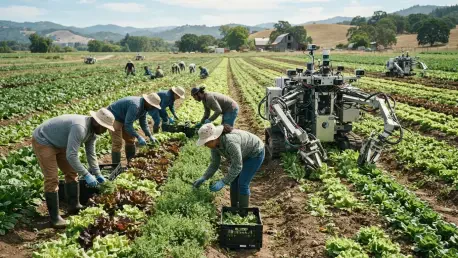
Instead of displacing workers, the integration of technology was fundamentally reshaping agricultural roles into a hybrid model that required a mix of traditional knowledge and technical skill. The introduction of motorized orchard platforms served as a primary example of this shift, as these machines eliminated the physical strain of climbing ladders while demanding new proficiencies in equipment operation. Workers transitioned from being manual pickers to becoming machine managers who coordinated complex logistics in real-time. This evolution led to the creation of smaller, more specialized crews that were capable of higher productivity per individual. In several observed operations, workers who mastered these new systems saw their wages increase by fifteen to twenty-five percent, reflecting the higher value placed on their expanded skill sets. The goal was no longer to eliminate the human element but to maximize its efficiency through the strategic application of mechanical assistance.
The success of these technological transitions was heavily dependent on the methodology of implementation and the level of worker consultation. In regions where growers adopted a top-down approach, purchasing expensive equipment without feedback from those who would use it, the results were often disastrous. One California operation invested in a fleet of platforms that were ultimately abandoned because they were incompatible with the existing row spacing of the orchard. Conversely, growers in Washington who utilized collaborative research networks and included laborers in the testing phase experienced much smoother integrations. When workers were treated as partners in the innovation process, training was more effective, and the equipment was better adapted to the specific needs of the field. This collaborative strategy ensured that technology served the workforce, leading to improved morale and a more sustainable pathway toward modernization across the agricultural industry.
Strategic Evolution and Future Collaborative Pathways
The overarching trajectory of the agricultural sector indicated that the future was defined by a sophisticated partnership between humans and machines rather than a complete takeover by automation. It became clear that the most successful farms were those that treated artificial intelligence as a tool to augment the existing expertise of their workforce. The research demonstrated that the traditional knowledge held by seasoned farmworkers—the ability to interpret tree health and weather patterns—remained the essential foundation for any successful technological deployment. Moving forward, the industry prioritized the development of “human-in-the-loop” systems where sensors provided data and people provided the critical interpretation. This approach moved the conversation away from job displacement and toward a model of workforce evolution, ensuring that the agricultural sector remained resilient and capable of meeting global food demands through the combined power of human intuition and mechanical precision.
Stakeholders across the industry recognized that the next logical step involved a focused investment in regional infrastructure and specialized training programs for the existing labor pool. Rather than waiting for a perfect autonomous solution, growers began implementing modular technologies that allowed for gradual upgrades as specific mechanical hurdles were cleared. This phased approach allowed farms to maintain economic stability while slowly integrating more advanced diagnostic tools and robotic assists. Educational initiatives shifted toward teaching data literacy alongside traditional horticultural practices, creating a new generation of agricultural technicians. The realization that human experience was the vital component making modern AI functional provided a clear roadmap for future development. By focusing on workforce support and adaptive technology, the industry established a sustainable framework where innovation and traditional expertise flourished in tandem to secure the future of global food production.