


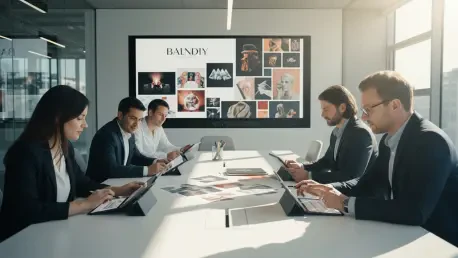

The rapid evolution of large-scale diffusion models and generative pre-trained transformers has transformed the landscape of modern advertising from a manual craft into an automated high-velocity production line. Today, the challenge is no longer the generation of visual or textual content, as tools like Midjourney v8 and Claude 4 Opus produce high-fidelity assets in mere seconds. Instead, the industry faces a profound saturation point where the sheer volume of AI-generated media risks diluting brand identity and consumer engagement through sheer repetition. Marketing agencies are discovering that while the cost of production has plummeted, the value of distinctiveness has increased exponentially, forcing a shift in focus toward the human elements of taste, cultural context, and ethical decision-making. This transition signals a move away from technical prompt engineering toward a sophisticated form of creative curation where success is defined by what a brand chooses to reject rather than simply what it can produce with a single click. Every piece of content must now pass through a rigorous filter of intentionality to ensure it resonates with a public that is becoming increasingly adept at spotting synthetic patterns.
The Transition From Content Creation to Strategic Curation
Automation has fundamentally altered the standard workflow within global creative departments, moving the primary point of value from execution to high-level conceptual vetting. As platforms like OpenAI’s Sora and Runway Gen-4 provide the ability to generate cinematic video sequences with minimal oversight, the role of the traditional copywriter or designer has expanded into that of an editorial overseer. This shift necessitates a deeper understanding of brand semiotics, as the ease of creation often leads to a “sameness” in aesthetic output that can alienate sophisticated consumer bases. Professional curators now spend their time fine-tuning the outputs of custom-trained LoRA models that adhere to specific brand guidelines, ensuring that the visual language remains consistent across diverse digital ecosystems. The objective is no longer to simply fill a media buy with assets, but to ensure that each generated image or video serves a specific psychological function within the broader consumer journey, a task that remains firmly rooted in human intuition.
Integrating these advanced tools into existing enterprise stacks requires more than just a subscription; it demands a robust infrastructure capable of handling massive iterative cycles. Companies are increasingly turning to specialized environments such as Adobe Firefly for Enterprise or NVIDIA’s Omniverse to create digital twins of products that can be instantly placed into AI-generated lifestyle settings. This capability allows for hyper-personalization at a scale that was previously unimaginable, where a single campaign can generate thousands of unique variants tailored to specific micro-segments. However, this level of granularity introduces the risk of brand fragmentation if a central creative authority does not maintain a cohesive vision. Strategic judgment acts as the connective tissue, linking the disparate outputs of various algorithms into a unified narrative that reflects the core values of the organization. Without this human-centric oversight, the advertising landscape would quickly devolve into a chaotic noise of uncoordinated messages that fail to build long-term brand equity or trust.
Future-Proofing Marketing Strategies: The Path Ahead
Developing a resilient framework for the next few years involves a dual-track approach that prioritizes both technical agility and human-centric design thinking. Organizations must invest in training their teams not only on how to use the latest generative tools like Google’s Gemini Ultra or Anthropic’s newest models but also on the philosophy of brand storytelling. This education focuses on the “why” behind a campaign, empowering creatives to use AI as an accelerant for their own vision rather than a replacement for it. By establishing clear “human-in-the-loop” protocols, companies can ensure that every automated output is scrutinized for quality, tone, and strategic alignment. This proactive stance allows for the exploration of new formats, such as interactive AR advertisements and real-time personalized video content, without sacrificing the integrity of the brand voice. Cultivating a culture that values creative bravery and critical thinking will be essential as the barrier to technical entry continues to vanish and the competition for consumer attention intensifies across all digital touchpoints.
The industry moved toward a model where the synergy between human discernment and algorithmic power dictated the success of every major initiative. Leadership teams recognized that the most effective campaigns were those that used technology to amplify a distinct, human-led vision rather than those that relied solely on automated efficiency. It became clear that while machines managed the heavy lifting of data processing and asset generation, the soul of the brand remained a human construct. Professionals who prioritized ethical transparency and cultural relevance found themselves leading the most impactful projects in the landscape from 2026 to 2028. This period established that the true value of an advertiser lied in their ability to curate meaningful experiences from a sea of infinite digital possibilities. Ultimately, the focus shifted from the mechanics of creation to the mastery of judgment, ensuring that technology served the narrative rather than the narrative serving the technology. The organizations that thrived were those that maintained a firm grip on the creative steering wheel, even as the engines of production reached unprecedented speeds.







