


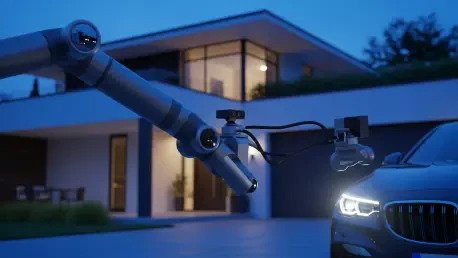

The transition toward fully autonomous electric mobility has long been hindered by the physical requirement of manually connecting a heavy charging cable to a vehicle port, a task that remains frustratingly analog in an increasingly digital world. Xiaomi recently addressed this friction point by demonstrating a sophisticated AI-powered robotic arm designed specifically for its SU7 lineup and broader ecosystem. This system utilizes a complex array of visual sensors and high-precision actuators to locate, open, and plug into the charging port without any human intervention. By removing the final manual step from the driving experience, the technology promises to redefine how owners interact with their vehicles in residential and commercial settings alike. The arm is not merely a motorized tether but a highly intelligent peripheral that communicates directly with the car’s onboard computer, ensuring that the vehicle is perfectly positioned and the charging parameters are synchronized before the physical connection is established.
The Mechanics: Intelligent Alignment and Connection
At the core of this robotic charging system lies a multi-modal perception suite that combines high-definition cameras with solid-state light detection and ranging technology to map the immediate environment in real-time. This sensory input allows the robotic arm to calculate the precise three-dimensional coordinates of the vehicle’s charging flap with sub-millimeter accuracy. Unlike early mechanical prototypes that relied on magnetic alignment, Xiaomi’s implementation uses advanced spatial computing to adapt to various parking angles and heights. This flexibility is crucial because it accounts for human error in parking or slight variations in ground leveling, ensuring that the connector always meets the port at the optimal angle to prevent wear on the internal pins. The arm’s movement is choreographed by high-torque servos that provide smooth, fluid motion, mimicking the dexterity of a human limb while maintaining a level of consistency that manual operation cannot match in daily residential use.
Software plays an equally vital role in managing the physical complexities of the charging process, utilizing a deep-learning model trained on thousands of individual docking sequences to recognize different lighting conditions and weather patterns. Whether the vehicle is covered in rain, dust, or snow, the vision algorithms can isolate the contours of the charging port and verify the safety of the connection point before the arm extends. This proactive safety check includes detecting foreign objects or obstructions that might interfere with the current flow or damage the hardware. Once the port is identified, the system initiates a secure handshake with the vehicle’s HyperOS architecture, which triggers the automatic opening of the motorized cover. This level of hardware-software integration allows the robotic arm to operate effectively in unlit garages or outdoor environments where visibility is poor. The resulting system represents a significant shift toward a truly autonomous, self-correcting energy delivery platform.
Network Integration: Future of Smart Charging
Building on this foundation of precision engineering, the robotic arm is designed to integrate seamlessly into a wider network of smart home and municipal infrastructure. This connectivity allows the charging process to be scheduled based on fluctuating energy prices or grid demands, ensuring that the vehicle is replenished during off-peak hours without the owner needing to remember to plug it in at night. The system can be controlled via a smartphone application or voice commands, providing real-time status updates and diagnostic data regarding the health of the battery and the charger itself. Furthermore, the compact industrial design of the unit allows it to be installed in existing parking bays without requiring extensive structural modifications. This modularity is a key advantage for commercial operators looking to upgrade their fleets to fully automated depots. By standardizing the communication protocols, Xiaomi has created a blueprint for a future where energy replenishment is as passive as a wireless data transfer.
The unveiling of this robotic solution established a new benchmark for the intersection of robotics and automotive technology, effectively solving one of the most persistent bottlenecks in EV ownership. Industry analysts observed that the move shifted the focus from battery capacity alone to the overall convenience of the refueling ecosystem, which became a critical differentiator in a crowded market. By demonstrating that a robot could handle high-voltage connections safely and efficiently, the initiative provided a clear path toward the goal of fully driverless valet parking and charging. Engineers addressed the initial concerns regarding mechanical durability and weatherproofing by implementing rigorous stress tests across various environmental extremes. This progress solidified the role of automated infrastructure in supporting the next generation of transport. The development ultimately moved the industry away from static charging pillars and toward dynamic, intelligent systems that anticipated user needs and improved the longevity of the power delivery hardware.







