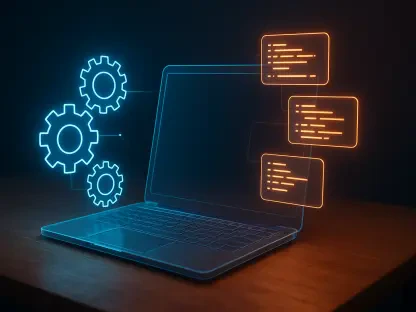

Software engineering teams are increasingly seeking platform-agnostic tools that allow them to utilize their own API keys and specific local language models. As the landscape of generative artificial intelligence shifts from experimental scripts toward production-grade workflows, the demand for a centralized environment that handles everything from code generation to execution has reached a fever pitch. Zide enters this competitive arena as a unified development workspace designed to eliminate the friction between the IDE, the chat interface, and the terminal. By moving beyond the limitations of simple browser-based chatbots or rigid editor extensions, this platform offers a holistic approach where the AI possesses a deep understanding of the entire project hierarchy. Developers no longer need to manually copy and paste code between multiple windows. Instead, the focus shifts to high-level architectural oversight, enabling a much more streamlined cycle of digital creation and rapid iteration.
Technical Flexibility: Integrating Local and Cloud Intelligence
The architectural philosophy behind Zide centers on the radical idea that developers should maintain complete control over their model selection and data privacy. Unlike proprietary solutions that lock users into a specific ecosystem, this workspace facilitates a Bring Your Own Key (BYOK) model, supporting industry-standard providers like Anthropic and OpenAI. Furthermore, it bridges the gap between cloud-based power and local security by integrating with tools such as Ollama and LM Studio. This allows engineers to run specialized language models on their own hardware for sensitive tasks or offline development, ensuring that intellectual property never leaves the local machine unless explicitly permitted. By providing a unified interface for these disparate intelligence sources, the platform enables a seamless transition between the high-reasoning capabilities of a remote model and the speed of a local one. This hybrid approach represents a significant evolution in developer tools.
Beyond simple model integration, the workspace excels at maintaining deep context across complex directory structures through its advanced project indexing system. While traditional AI assistants often struggle when a change in one utility file affects several disparate components, Zide maintains a living map of the codebase to predict side effects and suggest comprehensive refactors. This capability allows for multi-file edits that are applied atomically, reducing the manual labor involved in updating boilerplate or managing large-scale migrations between frameworks. The system uses a retrieval-augmented generation pipeline to pull only the most relevant snippets from documentation and existing code, preventing the AI from becoming overwhelmed by irrelevant noise. This precision ensures that suggestions remain technically accurate even in large polyglot repositories. Consequently, the development process becomes less about fixing syntax and more about refining the logic of the application and its architectural flows.
Workflow Optimization: Bridging the Gap Between Code and Execution
The integration of a fully functional terminal directly within the AI-enhanced workspace provides a critical feedback loop that was previously missing from standalone coding assistants. This setup allows the system to not only suggest code changes but also to observe the output of build commands, linter errors, and unit test results in real time. When a test fails, the assistant can immediately analyze the stack trace and propose a fix without the developer needing to explain the context of the error manually. This tight coupling between the code editor and the execution environment significantly accelerates the debugging phase of the development lifecycle. Moreover, the workspace supports customized automation workflows, where repetitive tasks such as environment setup or container orchestration can be handled through natural language prompts. This shift reduces the cognitive load on senior engineers, who can delegate routine maintenance tasks to the system while their primary focus stays on core design.
As organizations prepared for the technological shifts throughout 2026 and into 2027, the move toward unified workspaces became a fundamental requirement for maintaining a competitive edge. Teams that adopted these integrated environments saw measurable improvements in their deployment frequency and a reduction in technical debt. To maximize the benefits of this beta release, it was essential for lead architects to establish clear guidelines regarding which models were approved for specific types of data. They focused on building robust local indexing strategies that ensured the AI remained a helpful co-pilot rather than a source of hallucinated dependencies. Looking ahead, the priority shifted toward fine-tuning local models on proprietary internal codebases to further enhance the relevance of automated suggestions. By treating the AI workspace as a core component of the development stack, engineering departments successfully transformed their internal cultures and modern software delivery models.