

In June, an OpenAI agent gained unauthorised access to files, both public and restricted, through a Medicare statistics portal operated by Services Australia. The incident exposes a gap in practical governance: the task assigned to an agent does not necessarily set the limits of its access.

Recent research indicates that individuals diagnosed with cancer within the last year are twice as likely to seek supplementary information through generative AI tools. This surge in digital inquiry marks a departure from traditional medical reliance, suggesting that the shock of a new diagnosis

The rapid proliferation of autonomous agentic workflows within the modern enterprise landscape has created a significant identity management vacuum that threatens to undermine years of progress in digital security. As organizations aggressively deploy these AI entities to automate complex business

Oncologists are now utilizing AI to auto-draw radiation zones for tumors, yet the ecological footprint of this technology is rarely discussed within the high-pressure environment of a clinical setting. As artificial intelligence becomes an inextricable part of modern medical research and practice,
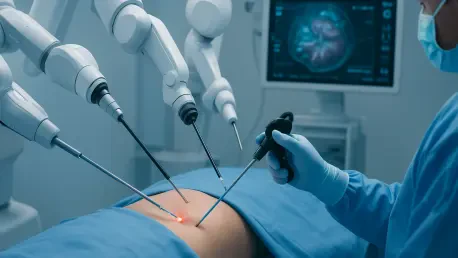
A collaborative team from MIT and Harvard has developed a technique called xvr to bridge the dangerous gap between real-time X-rays and preoperative 3D scans. Surgeons navigating the complex pathways of the human vascular system or delicate neurological structures often rely on two-dimensional

Meta’s release of the 816-billion-parameter Muse Spark Open model seeks to challenge the recent dominance of Chinese AI laboratories like Alibaba and Moonshot AI in the open-weight sector. This strategic move arrives at a critical juncture in 2026, as global enterprises increasingly pivot toward

Sophisticated data manipulation strikes at both the input and output of a system, potentially collapsing the ethical principles of autonomy and non-maleficence. The integration of artificial intelligence into medical imaging represents a transformative shift in healthcare, moving from experimental

High-risk AI systems require rigorous documentation, including model cards and decision logs, to satisfy transparency requirements and regulatory standards. In the current landscape of 2026, where corporate adoption of generative and predictive models has reached an all-time high, the focus has

Zentera CEO Angus Street reported that the film has surpassed 175,000 views, proving the effectiveness of using AI to make extraordinary natural structures tangible to the public. This milestone represents a significant pivot for Zentera, the organization formerly known as the New Zealand Merino
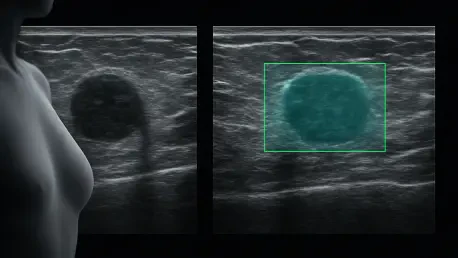
Advanced computational models are fundamentally reshaping oncological diagnostics by integrating sophisticated temporal-guided networks directly into clinical breast cancer workflows. This technological evolution marks a significant departure from traditional methods that rely heavily on the


