
Many industrial machines operate on isolated networks, creating siloed data that was previously inaccessible for real-time operational visibility and analysis. This fragmentation has long served as a barrier to the full realization of the Fourth Industrial Revolution, as valuable insights remained trapped within proprietary systems. However, the landscape is shifting rapidly as edge computing and artificial intelligence converge to create a more integrated and responsive manufacturing environment. By moving computational power away from distant data centers and directly onto the factory floor, companies are finding they can process information with unprecedented speed. This transition is not merely a technical upgrade; it represents a fundamental change in how physical operations are managed. As we progress through 2026, the reliance on centralized cloud systems is being supplemented by decentralized intelligence that allows for immediate action on the production line, turning raw data into a strategic asset.
The Strategic Move to Hybrid Infrastructure
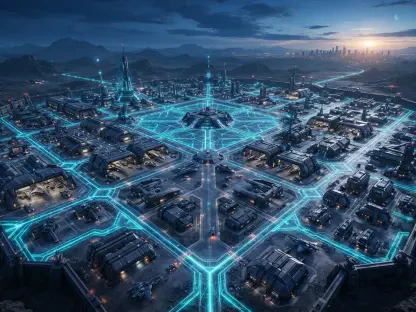
The current trend in industrial architecture focuses on creating a balanced hybrid infrastructure that leverages both edge and cloud capabilities to maximize efficiency. While the cloud offers nearly unlimited storage and the computational muscle required for long-term historical analysis, its inherent latency issues make it unsuitable for high-stakes, millisecond-level decisions required in robotics or chemical processing. Organizations are increasingly deploying localized hardware that can handle the heavy lifting of data ingestion and preliminary processing without needing a constant link to the external internet. This setup ensures that critical operations continue even if a connection is severed, providing a level of resilience that was previously unattainable. By filtering out the digital “noise” at the source, these edge systems send only the most refined and actionable data packets back to the central repository. This selective transmission significantly lowers bandwidth costs and reduces the storage burden on cloud environments.
Beyond cost and performance, the shift toward hybrid systems is also driven by rigorous security and data residency requirements. In an era where industrial espionage and cyber threats are persistent concerns, keeping sensitive operational data within the local network perimeter provides a necessary layer of protection. Edge devices can execute complex AI models locally, ensuring that proprietary manufacturing recipes or employee biometric data never leave the facility. This approach satisfies both internal compliance policies and international regulations that govern how and where data can be stored. Furthermore, the integration of these systems allows for a more granular level of control over specialized equipment. Engineers can now fine-tune localized models to account for the unique environmental conditions of a specific plant, such as humidity or altitude, which might be overlooked by a generic global model. This localized optimization ensures that every site operates at peak performance while maintaining a cohesive data strategy.
Precision Agriculture and Real-Time Adjustments
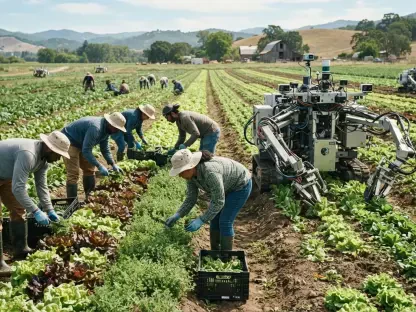
In the agricultural sector, specifically within large-scale greenhouse operations, the integration of edge computing has redefined the meaning of precision. Managing hundreds of acres of indoor crops requires the constant monitoring of millions of individual plants to ensure quality and flavor consistency. Edge infrastructure enables the immediate processing of data from thousands of sensors that track light levels, carbon dioxide concentrations, and soil moisture in real time. When a sudden spike in solar radiation is detected, the system does not wait for a round-trip response from a distant cloud server. Instead, it triggers local irrigation valves and adjusts shading screens instantly to protect the delicate root systems from heat stress. This localized response mechanism is critical for maintaining the specific nutrient balances that define premium produce. By automating these micro-adjustments, growers are achieving higher yields while significantly reducing the amount of water and fertilizer wasted during the production cycle.
The application of computer vision at the edge has further transformed the post-harvest phase, particularly in grading and packing. High-speed cameras mounted above conveyor belts use deep learning models to inspect every piece of fruit or vegetable for ripeness, size, and surface defects as they pass by. Because the shelf life of perishable goods begins to decline the moment they are picked, any delay in the sorting process can lead to significant economic loss. Processing these high-definition video streams locally eliminates the latency that would occur if the data were sent to the cloud for analysis. This allows the system to make split-second decisions to divert sub-par produce into different processing streams or remove it entirely. This level of quality control ensures that only the best products reach the consumer, while also providing the sales and logistics teams with precise, real-time inventory counts. This synchronization between the greenhouse floor and the supply chain has allowed for more accurate forecasting.
Overcoming Legacy Equipment Challenges
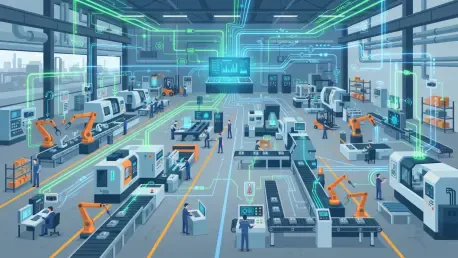
One of the most persistent obstacles in the modernization of heavy industry is the prevalence of legacy machinery that lacks native networking capabilities. Many of these assets, including massive turbines, milling machines, and industrial furnaces, utilize older proprietary protocols that were never designed to communicate with modern IT frameworks. To bridge this gap, companies are employing sophisticated edge gateways that act as universal translators. These devices can ingest various data formats and convert them into standardized protocols, effectively bringing “dark” assets into the digital light. This transformation allows for a unified view of the entire production ecosystem, regardless of the age or manufacturer of the hardware. By standardizing this data stream, organizations can deploy consistent AI models across their entire global footprint, enabling comparative analysis that was once impossible. This unified approach is essential for identifying inefficiencies that span multiple different production lines.
The democratization of edge technology has also streamlined the way these systems are deployed and managed within the industrial environment. Historically, setting up an industrial internet of things node required extensive coordination between IT departments and operational staff, often leading to months of delays. Today, software-defined edge platforms allow factory floor employees to deploy pre-configured containerized applications with minimal technical oversight. This ease of use means that a plant manager can request a new anomaly detection model or an energy monitoring tool and have it running on a local gateway in a matter of minutes. This agility is crucial for responding to unexpected changes in the production environment or testing new process improvements on the fly. As these tools become more accessible, the focus shifts from the technical challenges of connectivity to the strategic application of the insights generated. This shift empowers on-site teams to take ownership of their data and drive innovation.
The Rise of Predictive Maintenance and Physical AI
The synergy between localized computing and artificial intelligence is perhaps most impactful in the realm of predictive maintenance. Traditional maintenance schedules are often based on fixed time intervals or usage hours, which can lead to either unnecessary servicing or unexpected catastrophic failures. By running machine learning models at the edge, systems can continuously monitor the health signatures of critical components, such as the high-frequency vibration of a bearing or the thermal profile of a motor. These models are trained to recognize the subtle deviations that precede a failure, often weeks before a human operator would notice a problem. When an anomaly is detected, the system can automatically generate a work order and order the necessary replacement parts, ensuring that repairs are conducted during scheduled downtime. This move from reactive to proactive management significantly reduces the total cost of ownership for expensive industrial assets and prevents the failures that can shut down a line.
The evolution of this technology is currently leading toward the concept of physical AI, where systems move beyond passive monitoring to active, autonomous control. In a physical AI environment, the edge-based system possesses the authority to make real-time adjustments to a machine’s operating parameters to correct a detected drift in quality or efficiency. For example, if a localized AI model notices that a coating process is becoming inconsistent due to a change in ambient temperature, it can automatically recalibrate the sprayer’s pressure or the conveyor speed without waiting for human intervention. This closed-loop control allows for a level of precision that exceeds human capability, especially in high-speed manufacturing environments. This integration of digital intelligence with physical mechanical action marks the transition to truly self-optimizing factories. As these autonomous systems become more common, the role of the industrial worker is shifting toward higher-level oversight, focusing on the strategic goals of the operation.
A New Standard for Industrial Efficiency
The integration of edge computing and artificial intelligence has firmly established a new standard for operational excellence across the industrial spectrum. Over the past year, organizations that prioritized decentralized intelligence realized significant gains in both productivity and sustainability. These systems proved that localized data processing is the only viable way to manage the massive volumes of information generated by modern sensors while maintaining the low latency required for real-time control. Moving forward, the focus should shift toward the broad adoption of standardized data architectures and the training of personnel to work alongside autonomous physical AI systems. Decision-makers should evaluate their current infrastructure to identify siloed data sets that could be unlocked through edge gateways. Investing in scalable, vendor-neutral edge platforms will provide the flexibility needed to adapt to future technological shifts. By embracing this decentralized model, the industrial sector can continue to evolve into a more resilient ecosystem.