
Protecting the digital ecosystem requires maintaining legal standards that support the transformative use of data for scientific advancement and public benefit. The current legal landscape is dominated by high-stakes lawsuits pitting content creators and publishers against artificial intelligence

A solar-powered camera for detecting elk needed its vision model reduced by a factor of 250 before it could fit the device’s constraints. A University of Washington research team used AI agents to tackle that deployment problem, connecting model changes to measurements from actual hardware. In the

The 'Evil Qwen' phenomenon raises critical questions about the security of autonomous systems when connected to models that can be easily manipulated at the neuron level. As large language models continue to integrate into every facet of digital infrastructure in 2026, the discovery that minor

Securing a reliable supply of High-Bandwidth Memory from Samsung and SK Hynix has become a survival necessity as OpenAI attempts to keep pace with the surging computational demands of generative AI. Sam Altman’s recent high-stakes, unannounced mission to Seoul marks a definitive shift in corporate

The transition from near-uniform data to extreme heterogeneity causes a sharp decline in the worst-client accuracy even when the mean accuracy remains relatively stable. Federated Learning represents a pivotal shift in how decentralized systems, from localized medical sensors to global smartphone
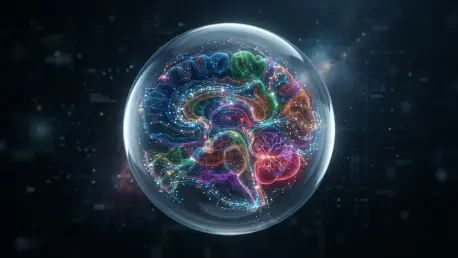
Standard Convolutional Neural Networks often fail to capture the global context of brain scans because of their inherently limited receptive field during image processing. This limitation is particularly problematic in neuro-oncology, where the management of gliomas—the most prevalent primary