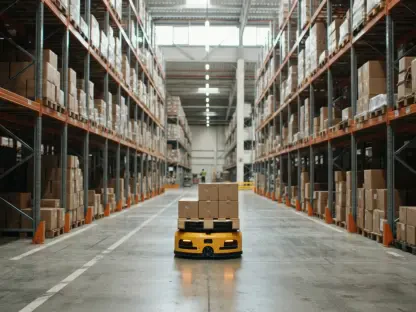
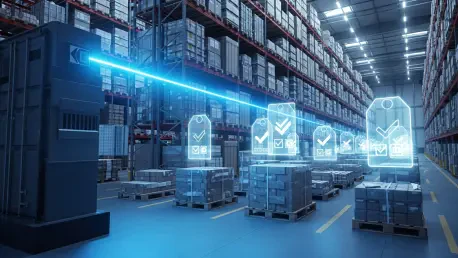
Global supply chains have reached a level of complexity where human-only management often leads to critical oversights and missed opportunities in the modern market. In the past, procurement was frequently dismissed as a purely administrative function, buried under stacks of physical invoices and

Modern global enterprises face an increasingly complex challenge where high-level strategic ambitions often collide with the technical limitations of fragmented, legacy digital infrastructures. While boardrooms prioritize the anticipation of customer needs through artificial intelligence, the

The historical divide between boardroom strategy and the reality of the shop floor has often resulted in a profound disconnect where frontline workers operate within a vacuum of data that severely limits their potential. In the past, data-driven insights were the exclusive domain of managers,

The prevailing narrative in the artificial intelligence sector has long suggested that intelligence is a direct byproduct of massive scale, yet the emergence of highly efficient models is rapidly dismantling this assumption. While industry giants continue to pour billions into trillion-parameter

The realization that human workers no longer need to manually reconcile disparate data sets across legacy mainframes and modern cloud applications has fundamentally altered the structural DNA of global corporations. As we navigate the current landscape, the deployment of Robotic Process Automation

The rapid proliferation of generative artificial intelligence within the corporate landscape has fundamentally altered how engineers approach data integration, yet many initiatives continue to stall due to the persistent friction between developer speed and organizational security protocols.