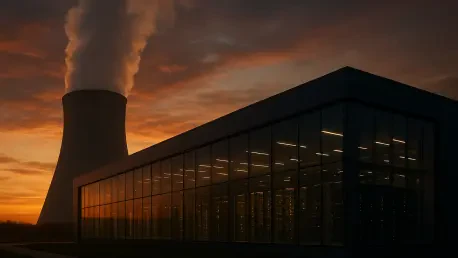

France’s existing and robust nuclear infrastructure may give European nations a competitive advantage over the United States in hosting the next generation of AI data centers. This geopolitical reality is beginning to reshape the strategic planning of major technology firms as they grapple with the sheer scale of the energy required to sustain the current artificial intelligence boom. While Silicon Valley has long been the epicenter of digital innovation, the shift from relatively lightweight cloud services to the massive, power-hungry clusters needed for large language models is forcing a reckoning with physical infrastructure. The discourse surrounding a potential nuclear renaissance is no longer a fringe academic topic but a central pillar of corporate strategy for hyperscalers like Microsoft, Google, and Amazon. These companies are now positioning themselves not just as software pioneers, but as primary architects of a new atomic age, promising to fund and accelerate the deployment of carbon-free energy sources. However, as the 2020s progress, a significant tension has emerged between the ambitious, green-tinted marketing projected by Big Tech and the sobering, slower-moving realities of global energy policy and utility-scale construction.
The Energy Crisis: Why Artificial Intelligence Requires Atomic Power
The primary catalyst for this sudden and intense interest in atomic energy is the unprecedented power demand generated by the training and inference of advanced artificial intelligence models. Unlike traditional cloud computing environments, which experience predictable peaks and valleys in user activity, AI workloads require a constant, high-density supply of electricity to keep thousands of interconnected GPUs running at maximum capacity. This shift has fundamentally changed the load profiles that data center operators must manage, moving away from flexible demand toward a rigid, “always-on” baseload requirement. Standard renewable sources like wind and solar, while essential for general decarbonization, struggle to meet this specific need without massive, cost-prohibitive battery storage systems to bridge the gaps when the sun is down or the wind is still. Consequently, nuclear power has emerged as the most viable alternative for providing the reliable, carbon-free energy density necessary to support the massive infrastructure scaling planned for the rest of this decade.
Beyond the technical requirements of GPU clusters, hyperscalers are facing mounting pressure to fulfill their own ambitious environmental commitments. Most major technology firms have pledged to reach net-zero or even carbon-negative status by the early 2030s, yet their energy consumption is currently moving in the opposite direction due to the AI race. This creates a strategic paradox where the very technology meant to drive future efficiency is currently increasing the industry’s carbon footprint. For these companies, nuclear energy represents a “silver bullet” that could theoretically allow for infinite computational growth without the corresponding spike in reported emissions. By investing in nuclear capacity, hyperscalers are attempting to decouple their technological advancement from fossil fuel dependency, although the immediate reality still finds many data centers drawing power from regional grids that remain heavily reliant on natural gas and coal to handle the surging demand.
The Infrastructure Gap: Silicon Speed Versus Atomic Timelines
A major point of contention among energy specialists is the profound temporal mismatch between the lightning-fast cycles of the tech industry and the multi-decade development periods inherent to the nuclear sector. In the world of artificial intelligence, a single hardware generation might last only eighteen months before being superseded by more efficient and powerful chips. In contrast, the process of permitting, funding, and constructing a new nuclear facility in the United States or Canada typically requires a commitment of fifteen to twenty years. This discrepancy suggests that many of the high-profile nuclear deals signed recently are less about meeting today’s energy needs and more about securing a theoretical supply for a future that may look very different by the time the first reactor comes online. The current AI infrastructure is being built today, while the nuclear solutions being touted as its foundation are largely projected for the 2030s or even the 2040s.
Furthermore, critics and industry veterans often point out that while corporate press releases are filled with futuristic imagery of cooling towers and clean energy, the current physical reality of data center expansion is much more traditional. To stay competitive in the current AI race, companies cannot wait for the decades-long permitting process of a new nuclear plant; they must connect to whatever power is currently available on the local grid. This often means that the “nuclear renaissance” currently functions as a bridge for the distant future while the present operations continue to drive demand for gas-fired power plants. Experts from institutions like MIT have observed that while marketing materials emphasize a carbon-free future, the actual utility bills for these massive facilities remain dominated by the existing energy mix, which is still undergoing a slow and difficult transition away from hydrocarbons.
Small Modular Reactors: Innovative Solution or Theoretical Prototype
Much of the optimism surrounding the marriage of AI and atomic energy is centered on the development of Small Modular Reactors, or SMRs. These systems are marketed as a revolutionary departure from the massive, multi-billion-dollar reactors of the twentieth century, promising a more flexible and affordable approach to nuclear deployment. Proponents argue that because SMRs are designed to be manufactured in factories and shipped to their final locations, they can be deployed much faster and placed directly adjacent to data center hubs. This localized approach would theoretically allow hyperscalers to bypass some of the bottlenecks associated with the national power grid and ensure a dedicated energy stream for their most critical AI operations. The narrative suggests that by providing the “catalytic capital” needed to jumpstart the SMR industry, tech companies are acting as the necessary vanguard for a broader energy transition.
However, the technical reality of SMRs remains largely unproven at a commercial scale, leading many experts to categorize current designs as “PowerPoint reactors.” Despite the significant financial backing from companies like Google and Microsoft, most SMR technologies are still in the early stages of regulatory review or experimental prototyping. There is a fundamental economic challenge as well: these smaller units currently lack the economies of scale that made traditional large-scale nuclear power cost-competitive in the past. Because the specialized manufacturing lines required to mass-produce these reactors do not yet exist, the cost per unit of electricity generated is currently much higher than that of natural gas or even traditional renewables. Until the industry can move from bespoke experimental designs to a standardized, mass-produced reality, the promise of localized nuclear power for data centers remains a speculative prospect rather than an immediate solution.
Strategic Public Relations: Building the Halo Effect Through Nuclear Deals
From a corporate strategy perspective, the recent wave of nuclear investments offers a remarkably high return on reputation for what is, in relative terms, a minor financial outlay. While a multi-billion-dollar agreement to restart a dormant reactor at a site like Three Mile Island sounds like a massive commitment, it represents only a fraction of the capital expenditures that companies like Alphabet or Microsoft allocate to their AI hardware and research budgets each year. This strategic investment allows hyperscalers to align themselves with popular bipartisan goals such as energy independence, national security, and carbon reduction. By positioning themselves as the patrons of a clean energy future, these firms create a “halo effect” that helps shield them from increasing scrutiny regarding the environmental and social impacts of their massive data centers.
This branding strategy effectively shifts the public conversation away from the current environmental costs of the AI boom and toward a visionary, atom-powered future. By adopting the persona of a “friendly neighborhood corporation” that is saving the nuclear industry, tech giants can navigate complex regulatory environments and gain political capital that may be useful for other aspects of their business. If these nuclear projects eventually succeed and provide carbon-free electrons to the grid, the companies will be celebrated as visionary pioneers who solved the energy crisis. Conversely, if the projects face significant delays or technical failures, the companies have still secured years of positive press and built strong relationships with policymakers in the interim. This makes the nuclear renaissance a low-risk, high-reward communication tool regardless of the eventual technological outcome.
Shifting Public Sentiment and Geopolitical Realities
Public opinion regarding nuclear energy has undergone a significant transformation, moving from the deep skepticism that followed the high-profile accidents of the late twentieth century to a position of pragmatic support in the mid-2020s. This shift is not necessarily driven by a sudden enthusiasm for nuclear physics, but rather by the growing realization that meeting global climate targets while satisfying the digital economy’s hunger for power is nearly impossible without it. In the United States, recent surveys indicate that a majority of the population now supports the expansion of nuclear energy as a necessary component of a stable and secure grid. This changing sentiment has provided the social license that tech companies need to pursue aggressive nuclear strategies and has encouraged governments to streamline some of the regulatory hurdles that previously hindered the industry.
Despite this domestic shift, the United States is facing intense geopolitical competition from nations that have maintained and expanded their nuclear expertise over the past several decades. France, in particular, stands out as a potential leader in the AI-hosting race due to its existing infrastructure and long-standing commitment to atomic energy as a primary power source. This creates a competitive pressure that forces American technology companies to act decisively and make grand announcements to ensure they are not left behind. The race for AI supremacy is increasingly becoming a race for energy security, and the ability to provide reliable, carbon-free baseload power is becoming a primary factor in where the next generation of data centers will be located. This geopolitical dimension adds another layer of urgency to the nuclear deals being signed today, as companies look to secure their future in an increasingly energy-constrained world.
Lessons From the Renaissance: Actionable Pathways for a Carbon-Free Future
The industry leaders who navigated the early stages of this nuclear shift established that successful energy integration required more than just financial capital; it demanded a fundamental realignment of how technology companies interacted with the physical grid. Stakeholders recognized that the most effective path forward involved a direct partnership with utility providers rather than trying to operate as independent energy producers. These companies discovered that by providing long-term power purchase agreements, they could give energy developers the financial certainty needed to break ground on complex projects. This model proved that the tech sector’s primary role was not as an inventor of new nuclear technology, but as a critical market stabilizer that enabled the massive investments required for grid modernization.
Looking back at the progress made, it became clear that the integration of artificial intelligence and nuclear energy served as a catalyst for a broader discussion about ecological limits and technological growth. Policymakers and engineers worked together to move beyond theoretical “paper designs” by prioritizing the standardization of reactor components and streamlining the permitting process for brownfield sites. The most successful implementations were those that focused on revitalizing existing nuclear infrastructure before attempting to build entirely new systems. These early actions provided a blueprint for how a high-growth industry could responsibly address its energy footprint while contributing to a more resilient and sustainable global power network. The lessons learned during this period demonstrated that while the nuclear renaissance began with a heavy emphasis on public relations, it eventually matured into a necessary structural shift that defined the next era of industrial development.