


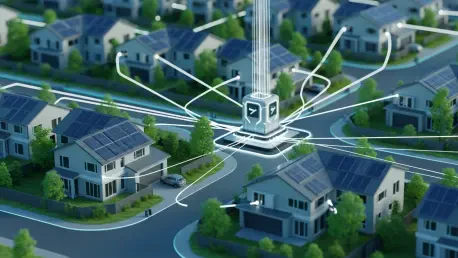

Australia’s transition toward a sustainable energy future has reached a critical juncture where the physical limitations of aging transmission lines must be overcome by the digital precision of artificial intelligence and machine learning. As the nation aggressively pursues a net-zero trajectory, the influx of variable renewable energy from massive wind farms and millions of rooftop solar installations has created a volatility that traditional management systems simply cannot handle. The challenge lies in the fact that the Australian grid was originally designed for a one-way flow of electricity from large, centralized coal-fired power plants to urban consumers, rather than the complex, multidirectional symphony of electrons seen today. By implementing advanced AI algorithms, grid operators are now able to unlock hidden capacity within existing infrastructure, allowing more green energy to flow without the immediate need for multibillion-dollar physical expansions. This digital layer acts as a traffic controller, ensuring that the surge in solar power during peak afternoon hours does not overwhelm localized distribution networks.
Intelligence at the Edge: Enhancing Grid Resilience and Throughput
The deployment of machine learning models has fundamentally altered how the Australian Energy Market Operator (AEMO) forecasts demand and manages the supply-side fluctuations of weather-dependent assets. These AI systems ingest vast quantities of satellite imagery, atmospheric data, and historical usage patterns to predict cloud cover movements and wind speed changes with an accuracy that was previously unattainable. Consequently, fossil-fuel-based backup generators no longer need to run in a constant state of high-readiness, which significantly reduces both carbon emissions and operational costs for retailers. This predictive capability allows for the dynamic rating of transmission lines, where AI calculates the real-time cooling effect of wind and ambient temperature on physical wires. By knowing exactly how much heat a line can dissipate at any given moment, operators safely push more electricity through the existing wires, effectively increasing the grid’s capacity by up to thirty percent during favorable conditions.
Beyond mere forecasting, artificial intelligence is being embedded directly into the grid’s hardware through high-speed sensors and automated switching systems that react in milliseconds to sudden faults. These intelligent electronic devices monitor frequency and voltage levels across thousands of nodes, identifying potential failure points before they cascade into widespread blackouts. When a bushfire or a severe storm threatens a specific transmission corridor, the AI-driven system automatically reroutes power through healthier segments of the network, maintaining stability for critical industrial and residential hubs. This level of granular control is essential as Australia integrates more inverter-based resources, which lack the mechanical inertia provided by traditional spinning turbines. The AI compensates for this missing inertia by coordinating fast-acting battery storage systems to inject or absorb power instantly. Such proactive management ensures that the transition to a high-penetration renewable grid does not come at the expense of reliability or safety.
Decentralized Solutions: Orchestrating the Distributed Energy Future
The emergence of Virtual Power Plants (VPPs) represents another significant frontier where artificial intelligence is maximizing the utility of Australia’s decentralized energy resources. By aggregating thousands of individual household batteries and rooftop solar arrays into a single, cohesive unit, AI platforms allow small-scale producers to participate in wholesale energy markets. These platforms use sophisticated optimization algorithms to determine when to store energy, when to use it locally, and when to export it back to the grid for maximum financial return and system benefit. This orchestration is particularly vital during peak demand periods, such as late afternoon when solar production drops and household consumption spikes. Instead of relying on expensive peaking plants, the grid draws upon the collective power of these distributed batteries. The AI ensures that every participant’s battery health is preserved while simultaneously providing the grid with a massive, flexible resource that can be deployed with surgical precision to relieve local congestion.
The successful integration of artificial intelligence into the Australian energy landscape provided a definitive roadmap for global grid modernization efforts. Regulators and industry stakeholders recognized that the primary challenge was not a lack of renewable energy, but rather the inability of legacy systems to process and move that energy efficiently. By prioritizing data transparency and investing in scalable software platforms, the energy sector achieved a level of flexibility that was once considered impossible. Decision-makers implemented standardized protocols for data sharing, which allowed for seamless communication between disparate hardware systems and AI vendors. This collaborative approach ensured that the grid remained secure against cyber threats while maximizing the utilization of every watt generated. Future considerations focused on the expansion of these AI models from 2026 to 2030, including the green hydrogen sector and electrification of heavy transport. The transition proved that a smarter grid was the most effective way to secure a clean and affordable energy future.







