
As generated imagery becomes ubiquitous across digital platforms, human taste and creative judgment have emerged as the primary differentiators for premium brands. The Australian post-production landscape has undergone a significant transformation, evolving from a period of experimental uncertainty into a phase characterized by the pragmatic application of machine learning. This shift represents a broader industry realization that while technology can automate the mechanical aspects of filmmaking, the core of storytelling remains deeply rooted in human intuition. In this environment, studios are no longer asking whether they should use artificial intelligence, but rather how it can be integrated into high-end creative workflows to meet the escalating demands of the global market. The current year marks a definitive milestone where the “AI shock” has transitioned into a sophisticated operational standard, allowing creators to focus on the nuances of craft rather than the limitations of software.
The integration of these tools has fundamentally altered the economic and creative expectations placed upon local studios. There is now a clear distinction between commoditized content—which is increasingly automated—and premium artistic output, which utilizes technology to push the boundaries of what is possible within a given timeframe. As production budgets face continued pressure from fragmented media landscapes, the ability to deliver high-quality visuals with increased speed has become a prerequisite for survival. However, this efficiency is not a replacement for talent; instead, it has raised the floor for all productions, forcing elite artists to find new ways to innovate. The result is a more resilient industry that values the intersection of technical proficiency and strategic creative thinking, ensuring that Australian post-production remains competitive on an international scale while maintaining its unique stylistic identity.
The Strategic Shift: From Experimental Novelty to Core Utility
The Australian post-production industry has successfully navigated the transition from viewing artificial intelligence as a potential threat to embracing it as a vital utility. This evolution is driven by the necessity of managing massive content volumes that would have been physically impossible to process just a few years ago. Studios have moved away from isolated experiments with generative tools toward establishing comprehensive, machine-learning-enhanced pipelines. These workflows are designed to handle the “heavy lifting” of data-intensive tasks, such as rotoscoping, object removal, and noise reduction, which previously consumed hundreds of human hours. By delegating these repetitive duties to intelligent systems, artists are afforded more time to engage in high-level art direction and conceptual development, ensuring that the final output resonates with a sense of purpose and deliberate design.
Furthermore, this shift toward utility is grounded in a more realistic understanding of technology’s current capabilities. While early hype suggested that entire campaigns might be generated with a single prompt, the reality of high-end production demands much more precision. Professionals in 2026 recognize that automated tools are best utilized for augmenting existing footage or streamlining the iterative process during the early stages of a project. This pragmatic approach has stabilized the labor market within the sector, as the demand for skilled operators who can direct and refine these tools has increased. The industry now prioritizes the “human-in-the-loop” model, where the machine provides the raw processing power and the creative lead provides the necessary discernment to ensure the work meets the rigorous standards of premium advertising and narrative content.
Unified Workflows: The Death of the Sequential Pipeline
The traditional linear production model, where projects moved strictly from pre-production to production and finally to post-production, has effectively collapsed in the current Australian market. In its place, a more fluid and continuous ecosystem has emerged, where post-production houses are engaged at the earliest conceptual stages. This early integration is facilitated by real-time engines and advanced pre-visualization tools that allow directors and clients to see a high-fidelity version of the final product before a single frame is shot. By using these technologies, teams can experiment with camera angles, lighting, and visual effects in a digital environment, reducing the risk of costly mistakes during live-action filming. This convergence ensures that the final edit is not a correction of the shoot, but a realization of a pre-planned and well-validated creative vision.
Building on this foundation, the use of “virtual pickups” has become a standard method for extending the creative possibilities of a campaign. By matching camera lens profiles and lighting data from a physical set within a digital twin environment, studios can create additional shots or make adjustments to existing footage without the need for expensive reshoots. This hybrid approach blurs the line between what was captured on location and what was generated in a studio, providing an unprecedented level of flexibility. As a result, design, animation, and editing often happen simultaneously rather than in sequence. This non-linear workflow significantly compresses the delivery timeline, allowing Australian studios to respond to the rapid pace of modern marketing while maintaining the high aesthetic standards that define the region’s creative reputation.
Digital Asset Scaling: Conquering the Deliverable Explosion
The commercial landscape of 2026 is characterized by a staggering requirement for asset volume that has fundamentally changed the scope of post-production contracts. Campaigns no longer consist of a single “hero” television commercial; instead, they are fragmented into hundreds of individual outputs tailored for diverse digital platforms, including social media, vertical video formats, and interactive retail displays. It is common for a single project to require over 400 unique deliverables, each needing specific localized messaging or platform-specific aspect ratios. This explosion of requirements has forced studios to move away from manual versioning and toward highly automated delivery systems. These systems use intelligent scripts and proprietary software to manage the logistics of scale, ensuring that every asset is correctly formatted and delivered according to the brand’s technical specifications.
To survive the pressure of these massive deliverable lists, successful studios have viewed the delivery process as a technical system rather than a labor-intensive chore. By automating the mechanical aspects of iteration and versioning, firms can protect their staff from the burnout traditionally associated with high-volume projects. This systematization also allows budgets to be allocated more effectively, as the “grind” of administrative production tasks is minimized. Technology serves as a buffer that protects the creative integrity of the “hero” assets, ensuring that the primary creative work receives the attention it deserves. This move toward systematic production has enabled Australian houses to take on larger, more complex global accounts without compromising their local artisanal roots or their commitment to individual project quality.
Precision and Performance: Navigating the Technical Limits of Automation
In the day-to-day operations of an Australian post-production suite, artificial intelligence is utilized as a sophisticated tool for technical precision rather than as a creative replacement. For example, colorists and visual effects artists routinely employ machine learning to create complex mattes and isolate specific elements within a frame for targeted adjustments. While these tools can generate masks in a fraction of the time it would take to draw them manually, the final edges still require the discerning eye of a specialist to ensure they are seamless and “clean.” Other practical applications include digital set extensions and re-lighting, which allow for a greater degree of control over the atmosphere and mood of a shot after it has been captured. These technical refinements contribute to a polished, high-end feel that separates professional work from amateur automated content.
Despite the impressive speed of modern tools, significant technical hurdles remain that require constant human oversight. Generative AI, while capable of producing striking short-form imagery, often struggles with maintaining temporal consistency and character continuity over longer sequences. These “hallucinations”—where the software adds unintended artifacts or loses track of geometry—can ruin the immersion of a professional production. Therefore, the role of the modern artist involves a high degree of troubleshooting and curation, ensuring that the digital output adheres to the laws of physics and the specific visual language of the brand. This limitation highlights why one successful generated frame is not the same as a production-ready asset. The focus in 2026 is on using technology to enhance existing data rather than relying on it to create something from nothing without rigorous human verification.
The Premium Differentiator: Why Human Artistry Still Commands the Market
As automated content production becomes more accessible, the value of human “taste” has become the defining characteristic of the high-end market. Modern audiences are increasingly visually literate and can easily detect when a piece of content feels generic or lacks an underlying creative intent. This has created a scenario where the ubiquity of AI tools has actually driven a higher demand for genuine artistic craft. Premium brands understand that to stand out in a saturated digital environment, they must invest in work that possesses emotional resonance and a unique soul—qualities that are still difficult for algorithms to replicate. Consequently, the most ambitious campaigns of 2026 are those that lean into high-level human artistry to provide a sense of luxury, authenticity, and brand identity.
Many industry professionals now view these advanced digital tools as a “cheat code” that accelerates the technical process, thereby liberating more time for the creative nuances that make a project successful. By automating the mundane, artists can spend more time focusing on pacing, emotional beats, and subtle visual cues that influence the viewer’s experience. Tighter budgets, rather than being purely restrictive, have often acted as a creative constraint that forces teams to be more innovative in their approach to blending technology with traditional filmmaking techniques. The successful studio of today is one that adds value to a client’s brief by providing strategic insight and a level of execution that exceeds the capabilities of standard automated platforms. In this way, technology has not diminished the artist’s role but has elevated it to that of a specialized creative consultant.
Emotive Characterization: The Evolving Role of the Animator
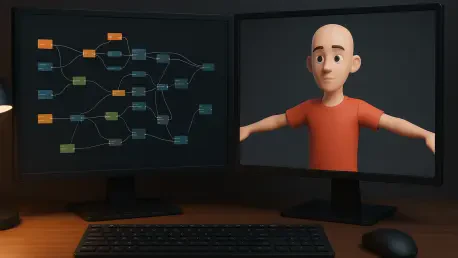
The animation sector has experienced a unique transformation, particularly in the way it balances the speed of new tools with the necessity for performance-driven storytelling. While technology can now apply complex styles and textures to characters with incredible efficiency, it still fails to capture the subtle nuances of human emotion and weight that a gifted animator provides. A compelling brand mascot or an emotive digital character still requires a human director to guide the performance and ensure that the animation communicates the intended message. In 2026, the focus has shifted toward using AI to handle the tedious aspects of the pipeline, such as in-betweening or basic rigging, while the “soul” of the movement remains the responsibility of the creative lead.
This new reality requires a higher level of discipline and orchestration from the animation team. Because the technology can generate output so quickly, there is a risk of losing control over the creative direction if the process is not carefully managed. Maintaining brand accuracy and character consistency requires rigorous upfront planning and a clear storyboard that serves as the blueprint for the digital tools. The animator’s role has evolved into that of a “performance director,” where they must curate and refine the machine’s output to ensure it aligns with the project’s specific aesthetic goals. This highlights a fundamental truth in 2026: while the tools have changed the speed of production, the fundamental principles of good animation—timing, appeal, and storytelling—remain as vital as they were in the analog era.
Technical Ecosystems: The Infrastructure of Modern Connectivity
By the midpoint of this decade, the transition to cloud-based and decentralized workflows has become the standard infrastructure for the Australian post-production industry. The debate over remote work has effectively ended, replaced by a seamless system of global connectivity that allows studios to tap into specialized talent pools regardless of geographical location. Standardized platforms for real-time collaboration have made it possible for artists in different cities to work on the same sequence simultaneously. This infrastructure supports “simultaneous disciplines,” where an editor, a colorist, and a visual effects artist can all contribute to a project in parallel. This departure from the linear hand-off model has created a more fluid and responsive workflow that can adapt to changing client needs in real-time.
Furthermore, this decentralized model has allowed Australian studios to maintain a strong presence on the international stage by offering 24/7 production cycles. A project can be initiated in a Sydney studio, refined by a specialist in Melbourne, and finalized by a global partner in a different time zone, ensuring that the work never stops. This level of efficiency is supported by robust cloud security and high-speed data transfers that have become the “boring” but essential backbone of the industry. The ability to work in this non-linear, hyper-connected way is a significant competitive advantage for the local market, as it allows smaller, agile teams to handle projects that previously would have required the massive physical infrastructure of a traditional Hollywood-style studio.
The Multidisciplinary Professional: Training for a Hybrid Future
The rise of the “hybrid artist” is one of the most visible changes in the labor market within the Australian creative sector. As technical boundaries between departments continue to blur, professionals must possess a working knowledge of the entire production pipeline to remain relevant. A modern motion designer is now expected to understand 3D environments, real-time rendering, and the integration of machine-learning tools into their workflow. This versatility allows artists to interpret a creative brief more holistically and to make informed decisions about which tools are best suited for a particular task. This shift has placed a premium on continuous learning and adaptability, as the software landscape evolves at a pace that requires constant professional development and a willingness to embrace new methodologies.
Beyond technical versatility, there has been a significant increase in the value placed on interpersonal intelligence and stakeholder management. Because the tools of production are more accessible than ever, the real differentiator for a high-level professional is their ability to lead a project through the complex emotional and strategic challenges of the creative process. The most valuable artists are those who can communicate effectively with clients, manage expectations, and maintain a clear creative vision amidst the noise of a tech-heavy production environment. The foundation of the business remains built on trust and “creative chemistry,” proving that even in a world of advanced automation, the strength of human relationships is the primary driver of successful outcomes. Professional success in 2026 is defined by the ability to combine these “soft skills” with a deep understanding of the digital toolkit.
Global Positioning: The Competitive Edge of Australian Studios
Despite the pressures of global competition and the potential for in-house agency departments to absorb production tasks, the Australian post-production community has maintained its strength through regional solidarity. Local studios have successfully positioned themselves as high-end strategic partners rather than mere service providers. By offering a level of craft-led execution and creative thinking that automated in-house systems cannot match, they have preserved their place at the top of the value chain. This sense of community is fostered by a collective desire to see the local industry thrive, leading to collaborative efforts and knowledge sharing that benefit the sector as a whole. This unity allows the Australian market to present a formidable front when competing for large-scale international contracts.
Small, agile teams in Australia have used the convergence of AI and real-time tools to effectively “punch above their weight” on the world stage. By embracing these technologies early and integrating them into highly efficient workflows, they have achieved production values that were historically reserved for the largest global budgets. This agility is a key competitive advantage, allowing local firms to deliver “ideas with effort” that feel bespoke and carefully crafted. As the global market becomes increasingly saturated with low-cost, generic automated content, the Australian industry’s focus on high-quality, human-centric storytelling ensures its continued relevance. The future of the local post-production scene is one of resilience and innovation, where the mastery of technology is always secondary to the power of a well-told story.
Future Readiness: Building Resilience in a Tech-Driven Economy
The transition into a machine-augmented workflow proved to be a necessary evolution for the Australian post-production industry, allowing it to survive and thrive in an increasingly demanding market. Studios that successfully integrated these tools did so by prioritizing the human element, ensuring that technology served as a support system rather than a creative lead. The initial anxiety surrounding automation was replaced by a sophisticated understanding of how to leverage digital efficiency to protect artistic integrity. This period of change demonstrated that the most effective way to navigate technological disruption was through a combination of technical curiosity and a commitment to the foundational principles of visual craft. By focusing on high-level art direction and systemic delivery, the industry established a new standard for excellence that was both scalable and uniquely creative.
Moving forward, the industry adopted a strategy of continuous investment in specialized talent and infrastructure to stay ahead of the next wave of digital transformation. The actionable takeaway for the coming years was the necessity of maintaining a balance between automated speed and the “soul” of the brand experience. Studios recognized that as AI content becomes more common, the unique perspective of a human artist remains the most valuable asset in a creative partnership. Continued success depended on the ability to cultivate “hybrid artists” who could navigate complex pipelines while providing the strategic insight clients required. The Australian post-production sector has emerged as a global leader by proving that the true power of artificial intelligence lies in its ability to amplify human ingenuity, rather than replace it.