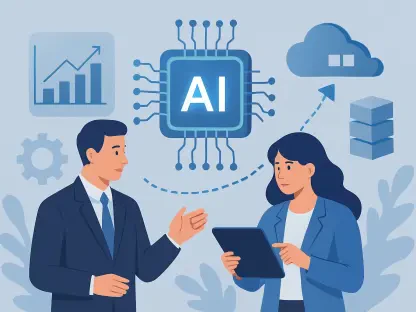

Modern software teams are utilizing Devin AI to handle repetitive tasks such as internal API development, script automation, and the creation of operational dashboards. This shift represents a fundamental change in how engineering departments allocate their most valuable resource: human intelligence. As development cycles accelerate, the traditional barriers between planning, coding, and deployment have begun to dissolve under the influence of autonomous agents. The integration of such tools allows for a significant reduction in the time spent on toil—those necessary but noncreative tasks that often stall project momentum. By delegating these activities to a system capable of independent reasoning, teams can maintain a constant velocity even when faced with complex technical debt or tight deadlines. This transition is not merely about speed; it is about the reliability and consistency that an automated environment provides. As we look at the current state of software production, the influence of these autonomous engineers has become unmistakable, setting a new standard for high-level productivity.
1. Defining the Core Capabilities of Devin AI
Devin AI, introduced by Cognition in early 2024, has moved beyond the status of a simple coding assistant to become a comprehensive autonomous entity. Unlike predecessors that functioned primarily through snippet generation or autocomplete features, this system operates within a specialized sandbox environment. This compute environment is equipped with its own shell, browser, code editor, and file system, mimicking the exact setup a human engineer uses daily. This architectural choice is crucial because it enables the AI to execute code, observe the results, and iterate based on real-time feedback. When tested against the SWE-bench benchmark, it demonstrated a notable ability to resolve complex GitHub issues, achieving a success rate of 13.86 percent in its initial evaluations. This performance proved that the agent could handle more than just isolated logic; it could navigate entire repositories and understand the interconnected nature of modern software projects without constant human intervention.
The autonomy of the system is further enhanced by its capacity to manage the entire lifecycle of a software project, from the initial architectural plan to the final production deployment. It does not just stop at writing clean, functional code; it also identifies the infrastructure requirements and security protocols necessary for a successful launch. By bridging the gap between development and operations, the AI reduces the friction points that typically delay product releases. This end-to-end capability is what distinguishes it from standard large language models that merely provide text-based suggestions. Within its secure sandbox, the AI can experiment with different library versions or configuration settings, ensuring that the final output is fully compatible with the intended runtime environment. This self-contained workflow ensures that the generated solutions are not just theoretically sound but are practically viable and ready for immediate implementation by engineering teams looking to scale.
2. Operating the Autonomous System Step-by-Step
Utilizing this autonomous engineer is an intuitive process that begins with setting up a dedicated user profile and linking necessary development accounts. Step 1: Account Creation. Users start by registering on the platform and connecting their GitHub repositories, which allows the AI to access the existing codebase and maintain proper version control. Once the environment is ready, the next phase is Step 2: Launch a Workday. This involves navigating to the sessions interface where the user provides a natural language prompt or specific code to be modified. For example, a developer might ask the system to build a specialized tool that parses complex server logs to identify recurring error patterns. The AI then enters Step 3: Strategy and Implementation. It analyzes the request and builds a virtual sandbox, installing all required dependencies in a cloud environment. This setup includes a live preview, allowing the user to see the progress in real time as the AI breaks the prompt into manageable, actionable tasks.
Throughout the implementation phase, the system maintains a high degree of transparency and flexibility, allowing for human intervention whenever necessary. It automatically runs a battery of tests to verify the integrity of the code and identifies potential bugs before they reach the production stage. If an error is detected, the AI attempts to resolve it independently by searching for documentation or adjusting its logic within the sandbox. However, the user is never locked out of the process; one can jump into the chat interface at any moment to provide feedback, steer the direction of the development, or refine the deployment parameters. This collaborative loop ensures that while the AI handles the heavy lifting, the human engineer retains final creative control and can provide strategic pivots as the project evolves. By the time the final preview is generated, the tool has typically completed several rounds of internal debugging, resulting in a robust application that adheres to the technical standards established at the start.
3. Comparative Analysis: Devin vs. ChatGPT and Cursor AI
The distinction between Devin AI and other popular tools like ChatGPT or Cursor AI lies in the depth of autonomy and the breadth of the execution environment. ChatGPT serves as a versatile conversational model that excels at generating code snippets and explaining complex programming concepts. However, it operates primarily in a text-based vacuum; it cannot natively run the code it generates or see the final output in a browser environment. Consequently, the burden of testing, debugging, and deployment remains entirely on the developer, who must manually copy and paste code between the chat window and their local IDE. This creates a fragmented workflow where the AI acts more as an advisor than a direct participant in the construction process. While highly capable for solving isolated logic puzzles or brainstorming architectural patterns, the conversational model lacks the integrated infrastructure to see a project through from its inception to its final live state.
In contrast, Cursor AI represents an evolution of the traditional integrated development environment by embedding intelligence directly into a VS Code-based framework. It offers sophisticated autocomplete features and can suggest edits across multiple files, making it an excellent choice for developers who want to remain the primary drivers of their coding sessions. However, Cursor still requires the user to manage the execution environment, run tests, and handle the deployment pipeline manually. Devin AI diverges from both of these approaches by acting as a fully autonomous agent that manages its own ecosystem. It does not just suggest code; it builds the environment, executes the logic, and handles the deployment autonomously. This removes the need for constant context switching between different tools and platforms. By delegating the entire software engineering lifecycle to a single agent, teams can achieve a level of operational efficiency that is simply not possible with assistants that focus on text.
4. Real-World Engineering Applications and Practical Use Cases
In practical engineering scenarios, the utility of an autonomous agent extends far beyond solving academic benchmarks or simple coding challenges. One of the most impactful applications is mass bug correction, where the AI is assigned a backlog of reported issues within a large repository. It can autonomously trace the source of bugs, write comprehensive fixes, and even generate pull requests for human review. This capability allows development teams to maintain a healthier codebase without sacrificing time that would otherwise be spent on new feature development. Furthermore, teams are increasingly using the system to create internal tools such as operational dashboards and custom automation scripts. These projects, while essential for business efficiency, often sit at the bottom of the priority list due to resource constraints. By utilizing an autonomous engineer, these tools can be built and deployed in a fraction of the time, providing value through improved data visibility and workflows.
Another significant area of impact is the migration of legacy codebases, which is traditionally a tedious and error-prone process. The AI can analyze old systems and rewrite them in modern frameworks like Rust or Go while strictly following current project conventions and security standards. This allows enterprises to modernize their infrastructure without the massive overhead of manual translation. In corporate environments, large organizations are integrating these agents to handle repetitive tasks, such as updating API documentation or synchronizing data between disparate services. This shift enables senior architects to focus on high-level strategy and system design rather than getting bogged down in routine maintenance. By automating these engineering tasks, companies can accelerate their product roadmap and respond more quickly to market demands. The result is a more agile development process where human talent is leveraged for complex decision-making, leaving the mechanical execution to the machine.
5. The Shifting Evolution of the Development Workforce
The rise of autonomous engineering tools has fundamentally altered the conversation around job security and professional growth within the technology sector. While initial concerns often centered on the potential displacement of junior developers, the actual outcome has been more about the evolution of the role itself. The focus is shifting from basic syntax proficiency to a mastery of design thinking and strategic oversight. Modern developers are increasingly acting as orchestrators of multiple AI agents, directing their efforts toward complex business goals. This transition allows junior engineers to move past the repetitive phases of learning—such as manual debugging of boilerplate code—and engage with more sophisticated architectural challenges earlier in their careers. The tool acts as a multiplier of productivity, enabling a single engineer to manage projects that previously required an entire sub-team. This shift is redefining what it means to be a software professional in an era where execution is now automated.
Looking forward, the development roadmap for these autonomous systems points toward even deeper integration into the enterprise fabric. We are seeing a move toward multi-agent coordination, where different AI entities work together on large-scale infrastructure projects, each specializing in a specific domain like security or front-end optimization. This collaborative AI environment will further reduce the time from ideation to production, making it possible for startups to compete with established giants on a more level playing field. The global market for generative and agentic AI continues to expand at an unprecedented rate, with projections suggesting a reach of over 320 billion dollars by the early 2030s. As companies continue to invest in these technologies, the ability to effectively manage and deploy autonomous agents will become a core competency for any successful engineering organization. The goal is a seamless partnership where human creativity and AI execution combine to solve technical challenges.
6. Strategic Takeaways for the Future of Engineering
The introduction of autonomous agents into the software engineering workflow established a new standard for how modern applications are built and maintained. Organizations that adopted these tools early gained a distinct advantage by clearing their development backlogs and refocusing their human talent on high-value innovation. The transition from manual coding to strategic orchestration required a shift in mindset, but the rewards were evident in the increased reliability and speed of project delivery. To stay competitive, technical leaders prioritized the integration of these agents into their existing pipelines while providing their teams with the training needed to manage autonomous workflows. The future of the industry moved toward a hybrid model where the synergy between human intuition and machine precision drove the next wave of digital transformation. By embracing these advancements, developers ensured their roles remained vital, evolving from simple implementers into visionary architects of resilient software ecosystems.