
Strategic partnerships between semiconductor manufacturers and AI developers are creating a resilient and autonomous foundation for the next generation of computing. The evolution of artificial intelligence has reached a recursive milestone where the technology is now actively managing its own physical production. Moving beyond writing code and designing architectures, AI is descending “down the stack” into the high-stakes world of semiconductor fabrication plants. In these complex environments, the sheer volume of data produced during chip manufacturing has outpaced human capability, making AI-driven oversight an essential component for the hardware of tomorrow. This shift marks the transition of AI from a digital product to a critical industrial tool that ensures the stability and growth of its own supply chain. It is a moment of profound change, where the distinction between software and machine becomes blurred, as silicon layers are scrutinized by the very algorithms they were built to host.
Precision Oversight: The Evolution of Quality Control
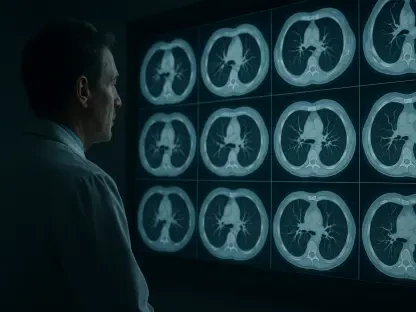
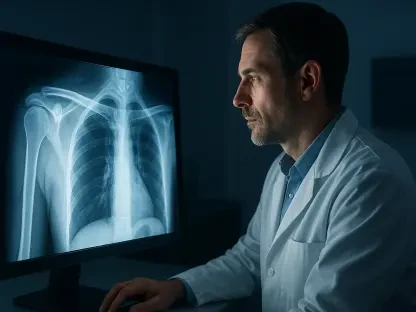
As chip components shrink to the nanometer scale, industry leaders like TSMC and NVIDIA are deploying vision AI and machine learning to identify flaws that are invisible to the human eye. Platforms like the TAO Toolkit allow for automated defect inspection, transforming how quality is maintained in hardware fabrication. This integration represents a fundamental change in manufacturing, where AI serves as the primary guardian of the very processors that will eventually power future machine learning models. By automating the visual inspection of wafers, manufacturers can detect patterns of failure that would take human technicians weeks to analyze. This speed is crucial for maintaining throughput in an era of surging demand. Furthermore, the use of deep learning models allows these systems to improve over time, learning from every wafer scanned to increase the precision of future inspections. This creates a feedback loop where the accuracy of hardware is directly linked to the software monitoring it.
However, the future of automated inspection goes beyond simple pattern recognition to encompass a deeper, predictive understanding of material behavior. Recent studies show that the physical size of a defect is often less important than its specific characteristics, such as how it absorbs heat or handles electrical loads. To remain effective, AI systems must evolve to prioritize the qualitative impact of an anomaly rather than just its dimensions. This ensures that minor imperfections do not escalate into catastrophic failures when the hardware is under operational stress, creating a more resilient production ecosystem. Engineers are now utilizing sophisticated neural networks to simulate how these microscopic defects will behave under varying thermal conditions once the chip is deployed in a data center. By moving from a binary pass-fail system to a nuanced risk assessment model, the industry can significantly reduce waste and improve the overall longevity of high-performance computing hardware.
Digital Twins: The Rise of the Predictive Factory
Beyond individual components, the implementation of digital twins is revolutionizing factory management through virtual replication. By using platforms like NVIDIA Omniverse, companies such as Samsung can create a real-time digital mirror of their manufacturing floor to simulate changes and predict maintenance needs before equipment actually fails. This proactive approach allows engineers to vet new production steps in a risk-free virtual environment, significantly reducing the cost of errors and moving the industry from a reactive mindset to a foresight-driven strategy. These digital environments ingest millions of data points from physical sensors, allowing the AI to run “what-if” scenarios that optimize everything from robotic arm movements to energy consumption. This level of synchronization ensures that the physical plant operates at peak efficiency, as the digital twin can identify bottlenecks that are invisible to operators. Consequently, the manufacturing process becomes a dynamic entity capable of self-optimization in real time.
Despite this rapid progress, the growth of AI-driven manufacturing faces a unique hurdle known as the training data bottleneck. Because modern factories are already highly optimized, actual equipment failures are rare, leaving AI models with very little error data to learn from. This creates a paradox where the more efficient a factory becomes, the harder it is to train the AI to prevent future malfunctions. To overcome this, the supply chain must rely on a combination of physical stress testing and cross-disciplinary data, ensuring that the recursive loop of AI building itself remains grounded in physical reality. Some manufacturers turned to synthetic data generation to simulate rare failure modes, providing the necessary training material for neural networks without needing to experience a costly real-world breakdown. This approach allowed the industry to move past the limitations of traditional datasets, creating a more robust framework for predicting systemic risks that are theoretically possible.
To ensure the continued success of this self-sustaining cycle, organizations focused on the integration of edge computing within the fabrication facility. It was necessary to process massive datasets locally to minimize latency in automated decision-making processes. Leaders in the field encouraged the standardization of data formats across different machinery vendors to allow for a unified AI oversight layer. This cross-platform compatibility ensured that proprietary software could communicate effectively with diverse hardware components, creating a cohesive ecosystem. Furthermore, the development of specialized talent who understood both semiconductor physics and machine learning became a top priority. By bridging the gap between hardware engineering and software development, the industry secured its ability to troubleshoot the complex interactions between physical matter and digital logic. This multidisciplinary approach served as the bedrock for more sophisticated automation that handled everything.