
The rapid convergence of machine learning and mechanical engineering has fundamentally altered the trajectory of modern manufacturing by demanding higher precision and lower environmental footprints. The Korea Institute of Machinery and Materials (KIMM) has met this challenge by launching an ambitious international strategy titled “With KIMM, to the World,” which seeks to position the organization at the forefront of the global research ecosystem. Led by President Seog-Hyeon Ryu, the institute is transitioning toward a “Global TOP” model, specifically designed to foster deep collaborations with leading European research bodies. This strategic pivot recognizes that the next generation of industrial breakthroughs will not occur in isolation but will emerge from the synergy between South Korean precision engineering and the stringent industrial standards of the European Union. By focusing on three core pillars—artificial intelligence, advanced manufacturing, and sustainable energy—the initiative serves as a bridge for sharing technical expertise and co-developing technologies that are robust enough for commercial deployment in demanding international markets. This expansion marks a significant milestone in South Korea’s commitment to solving global technical hurdles through structured, high-level scientific diplomacy.
Integrating Artificial Intelligence with Laser Precision Engineering
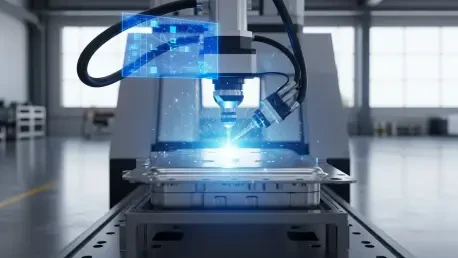
Modern industrial production is moving away from static, manual configurations toward highly adaptive systems that can respond to variables in real-time without human intervention. To achieve this, KIMM has deepened its collaboration with the Fraunhofer Institute for Laser Technology (ILT) to create intelligent manufacturing platforms that integrate advanced machine learning algorithms into laser processing equipment. These self-correcting systems use high-speed sensors to detect deviations in material consistency or thermal shifts during the fabrication process, allowing the laser to adjust its intensity and pathing instantaneously. This level of autonomy is particularly vital for the production of metallic fuel cells, where even a microscopic error can compromise the efficiency and safety of the entire energy system. By moving beyond traditional pre-programmed instructions, this partnership is setting a new standard for manufacturing resilience, ensuring that high-tech equipment remains productive even when faced with complex or unpredictable material behaviors during the assembly phase.
The expansion of laser technology also addresses some of the most difficult engineering challenges in the energy sector, specifically regarding the safe decommissioning of aging nuclear facilities. Researchers from both institutions are utilizing sophisticated monitoring techniques, including synchrotron-based observations, to study the microscopic interactions between intense laser beams and structural materials. This high-resolution analysis allows scientists to see exactly how materials react under extreme stress and heat, providing the data necessary to build specialized robots capable of dismantling hazardous components with surgical precision. These advancements do more than just improve efficiency; they provide a safer alternative for handling radioactive or hazardous waste, minimizing human exposure while maximizing the accuracy of the recovery process. The integration of real-time monitoring and advanced laser physics ensures that these tools are not only powerful but also incredibly reliable in environments where there is no room for mechanical failure or operational oversight.
Transforming Chemical Synthesis for Sustainable Agriculture
The global push for decarbonization has forced a reevaluation of traditional chemical processes, particularly the energy-intensive methods used to produce agricultural fertilizers. KIMM has partnered with the Fraunhofer Institute for Chemical Technology (ICT) to pioneer a carbon-neutral approach to nitrogen fixation using plasma-driven and electrochemical systems. Historically, the production of ammonia for fertilizers has been a major source of global carbon emissions due to its reliance on fossil fuels and high-pressure environments. The new collaborative research focuses on utilizing renewable electricity to power plasma reactors that can extract nitrogen from the air and convert it into usable nutrients without the heavy environmental toll. This shift represents a transition toward a circular nitrogen economy, where the inputs are entirely sustainable and the outputs do not contribute to the escalating climate crisis. By reimagining the fundamental chemistry of plant nutrition, the two organizations are creating a pathway for the agricultural sector to maintain productivity while meeting strict environmental regulations.
To bridge the gap between laboratory success and commercial adoption, KIMM is actively moving these green technologies into the field through rigorous validation trials in Germany. This phase of the project involves testing the effectiveness of plasma-produced fertilizers on actual crops within the European agricultural landscape to ensure they perform as well as, or better than, conventional chemical alternatives. These trials are essential for verifying that the new processes comply with the rigorous environmental and safety standards of the European market, which are often more demanding than those in other regions. By proving the commercial viability of these systems in real-world settings, the institute is facilitating a smoother transition for local industries looking to adopt sustainable practices. The focus remains on creating a scalable solution that can be exported globally, providing farmers and chemical manufacturers with the tools they need to operate within a carbon-constrained economy without sacrificing the quality or quantity of food production.
Revolutionizing Battery Production Through Solvent-Free Techniques
The demand for high-capacity batteries is surging as the world shifts toward electric mobility, but the traditional manufacturing process for these components remains a significant environmental bottleneck. KIMM is addressing this issue through a partnership with the Fraunhofer Institute for Material and Beam Technology (IWS) focused on developing “dry-process” electrode manufacturing. Conventional battery production relies on wet-coating methods that use toxic organic solvents, which then require massive industrial ovens and significant energy consumption to dry and recover. The move toward a solvent-free, dry-coating approach eliminates these hazardous chemicals from the production line and drastically reduces the energy footprint of the factory. This innovation not only makes the manufacturing process more eco-friendly but also lowers the overall cost of battery production, which is a critical factor in making electric vehicles more accessible to the general public. By simplifying the assembly line, manufacturers can increase throughput while maintaining a much cleaner operational profile.
Achieving consistency in dry-process manufacturing requires a level of precision that exceeds traditional quality control measures, which is why KIMM is deploying its proprietary Raman-based analysis technology. This specialized sensing method allows for the non-destructive, real-time monitoring of electrode coatings at a molecular level, ensuring that the distribution of active materials is perfectly uniform across the entire surface. Even small variations in coating thickness or composition can lead to reduced battery life or safety risks, so the ability to detect these issues during the production phase is a significant competitive advantage. Beyond the energy sector, KIMM is exploring ways to adapt these intelligent monitoring systems for use in the semiconductor and pharmaceutical industries, where extreme precision and cleanliness are paramount. This cross-industry application of high-precision sensing ensures that the technical advancements made in battery research provide broader benefits to the entire high-tech manufacturing landscape, reinforcing the importance of localized quality control in a global supply chain.
Strengthening Global Networks and Securing Specialized Talent
International cooperation in science is as much about building personal and diplomatic relationships as it is about sharing data and laboratory equipment. During its mission to Europe, KIMM prioritized honoring the historical connections that have shaped its development, including recognition for German experts who supported the institute during its formative years. This celebration of long-standing ties, held alongside the 30th anniversary of KIST Europe, served to solidify KIMM’s reputation as a reliable and respected partner within the European research community. By acknowledging these past contributions, the institute reinforced a foundation of mutual trust that is necessary for the success of future multi-year research initiatives. These diplomatic efforts ensure that South Korean engineers have a seat at the table when European industrial standards are being drafted, allowing for better alignment between East Asian manufacturing capabilities and Western regulatory frameworks.
To maintain a lead in the highly competitive fields of AI and green technology, KIMM has implemented a proactive strategy to attract top-tier global talent directly from European academic and industrial hubs. Participation in major scientific conferences across France and Germany allowed the institute to engage with researchers who possess specialized knowledge in areas like plasma physics and autonomous robotics. By offering opportunities to work in world-class laboratories in South Korea, the institute is building a diverse workforce capable of tackling complex, cross-disciplinary challenges. This talent acquisition strategy is integrated with the broader mission of internationalization, ensuring that the institute’s research staff remains current with global trends and methodologies. By fostering a multicultural research environment, KIMM ensured that its innovations were not limited by a single regional perspective, but were instead robust enough to be applied to the diverse technical and environmental needs of the global market.
The strategic mission to Europe established a concrete roadmap for the next phase of international technological integration. Researchers identified critical pathways for scaling plasma-based fertilizer production while simultaneously securing commitments for joint ventures in the semiconductor equipment sector. By prioritizing the recruitment of international experts, the institute successfully expanded its intellectual footprint, ensuring that future projects remained grounded in diverse perspectives and cross-border innovation. This shift in focus provided the necessary infrastructure to transition from theoretical laboratory research to large-scale industrial application. Leaders emphasized the importance of maintaining these diplomatic and scientific channels to navigate the increasingly complex regulations of the global market. Ultimately, these actions facilitated a robust framework for long-term growth, setting a standard for how national research institutions could effectively collaborate to solve pressing planetary challenges through the lens of mechanical and chemical engineering.