
The modern medical landscape is currently undergoing a radical shift as traditional clinical methods converge with advanced computational intelligence to redefine the boundaries of patient care and clinician productivity. In an environment where every second counts and the volume of medical data is expanding exponentially, the Mayo Clinic has emerged as a pioneer by embedding artificial intelligence directly into its core infrastructure. This transition is not merely about adopting new software but represents a fundamental reimagining of how clinicians interact with information to prevent diagnostic delays and reduce practitioner burnout. By prioritizing a collaborative model where technology acts as an augmentative partner rather than a replacement, the institution is setting a global benchmark for precision medicine. The objective remains clear: to harness the power of pattern recognition to uncover hidden health risks while simultaneously removing the administrative friction that has long plagued the healthcare industry and complicated the delivery of care. This approach ensures that the human element of medicine remains central even as digital tools take over the heavy lifting of data analysis.
Clinical Efficiency and Diagnostic Breakthroughs
Document Management: Streamlining the Record System
One of the most immediate benefits of this integration is the significant reduction in administrative tasks through tools like Record Time, which was developed in partnership with Scale AI to manage the overwhelming influx of clinical data. This technology is designed to parse through massive volumes of external medical records—often spanning hundreds of pages—to summarize and organize patient data chronologically. By automating what was once a manual and tedious process, physicians can reclaim significant portions of their day, shifting their focus from screen-based data entry back to direct clinical interaction. The tool effectively sifts through unstructured notes, laboratory results, and historical reports to present a cohesive narrative that a human doctor can review in minutes rather than hours. This efficiency not only boosts the morale of the medical staff but also ensures that no critical piece of a patient’s history is overlooked during the decision-making process.
Beyond the simple organization of records, this administrative automation serves as a vital bridge between high-volume data management and personalized patient care in the modern clinical setting. When physicians spend less time navigating clunky interfaces and more time observing their patients, the quality of the therapeutic relationship improves, leading to better diagnostic outcomes and higher patient satisfaction. This strategic shift effectively merges high-tech data analysis with traditional bedside manners, ensuring that technology serves to enhance the provider relationship rather than overshadowing it with digital barriers. Furthermore, the systematic nature of AI-driven summarization reduces the cognitive load on practitioners, preventing the fatigue that often leads to errors in clinical judgment. By standardizing how information is presented, the institution has created a more fluid and responsive environment where medical teams can collaborate with greater transparency.
Early Intervention: Advancing Disease Screening
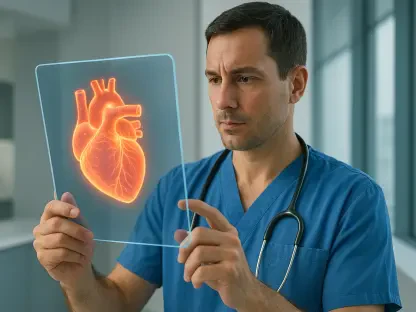
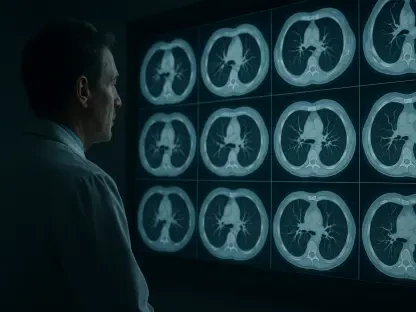
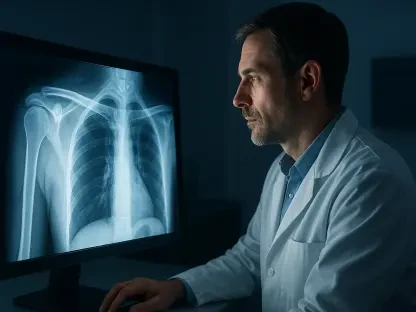
The institution is also deploying AI to catch aggressive diseases like pancreatic cancer and atrial fibrillation much earlier than conventional methods allowed in previous years. By analyzing heart rhythms and medical imaging for subtle indicators that may be invisible to the human eye, the technology provides a proactive defense against strokes and late-stage cancer diagnoses. These predictive models aim to identify risks long before they manifest as medical crises, which is a critical development for improving survival rates in high-stakes fields like oncology and cardiology. The algorithms are trained to recognize micro-patterns in electrocardiograms and CT scans, flagging anomalies that suggest a high probability of future illness. This early intervention capability represents a shift from reactive medicine to a preventative model, where the goal is to treat conditions before they become symptomatic or life-threatening.
The implementation of these diagnostic tools has already shown immense promise in identifying patients who are at an elevated risk for cardiovascular events that might otherwise go undetected. By integrating these screening tools into routine check-ups, the clinic has expanded the net of safety for patients who may not present traditional symptoms during a standard examination. This technological layering allows for a more nuanced understanding of patient health, as the AI can cross-reference current diagnostic data with historical trends and vast medical databases to calculate risk scores with high precision. This doesn’t replace the cardiologist’s expertise but rather provides them with a sophisticated lens through which to view a patient’s long-term health trajectory. As these models continue to refine their accuracy, the potential to catch chronic conditions in their infancy continues to grow, fundamentally changing the prognosis for thousands of patients.
Operational Evolution and Ethical Standards
Workforce Optimization: Maximizing Professional Potential
Rather than eliminating jobs, the integration of AI is designed to help medical staff operate at the top of their license by automating repetitive, time-consuming tasks that do not require clinical expertise. For instance, AI-driven note-taking for nurses can cut daily documentation time in half, allowing healthcare providers to prioritize empathy and complex clinical decision-making over paperwork. This trend suggests that the healthcare workforce is not shrinking but evolving, as digital assistants take over the heavy lifting of data management and administrative filing. By freeing up staff to focus on the tasks they were uniquely trained to perform, the clinic is maximizing the value of its human capital while reducing the burnout associated with the modern medical bureaucracy. This shift empowers employees to engage more deeply with their specialties, fostering a culture of professional growth and innovation where technology supports human potential.
The cultural impact of these changes is profound, as it redefines the role of the medical professional in an increasingly digital world where data is as important as the clinical examination itself. Healthcare workers are now being trained to act as the final evaluators of AI-generated insights, moving into a more supervisory and analytical role that emphasizes critical thinking. This evolution requires a new set of skills, blending traditional medical knowledge with digital literacy, ensuring that the staff remains indispensable in an automated environment. Moreover, the reduction in mundane tasks has been linked to higher retention rates among specialized staff, who feel their time is being utilized more effectively for patient-centered care. As the institution continues to roll out these tools, the focus remains on enhancing the human experience of medicine, proving that the most effective systems are those that leverage technology to return the focus to the individual.
Strategic Oversight: Validating Clinical Models
Medical leaders at the clinic established a rigorous framework for the future by prioritizing evidence-based validation over rapid software deployment. They successfully demonstrated that the key to sustainable AI adoption lay in the creation of interdisciplinary oversight committees that monitored model drift and ensured data integrity. Other healthcare organizations should look to this example by developing localized testing protocols that reflect their specific patient demographics rather than relying solely on generalized vendor claims. By fostering a culture of transparency and continuous learning, the institution provided a clear solution for balancing the risks of automation with the necessity of maintaining high standards of clinical excellence. Ultimately, the integration of these tools served as a template for how modern hospitals could leverage digital intelligence to enhance patient outcomes without compromising safety.