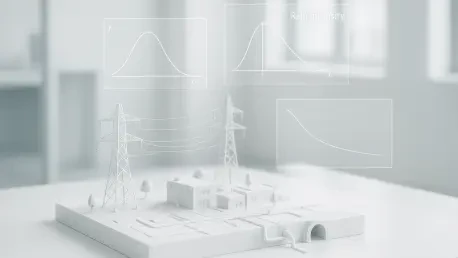

By combining point statistics with high-resolution spatial mapping, engineers can filter out implausible scenarios to focus on realistic worst-case threats. In the current landscape of risk assessment, reliance on historical data has created a dangerous blind spot for urban planners, insurance companies, and government agencies alike. Traditional models often assume that the worst possible disasters have already been witnessed, leaving modern infrastructure vulnerable to “black swan” events that exceed historical maximums in duration, scale, and intensity. MIT engineers, led by Kai Chang and Professor Themis Sapsis, have addressed this gap by unveiling a breakthrough machine-learning framework called η-learning, or “Extreme Event Aware” learning. This tool is specifically designed to forecast disasters that have never occurred in recorded history, offering a way to quantify risks such as record-shattering heatwaves or financial collapses that lack a precedent in existing datasets. By focusing on the underlying physics and statistical distributions rather than just past occurrences, this tool allows for a visualization of catastrophes that have never been witnessed, ensuring that the most extreme threats are no longer invisible to those responsible for public safety.
The Mechanics of η-Learning: Engineering a New Predictive Framework
Bridging the Gap: From Routine Data to Extreme Outliers
The brilliance of the η-learning methodology lies in its ability to generate realistic disaster scenarios without needing to observe an actual catastrophe during its training phase. Instead of waiting for a tragedy to happen to learn its patterns, the algorithm analyzes the underlying statistical relationships within mundane, daily information, such as routine weather shifts and topographical maps. By learning the physics and statistics of what constitutes “normal” conditions, the system can extrapolate what an extreme deviation would look like while remaining strictly grounded in physical reality. This approach bypasses the limitations of legacy computer simulations, which often fail to characterize how a “once-in-a-century” flood would actually manifest if it hasn’t happened within a city’s recorded window. By focusing on the potential for deviation rather than historical repetition, the framework provides a more accurate representation of the tail-end risks that pose the greatest threat to life.
Data Synthesis: Merging Statistics with Physical Reality
Traditional machine learning typically requires thousands of examples of an event to recognize its signature, but η-learning is “extreme event aware,” meaning it understands that the most impactful events are, by definition, the rarest. By modeling the tail of a probability distribution using physics-informed constraints, the algorithm can predict how a system might break under unprecedented stress. This is particularly useful in 2026, as climate change continues to push environmental variables into territory that human civilization hasn’t encountered in its history of data collection. The ability to simulate these “unseen” outcomes provides a scientific basis for preparing for the worst, ensuring that we are not simply hoping for the best but actively engineering for the inevitable shifts in our global environment. This shift from reactive to proactive modeling represents a transformative leap in how societies can prepare for the most dangerous and elusive risks that could disrupt our global infrastructure.
Visualizing the Unseen: The Power of Spatial Resolution
To achieve such high levels of predictive accuracy, the system utilizes a dual-pronged approach that merges point statistics with advanced spatial mapping techniques. It meticulously calculates the probability of specific variables reaching extreme thresholds—such as a specific millimeter of rainfall per hour—and then learns how these low-resolution patterns correspond to high-resolution, detailed maps of a specific region. This methodology allows the tool to filter out statistically impossible scenarios, ensuring that the visualizations of worst-case events are not just terrifying, but physically plausible. By identifying exactly which neighborhoods or industrial zones would be hit hardest by an unprecedented storm, η-learning moves beyond abstract probability to provide actionable spatial intelligence. This allows for a deeper understanding of the geographic footprint of a disaster, helping officials to pinpoint vulnerabilities in the power grid that might have been overlooked.
Strategic Filtering: Eliminating Implausible Disaster Scenarios
Beyond just identifying where a disaster might hit, the spatial mapping component of η-learning characterizes the likely duration and progression of an extreme event. This level of detail is critical because a flood that lasts for three hours requires a different emergency response than one that lingers for three days. By visualizing the entire life cycle of a potential catastrophe, the framework gives emergency managers a template for resource deployment, from the placement of temporary shelters to the pre-positioning of rescue equipment. Furthermore, the integration of topographical data ensures that the model accounts for local terrain, which can often amplify or mitigate the effects of extreme weather in ways that generalized models miss. This localized precision transforms η-learning from a theoretical mathematical exercise into a practical survival tool for modern cities, providing a high-definition preview of future challenges that were previously considered impossible to map or predict.
Putting the Tool to the Test: Proving Efficacy and Resilience
Validating Accuracy: National Precipitation Patterns
The MIT team demonstrated the tool’s practical power by applying it to 25 years of precipitation data across the continental United States. To truly test its predictive capabilities and ensure it wasn’t simply memorizing past storms, they intentionally restricted the algorithm’s training to a six-month period that contained no major weather events. Despite this total lack of extreme training data, the algorithm successfully projected how a once-in-a-century rainfall event might manifest, providing a detailed look at the potential size and intensity of such a storm. This experiment proved that the system does not need a history of trauma to understand the mechanics of a disaster. Instead, it uses the quiet periods to understand the limits of the environment, allowing it to accurately simulate the breaking point. This capability represents a massive shift in climate science, as it allows researchers to model the future where historical weather patterns are no longer reliable guides.
Strategic Planning: Helping Policymakers Prepare for the Unknown
This newfound predictive capability allows policymakers to ask specific “what-if” questions about their local regions and receive thousands of possible realizations for rare events. By providing a comprehensive visualization of risk, the η-learning framework enables communities to see the footprint of a disaster long before it strikes. This shift from looking at the past to simulating a plausible future provides a much-needed roadmap for building resilient environments. For instance, a city manager can use these simulations to determine the necessary height for a new seawall or the required capacity for a drainage system to handle a flood that has never happened but is statistically certain to occur eventually. By visualizing these unseen outliers, the tool transforms vague fears into concrete engineering requirements. This level of foresight is essential for maintaining the stability of modern cities, ensuring that resources are allocated where they will provide the most protection.
Beyond Meteorology: Finance and Robotics Applications
While weather prediction is the primary focus of the initial rollout, the researchers emphasize that η-learning is a versatile framework with broad cross-disciplinary utility. In the financial sector, it could be utilized to model the complex interactions and feedback loops that lead to sudden market crashes or liquidity crises, which often appear to come from nowhere. Similarly, in the field of robotics, it can help autonomous systems prepare for rare “edge-case” environments, such as a self-driving car navigating a unique combination of extreme weather and road hazards. The algorithm’s ability to extrapolate from the ordinary makes it ideal for any system where the most dangerous events are also the rarest. It also holds significant potential for stabilizing global supply chains and energy grids, where a single extreme event can currently trigger a cascading failure. By identifying these critical failure points in advance, organizations can build in redundancies that prevent localized problems.
Building Resilience: Proactive Infrastructure Management
Ultimately, the MIT tool represented a fundamental shift toward proactive disaster management and national economic resilience. By putting a concrete probability on events that had never happened before, it allowed for the optimized design of seawalls, power grids, and emergency response protocols across the globe. As the global climate became increasingly volatile, the ability to map the “unseen” outliers served as a cornerstone for protecting infrastructure and ensuring long-term economic stability. For organizations looking to implement these insights, the immediate next step involves integrating η-learning into existing risk management software to supplement historical datasets. Future developments will likely see this framework embedded directly into real-time monitoring systems, providing early warning signals for extreme events as they begin to form. This transition toward predictive modeling ensures that society is no longer blindsided by the “black swans” of the future, but is instead prepared with the necessary data.