


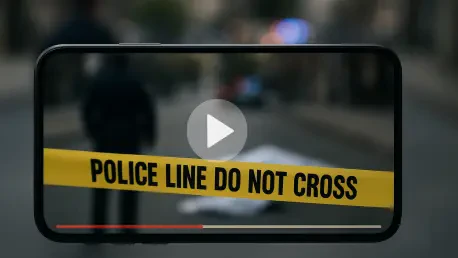

Modern disinformation campaigns now utilize AI-generated voices and B-roll footage to present false legal outcomes as verified news to unsuspecting social media users. This evolution in digital deception represents a significant departure from the poorly edited memes of previous years, replacing them with high-fidelity audiovisual content that mimics the authoritative style of legitimate news organizations. A recent investigation into a viral video detailing an alleged school bus assault in Florida highlights how easily these tools can manipulate public sentiment. By grounding a fabricated story in a grain of truth—specifically a real incident from 2023—and then layering it with artificial intelligence, bad actors can bypass the natural skepticism of a typical viewer. This particular campaign used synthetic narration and stolen images to build a narrative of judicial failure, proving that the primary goal of such content is to incite social unrest rather than to inform.
Part 1: The Anatomy of a Fabricated Narrative
The specific case that recently captivated social media platforms involved a detailed report of a nine-year-old girl named Lily Trejo being assaulted by a teenager named Jake Lynch. The video claimed that the assault left the young victim with permanent physical and psychological trauma, yet the attacker was supposedly released with only a stern warning from a local judge. Investigators found that while the footage used in the clip did depict a real-world struggle on a school bus, the names and the legal outcome provided were entirely fictional. The narrative was carefully engineered to strike a nerve with audiences concerned about juvenile violence and perceived leniency in the legal system. By presenting these fabricated identities as factual, the creators of the video were able to tap into existing societal anxieties, illustrating how a lack of verifiable information can be weaponized to create a sense of immediate crisis where none truly exists across the digital landscape in 2026.
Part 2: Technical Execution via Synthetic Media
Technological sophistication played a central role in the spread of this misinformation, as the video was not a mere text post but a fully produced news-style broadcast. Analysis using the Hive Moderation AI-Generated Content Detection tool confirmed that the voiceover was synthetic, created using a modern text-to-speech engine capable of mimicking human emotional inflection. This artificial narrator lent the video an unearned aura of professionalism, making it indistinguishable from local news clips to many viewers who consume content on mobile devices without checking sources. Furthermore, the video utilized generic B-roll footage of crime scenes and police tape that had no connection to the actual school bus incident in Homestead. This technique of blending real footage with AI-synthesized elements creates a partially fabricated product that is far more difficult for the average person to debunk than a completely fake video would be in the current media environment.
Part 3: Stolen Identities and False Representation
One of the most alarming aspects of this disinformation campaign was the blatant misuse of personal imagery taken from entirely unrelated tragedies. To provide a face for the alleged attacker, Jake Lynch, the video featured a photograph of Lamar Kemp, a teenager from Michigan who was sentenced for a second-degree murder charge back in 2023. There is no evidence connecting Kemp to the Florida bus incident, yet his image was used to portray him as a violent student who escaped justice in a different state. This intentional misidentification serves two purposes: it provides a tangible villain for the audience to focus their anger on, and it creates a false paper trail that makes the story seem more grounded in reality. The exploitation of Kemp’s likeness highlights the ethical vacuum in which these content creators operate, as they have no hesitation in reusing the faces of convicted criminals to bolster their manufactured narratives of systemic injustice and legal failure.
Part 4: Exploiting Victim Trauma for Virality
The deception continued with the portrayal of the supposed victim, Lily Trejo, whose injuries were depicted using a photograph of a young girl with significant facial trauma. Investigation revealed that the girl in the photo was actually Bella Willoughby from Alberta, Canada, who had been the victim of a tragic dog attack during a school recess in 2018. By co-opting the image of a child suffering from an unrelated trauma, the misinformation agents were able to provoke an immediate emotional reaction from viewers, which is a key driver of viral sharing. This tactic of stealing the identities of real victims from the past to populate a fake news story in 2026 demonstrates a callous disregard for the individuals involved and their families. It also complicates the work of fact-checkers, as they must search through years of unrelated archives to find the true origin of the imagery, a process that takes much longer than the few seconds it takes for a video to go viral.
Part 5: Legal Reality and Privacy Law Manipulation
The core of the viral claim relied on a fundamental distortion of a real event that occurred in Homestead, Florida, during the month of February 2023. In that actual incident, a fifteen-year-old boy was indeed recorded punching a nine-year-old girl on a school bus, a scene that provided the foundation for the misinformation. However, the viral narrative diverged sharply from the facts regarding the legal consequences faced by the perpetrator. While the hoax claimed the boy received a mere warning, the Miami-Dade State Attorney’s Office actually upgraded the initial civil citation to a criminal battery charge in juvenile court. The decision to prosecute was based on the severity of the violence, yet this reality was omitted from the social media report to support a story of judicial incompetence. By ignoring the actual legal proceedings, the creators of the misinformation were able to present a distorted view of the justice system that fueled outrage and deepened social divisions.
Part 6: Strengthening Defenses Against Digital Deception
Privacy protections for minors also provided a convenient shield for those spreading the fabricated story, as Florida law restricts the public disclosure of juvenile records. Because the identities of the actual children involved in the Homestead incident were not public knowledge, the misinformation agents were free to insert the names Lily Trejo and Jake Lynch without immediate fear of contradiction. This information vacuum was exploited to manufacture a narrative that standard news outlets could not easily refute with specific names. Moving forward, the most effective defense against such sophisticated deception involved a combination of advanced detection technologies and a renewed focus on media literacy. Experts suggested that users should verify sensational claims through official government portals and established journalistic entities before engaging with emotionally charged content. In this instance, the investigation by fact-checkers successfully dismantled the hoax by tracing the synthetic elements to their origins.







