
The transition of looksmaxxing into a mainstream trend reflects a growing societal reliance on algorithmic validation for personal identity and self-worth. What was once a fringe community primarily composed of young men debating the merits of skincare and weightlifting has morphed into a sophisticated, multi-million-dollar industry. This evolution is propelled by viral trends on platforms like TikTok and YouTube, where individuals are encouraged to treat their faces as projects requiring constant iteration. By introducing advanced artificial intelligence into this space, the movement has shifted from simple grooming toward a clinical pursuit of perfection. This shift has significant implications for how people perceive their natural features, as software now provides an objective-looking score to something as inherently subjective as human beauty. Consequently, users are no longer seeking to look like better versions of themselves; they are striving to meet a mathematical ideal determined by black-box algorithms that often prioritize profit over human well-being.
Quantifying Human Aesthetics Through Algorithmic Scrutiny
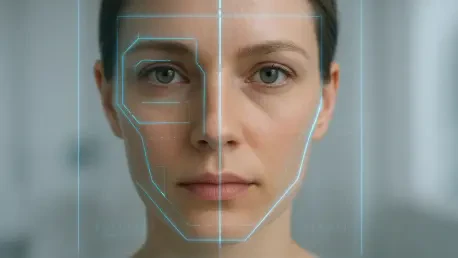
At the heart of this digital transformation are specialized AI services that offer exhaustive assessments of facial harmony for fees that often exceed $300. Companies such as Qoves and Facemaxify have pioneered a model where users upload high-resolution selfies to receive detailed reports that break down their appearance into hundreds of distinct metrics. These documents do not merely suggest a new hairstyle or a different shade of lipstick; they often span thirty or more pages, providing what amounts to a surgical roadmap. By scrutinizing minute anatomical details, such as the exact distance between the pupils or the specific angle of the jawline, these platforms apply a rigid geometric lens to the human face. This level of granular analysis creates a sense of authority that many users find difficult to ignore, leading them to believe that their natural variations are measurable errors. The commodification of these reports suggests that beauty is no longer a natural gift but a data point to be optimized through specialized software.
The process of digital dissection effectively reclassifies natural facial diversity as a series of medical deficiencies that require correction. When an algorithm flags a slightly asymmetrical nose or a naturally hooded eyelid as a flaw, it shifts the conversation from aesthetic preference to pathology. Users who might have been perfectly content with their appearance are suddenly presented with a list of invasive procedures, including rhinoplasty, blepharoplasty, and cheek augmentation, framed as necessary steps toward achieving harmony. This technological framing suggests that any deviation from a narrow set of proportions is a medical issue that can only be resolved through expensive interventions. Furthermore, the promotion of routine cosmetic procedures like Botox and fillers as entry-level maintenance further blurs the line between personal care and medical treatment. By turning the human face into a problem to be solved, these AI systems encourage a culture of perpetual dissatisfaction where the only solution is a costly visit to a plastic surgeon.
Challenging the Science of Digital Beauty Standards
Experts and academics are raising significant alarms regarding the pseudo-scientific claims that underpin these AI-driven beauty assessments. While the companies marketing these tools often cite peer-reviewed research to justify their “ideal” facial proportions, the scientists who conducted those original studies frequently argue that beauty is far too complex to be reduced to a universal formula. Attraction is a deeply subjective experience, heavily influenced by cultural background, environmental factors, and individual psychological context. By attempting to convert aesthetic appeal into a rigid set of geometric equations, these AI tools ignore the vast and healthy spectrum of human facial structures that have existed for millennia. There is no biological evidence to support the idea that a specific tilt of the eye or a particular width of the jaw is objectively superior. Instead, these algorithms tend to prioritize a very narrow, data-driven definition of attractiveness that fails to account for the unique charm and character found in diverse human faces.
Beyond the theoretical concerns, the technical reliability of AI facial scans is often surprisingly low, raising questions about the validity of the scores they produce. Recent investigations into these platforms have demonstrated that a user’s perceived skin health or facial symmetry can fluctuate wildly based on minor environmental variables. Simple changes in lighting, the angle of the camera, or even the resolution of the phone used to take the selfie can lead to drastically different scores. Because many of these consumer-facing algorithms lack the technical rigor found in clinical diagnostic software, the results they generate are frequently arbitrary and inconsistent. Despite these glaring technical shortcomings, the perceived authority of “data” and “AI” carries significant psychological weight. Vulnerable individuals may interpret a low algorithmic score as an objective truth, leading them toward life-altering and permanent surgical decisions based on data that could change simply by standing closer to a window.
Psychological Consequences and Cultural Homogenization
Psychologists warn that these “flaw-finding” tools pose a particular danger to individuals already struggling with body dysmorphia or low self-esteem. By presenting an impossible standard of beauty that is gated behind thousands of dollars of surgical procedures, these AI services can trigger a cycle of perpetual dissatisfaction and anxiety. The marketing strategies for these platforms often target individuals during particularly vulnerable periods of their lives, such as during career transitions or bouts of unemployment. The underlying premise suggests that “optimizing” one’s face will lead to tangible improvements in professional or social outcomes, effectively selling a surgical solution to life’s complex challenges. This exploitation of personal insecurity creates a feedback loop where the user is never “finished” improving, as the algorithm will always find a new micro-metric to optimize. This focus on minor physical details can distract from more holistic forms of self-worth, leading to a fragmented self-image where people only see parts to be fixed.
A broader societal concern involves the systemic bias embedded within these AI systems, which often promotes a narrow, Eurocentric standard of beauty. Many algorithms are trained on datasets that overrepresent Western features, such as slim noses and specific orbital shapes, which then become the “ideal” against which the entire world is measured. This cultural homogenization tells individuals from diverse ethnic backgrounds that their natural, heritage-linked features are “suboptimal” or “unharmonious.” By promoting a standardized version of facial harmony, these technologies threaten to erase the unique characteristics that define human beauty across different cultures and ethnicities. This is not just a matter of personal vanity; it is a form of digital colonialism that seeks to reshape global faces in the image of a specific cultural aesthetic. As these AI tools become more integrated into social media platforms, there is a risk that this narrow beauty standard will become a requirement for digital visibility, further marginalizing those who do not fit the mold.
Navigating the Future of Aesthetic Regulation
Addressing the rise of digital beauty standards required a multi-faceted approach involving both regulatory oversight and increased public literacy regarding AI capabilities. Governments and consumer protection agencies began to scrutinize the medical claims made by aesthetic analysis platforms, ensuring that they did not overstep into providing unlicensed surgical advice. By mandating transparency in how these algorithms functioned, authorities helped demystify the “objective” scores that many users found so persuasive. Furthermore, educational initiatives focused on teaching younger generations about the limitations of algorithmic objectivity, highlighting how lighting and data bias can distort reality. Mental health professionals also integrated discussions about digital beauty tools into their practices, helping patients decouple their self-worth from algorithmic validation. These steps were crucial in shifting the focus from fixing perceived flaws to celebrating natural human variation. By treating AI as a tool for creative expression, society reclaimed a more inclusive definition of beauty.
Ultimately, the movement to re-humanize aesthetic standards gained momentum as individuals recognized the inherent value of diversity. The push toward mathematical perfection had resulted in a world of increasingly identical faces, sparking a counter-cultural appreciation for unique features and natural aging. Tech developers began to collaborate with anthropologists and psychologists to create AI models that celebrated variety rather than penalized it. These new systems were designed to highlight an individual’s unique strengths rather than listing their supposed anatomical failures. By prioritizing ethical AI development, the industry moved away from the predatory models that defined the early days of the looksmaxxing trend. This transition allowed people to view technology as a supportive partner in self-care rather than a judgmental authority on their physical worth. In the end, the collective effort to challenge algorithmic beauty standards ensured that natural facial features were once again seen as essential components of identity rather than medical flaws.