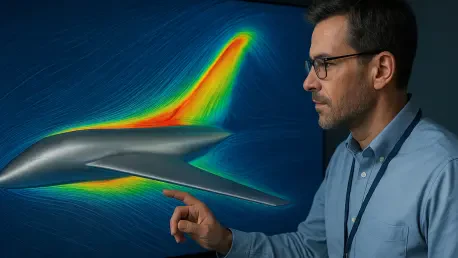
Rather than relying on fault-tolerant systems, researchers are focusing on incremental but provable structural advantages within quantum neural networks. As the demand for high-fidelity physical simulations grows in fields like aerospace engineering and climate science, traditional computational

The architectural constraints of the first generation of artificial intelligence agents often felt like a series of digital walled gardens where a user’s data remained trapped within a single provider’s ecosystem. This isolation hindered the true potential of automated systems, forcing individuals

Modern AI development has moved toward extreme billing granularity, where per-second and per-minute charges are essential for cost-efficient bursty or serverless workloads. The global demand for high-performance computing has transformed the humble Graphics Processing Unit from a niche gaming

Technical bottlenecks have shifted from model training to integration, with 40 percent of enterprises identifying real-time data connectivity as the single greatest hurdle for AI agents. This paradigm shift occurs as organizations realize that static datasets are no longer sufficient for the

As generated imagery becomes ubiquitous across digital platforms, human taste and creative judgment have emerged as the primary differentiators for premium brands. The Australian post-production landscape has undergone a significant transformation, evolving from a period of experimental uncertainty

Graphic design tools have democratized high-end asset creation by allowing a single visual to be instantly resized and optimized for multiple social media channels. This technological leap reflects a broader transformation within the freelance economy, which has shifted from a model of manual labor