
When the history of software development is eventually rewritten, the mid-twenties will likely be cited as the moment the keyboard became an optional peripheral for the professional programmer. In a landmark shift for the software industry, Anthropic recently revealed that over 80% of its new

The digital fortifications designed to protect global icons and government officials collapsed not under a barrage of sophisticated malware, but through the polite requests of an automated assistant. This recent security breach involving the Meta AI support agent highlights a fundamental flaw in

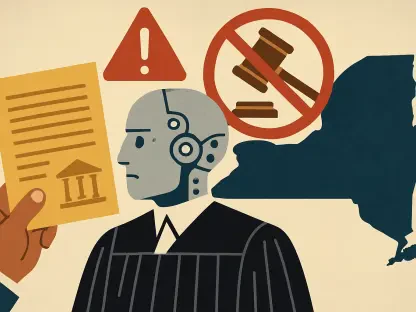
The rapid evolution of generative artificial intelligence has fundamentally altered the structural integrity of the courtroom by forcing a total reevaluation of how legal documents are drafted and verified. While the promise of efficiency initially fueled a wave of automation, the reality of recent

The rapid evolution of generative technologies has moved beyond simple experimentation to become a foundational component of modern industrial design and corporate communication strategies. As the digital landscape becomes increasingly saturated with automated content, the demand for precision and

The current landscape of artificial intelligence is defined by a striking paradox where the rapid adoption of sophisticated tools exists alongside a deep-seated suspicion regarding the safety of personal information. Even as digital assistants and generative models become woven into the fabric of

Governor Ned Lamont officially signed Public Act 26-15, a comprehensive piece of legislation known as the C.A.R.T. Act, marking a definitive move by the State of Connecticut to regulate the digital landscape. This landmark decision highlights a significant shift in the relationship between state