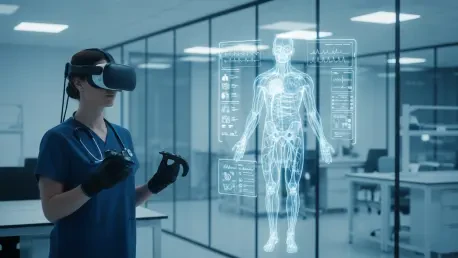

The high-stakes environment of a modern hospital leaves almost no room for error, yet traditional medical education has long relied on a system where trainees must wait for specific patient cases to emerge before they can practice critical life-saving interventions. This “opportunistic” model often creates gaps in practical experience, particularly when dealing with rare or high-risk clinical scenarios that require immediate, decisive action. The Virtual CHI Living Lab, commonly known as VirtCHILL, addresses this systemic challenge by creating a bridge between theoretical knowledge and the complex realities of the clinical floor through immersive technology. By leveraging Extended Reality, this collaborative initiative allows practitioners to sharpen their skills in a safe, repeatable, and highly realistic digital environment. This shift represents more than just a technological upgrade; it is a fundamental transformation in how healthcare professionals achieve and maintain clinical competency while ensuring that patient safety remains the highest priority during every stage of the learning process.
Enhancing Competency Through Technological Maturity
Overcoming Traditional Training Barriers: The Shift to XR
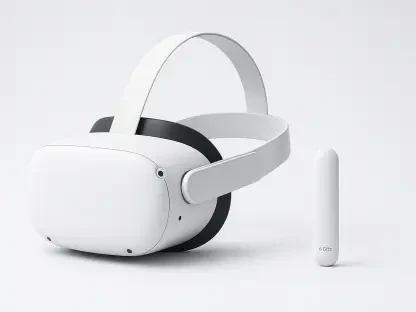
Historically, the medical field faced significant limitations in how junior staff and students could rehearse high-risk procedures without compromising the well-being of the people in their care. The previous reliance on physical manikins and static classroom instruction frequently failed to capture the chaotic and unpredictable nature of a live hospital ward, leaving many practitioners feeling underprepared for their first real-world emergencies. However, the current landscape of Extended Reality hardware has reached a level of sophistication that finally matches the rigorous demands of medical training. Modern headsets now feature high-resolution OLED displays and ultra-stable frame rates that provide a visual fidelity indistinguishable from reality for many users. These advancements have effectively eliminated the persistent issues of motion sickness and latency that hindered earlier adoption of virtual tools, allowing clinicians to remain immersed in complex simulations for extended periods without experiencing any physical discomfort or distraction.
This maturity in hardware allows for the simulation of intricate motor skills, such as the precise handling of surgical instruments or the calibration of delicate life-support machinery, which were previously impossible to master outside of an operating room. By providing a low-stakes environment for high-stakes actions, VirtCHILL enables a shift from passive observation to active, deliberate practice. Practitioners can now repeat a difficult procedure dozens of times in a single afternoon, receiving immediate haptic and visual feedback on their performance. This iterative process ensures that by the time a clinician faces a real patient, their movements are governed by muscle memory and confidence rather than hesitation. The ability to simulate rare medical complications on demand means that no student has to wait months for a specific case to arrive at the hospital; instead, the technology brings the most challenging cases to the student whenever they are ready to learn.
Quantifying Educational Success: Higher Pass Rates and Efficiency
The transition to virtual simulations is supported by compelling data from recent clinical trials involving various healthcare disciplines, including nurse educators and specialized speech therapists. In a landmark study focusing on the complex task of feeding patients with severe swallowing difficulties, the results provided an undeniable argument for the integration of Extended Reality into the core curriculum. Participants who underwent training through virtual reality platforms achieved a remarkable 98.5% pass rate during their practical assessments, a figure that stands in stark contrast to the 71% success rate recorded for those who received only traditional classroom-based instruction. This significant disparity highlights how immersive environments cater to different learning styles, allowing for a deeper cognitive encoding of procedural steps and safety protocols that traditional textbooks or lectures simply cannot replicate in a meaningful way.
Beyond the improvement in competency scores, the implementation of these virtual modules has also demonstrated a profound impact on the operational efficiency of healthcare institutions. The data revealed that virtual training sessions were completed in less than half the time required for conventional methods, representing a massive saving in human resources. In an era where clinical staff are often stretched thin, the ability to return highly trained nurses and therapists to their bedside duties twice as fast is a critical advantage. This efficiency does not come at the cost of quality; rather, it stems from the ability of XR to strip away the logistical overhead of setting up physical training rooms and specialized equipment. Hospitals can now scale their professional development programs to accommodate hundreds of staff members simultaneously, ensuring a consistently high standard of care across the entire organization while maximizing the utility of every available minute.
A Collaborative Model for Software Development
Fostering Industry-Ready Talent: The Academic-Clinical Partnership
VirtCHILL operates on a unique collaborative framework that bridges the gap between the healthcare sector and the academic world, specifically through a deep partnership with Nanyang Polytechnic. This model allows media and design students to step out of the classroom and onto the clinical front lines, working directly with senior medical consultants to build the next generation of training tools. By engaging in these live industry projects, students gain firsthand insight into the complexities of medical workflows, ensuring that the software they develop is not just technologically advanced but also clinically accurate. This symbiotic relationship provides clinicians with access to cutting-edge technical creativity while offering students a clear pathway to becoming industry-ready graduates. These young professionals enter the workforce with a portfolio of functional applications already deployed in major medical facilities, making them invaluable assets to the growing health-tech ecosystem.
The creative synergy between designers and doctors has led to the development of simulators that are highly attuned to the nuances of patient interaction and ward management. While a student might focus on the fluidity of a user interface or the realism of a 3D model, a nurse educator ensures that the virtual patient’s physiological responses are medically sound. This constant feedback loop prevents the development of “gamified” experiences that lack clinical depth, replacing them with professional-grade simulations that respect the gravity of medical practice. Furthermore, this partnership encourages a culture of innovation where diverse perspectives collide to solve long-standing problems in medical pedagogy. The result is a library of training modules that are as engaging as they are educational, proving that the future of healthcare software lies in the intersection of technical excellence and deep clinical expertise, fostered through sustained cooperation across different sectors.
Refining the Simulation: From Technical Challenges to Ward Readiness
The development of the “Code Blue” emergency simulator serves as a primary example of how iterative design and technical persistence result in robust training solutions for the medical community. Initial versions of the simulator faced significant hurdles, particularly regarding the synchronization of multiple users in a shared virtual space and the management of real-time data flow. However, through continuous testing and refinement, the development team successfully integrated advanced physiological feedback loops and seamless team-based interaction capabilities. This allows a diverse group of doctors and nurses to enter the same virtual ward simultaneously, where they must communicate and coordinate their efforts to save a patient experiencing a sudden cardiac arrest. The current iteration of the tool provides a high-fidelity environment where every action taken by one team member is instantly reflected in the patient’s vital signs and the collective situational awareness.
These sophisticated simulators now allow medical teams to rehearse life-saving maneuvers under conditions that mimic the intense psychological pressure of a real hospital emergency. By including randomized variables such as equipment malfunctions or unexpected patient reactions, the “Code Blue” module forces practitioners to move beyond rote memorization and develop genuine critical thinking skills. The synchronization of these virtual environments ensures that team dynamics—often the most fragile element during a crisis—can be analyzed and improved in a controlled setting. After each session, the software provides a detailed breakdown of the team’s performance, highlighting delays in response or lapses in communication. This data-driven approach to debriefing allows for a level of objective self-reflection that was previously impossible, ensuring that when a real emergency occurs, the team operates as a single, well-oiled machine capable of delivering the highest level of care.
The Strategic Path Forward: Integration and Standardization
Scaling Digital Competency: National Accreditation and Transferable Skills
As the adoption of immersive technology becomes more widespread, project leaders identified the urgent need for a standardized framework to govern the use of virtual simulations across the public healthcare sector. To address this, a new accreditation system was established to validate and certify virtual training modules, ensuring they meet the highest standards of clinical accuracy and pedagogical effectiveness. This framework allowed for the creation of a unified digital curriculum where skills mastered in one virtual lab are officially recognized across all participating medical institutions. This move toward national standardization eliminated the fragmentation that often plagues new technological rollouts, providing a clear and consistent pathway for professional advancement. Clinicians can now build a digital portfolio of certified competencies that are fully transferable, facilitating greater mobility within the healthcare system and ensuring a baseline of excellence regardless of the specific facility.
The implementation of these standards also provided a roadmap for future investments in virtual infrastructure, allowing hospitals to share resources and best practices more effectively. By centralizing the validation process, the healthcare sector ensured that only the most effective and evidence-based simulations reached the hands of practitioners. This strategic oversight encouraged developers to focus on quality and clinical relevance, knowing that their tools would be subjected to rigorous institutional scrutiny before being deployed. The result was a scalable ecosystem where virtual training became a core component of the national healthcare strategy, rather than a series of isolated pilot projects. This structured approach not only improved the quality of training but also streamlined the procurement process for new technologies, allowing the entire system to adapt more rapidly to emerging medical challenges and evolving clinical protocols.
Engaging the Patient: Moving Toward a Participatory Healthcare Metaverse
The evolution of virtual training naturally led to the expansion of these digital environments to include the patients themselves, marking a significant shift toward a more participatory and transparent healthcare model. In this expanded “healthcare metaverse,” patients began using immersive simulations to explore their own anatomy and gain a deeper understanding of their upcoming surgical procedures or chronic condition management plans. This transition from a clinician-centered approach to a multi-stakeholder model empowered individuals to take a more active role in their own care, reducing anxiety and improving treatment adherence through visual and experiential education. By stepping into a virtual representation of their own treatment journey, patients were able to visualize the positive impacts of their therapies and the mechanics of their recovery, fostering a level of health literacy that traditional pamphlets or verbal explanations could never achieve.
Moving forward, the focus was placed on integrating these shared virtual experiences into the daily routine of population health management and long-term patient support. Healthcare providers began utilizing these platforms to host virtual support groups and rehabilitation sessions, allowing patients to connect with one another in a safe and supportive digital environment. The data gathered from these interactions provided clinicians with new insights into patient behavior and psychological needs, leading to more personalized and effective care strategies. This shift highlighted the potential for technology to transform not just how doctors are trained, but how the entire community engages with the concept of wellness. By prioritizing the human element within the digital landscape, the medical field successfully harnessed the power of Extended Reality to create a more inclusive, empathetic, and patient-centered healthcare ecosystem that continues to evolve with the needs of the population.