
The success of the digital journey to 1945 suggests that future educational toolkits in Vietnam will rely heavily on 3D scanning and LIDAR to preserve local landmarks for digital twin archives. This specific initiative, centered in the vibrant coastal city of Nha Trang, represents a profound intersection of national history and modern consumer electronics. By transforming the “Returning to Sacred Moments” program into a high-fidelity virtual reality experience, the organizers have effectively bypassed the limitations of traditional media, offering a visceral connection to the birth of the Democratic Republic of Vietnam. As citizens gather at the 2/4 Square, they are not merely watching a historical documentary; they are stepping into a digital reconstruction of Ba Dinh Square as it existed on September 2, 1945. This move signals a significant shift in how state entities and media conglomerates like Voice of Vietnam and VTC News approach cultural preservation in an increasingly digital-first society. The project serves as a pilot for broader national efforts to modernize education, ensuring that the foundational stories of the nation remain accessible and engaging for a generation that consumes information through immersive platforms rather than static texts.
Immersive Reconstructions: Bringing Ba Dinh Square to Nha Trang
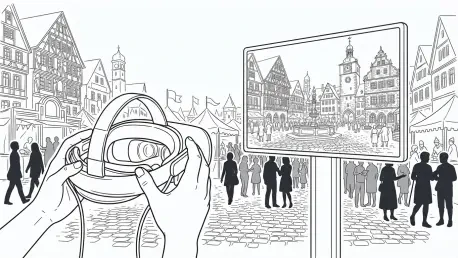
The primary goal of the “Returning to Sacred Moments” program was to recreate the solemn and electrified atmosphere of Hanoi during the reading of the Declaration of Independence. By utilizing advanced 360-degree virtual reality, the exhibit allowed participants to witness President Ho Chi Minh’s historic address from a perspective that felt both intimate and grand. This particular moment is a cornerstone of Vietnamese identity, yet for decades, it has been primarily experienced through grainy black-and-white footage or textbook descriptions. The transition to a three-dimensional space allows for a more nuanced understanding of the event’s scale, from the specific arrangement of the ceremonial platform to the vast, hopeful crowds that filled the square. This immersive environment fostered a sense of “presence”—the psychological feeling of truly being at a location—which is critical for the success of any historical recreation. By anchoring the technology in such a pivotal event, the organizers provided a compelling reason for a diverse demographic to engage with high-end hardware they might not otherwise encounter.
The strategic placement of the event within the Khanh Hoa Province Digital Technology Festival underscored the collaborative nature of this technological leap. It required a unique synergy between the editorial expertise of the Voice of Vietnam and the administrative resources of the Khanh Hoa Department of Science and Technology. This partnership ensured that the digital recreation was not only technically impressive but also historically accurate according to state archives. For three days in late October, the 2/4 Square was transformed into a laboratory for digital heritage, where the general public could experience the revolutionary spirit of 1945. This deployment model highlights a growing trend in Southeast Asia where portable, high-impact technology is used to bring national history directly to the people, regardless of their proximity to the capital. Such initiatives serve as a bridge between the physical past and the digital present, creating a new standard for public engagement with the country’s revolutionary heritage and the ongoing digital transformation agenda.
Technical Gaps: Analyzing the Digital Framework
Despite the cultural success of the program, a closer inspection reveals a distinct divide between the narrative provided to the public and the technical specifications used to achieve it. While the promotional material correctly emphasized the historical significance of the Ba Dinh Square recreation, there was a noticeable lack of detail regarding the hardware and software utilized. Industry experts often seek information on the specific headsets—whether they were Meta, Pico, or Valve models—and the underlying rendering engines that powered the experience. This information is vital for assessing the visual fidelity and latency of the simulation, which directly impacts the user’s sense of immersion. In civic technology showcases, the “wow factor” often takes precedence over technical transparency, yet the engineering behind these projects is what determines their long-term viability and scalability for other historical sites. Understanding whether the experience was a pre-rendered 360-degree cinematic loop or a real-time rendered 3D environment is essential for evaluating the computational demands of such a large-scale project.
Beyond the hardware itself, the operational logistics of the festival raised questions about the scalability of shared virtual reality experiences in high-turnover public environments. Managing a large volume of visitors requires robust hygiene protocols and a significant number of units to prevent long wait times, which can detract from the overall experience. The reports from the festival in Nha Trang remained silent on the capacity of the setup and the maintenance routines used to protect the sensitive lenses and tracking sensors from the humid, salty air of a coastal city. These “on-the-ground” details are the unsung heroes of successful tech deployments, as they ensure that the hardware performs optimally for every participant. Without a clear public record of the production budget or the technical challenges faced by the VTC News team, other provinces looking to replicate this model may find themselves unprepared for the hidden costs of managing a fleet of VR headsets in a tropical, outdoor setting.
Physics and Realism: The Mechanics of the Experience
The effectiveness of the “Returning to Sacred Moments” experience relied heavily on the fundamental principles of virtual reality optics and head-tracking technology. By placing dual displays behind magnifying lenses, the headsets created a wide field of view that mimicked natural human vision, effectively blocking out the modern surroundings of Nha Trang. High-speed inertial measurement units tracked the user’s head movements with millisecond precision, ensuring that the digital world of 1945 responded instantly to every glance. This lack of latency is crucial for maintaining the illusion of time travel; even a slight delay between movement and visual update can break the immersion and cause discomfort. The technical team likely opted for a fixed-point 360-degree perspective to accommodate the high throughput of the festival, allowing users to look in all directions without the need for complex walking mechanics that would require a larger, more controlled physical space. This balance of immersion and operational efficiency is a hallmark of modern public-facing virtual reality exhibits.
Spatial audio played an equally important role in the psychological impact of the digital recreation, providing the auditory cues necessary to anchor the viewer in the past. As a participant turned their head toward the ceremonial platform, the voice of the speaker would become more localized and clear, while the ambient sounds of the massive crowd—shuffling feet, distant whispers, and the rustling of banners—shifted to the sides and rear. This three-dimensional soundscape is what transforms a visual simulation into a convincing emotional experience. In the context of a historical address like the Declaration of Independence, the clarity and positioning of the audio are paramount. The use of spatial sound allowed the organizers to guide the user’s attention toward specific historical figures and moments within the crowd, creating a guided narrative without the need for intrusive text overlays or narration. This sophisticated use of audio technology ensured that the “sacred” nature of the moment was felt as much as it was seen, providing a comprehensive sensory journey.
Strategic Growth: Market Dynamics and Digital Sovereignty
The collaboration between state media and local government in Khanh Hoa reflects a broader socio-economic strategy focused on digital sovereignty and cultural preservation. By developing local expertise in virtual reality production, Vietnam is positioning itself to handle its own historical narratives rather than relying on foreign production houses. This internal development of high-fidelity assets for “Trở về thời khắc thiêng liêng” serves as a benchmark for future projects, creating a reusable library of 3D models and environments. As the global market for augmented and virtual reality continues to expand, with spending projected to rise significantly from 2026 to 2030, these state-backed initiatives provide a crucial training ground for local developers and technicians. By integrating these advanced technologies into the public sector, the government is not only preserving history but also stimulating the local tech economy. This approach ensures that the benefits of the fourth industrial revolution are applied directly to the enhancement of national identity and public education.
Furthermore, the deployment of expensive virtual reality hardware in a public square in Nha Trang serves as an effective method for bridging the digital divide. While high-end VR headsets remain a luxury for many households, public festivals provide an egalitarian platform where all citizens can experience the cutting edge of consumer tech. This exposure is vital for fostering a tech-savvy population and encouraging the adoption of digital tools in other areas of life, such as remote work or digital banking. The data from industry analysts suggests that virtual reality is moving past its initial novelty phase and into a period of sustained utility across various sectors. By leveraging this trend, the Khanh Hoa provincial government and its media partners have created a model for how technology can be used to promote patriotic education while simultaneously driving interest in the national digital transformation goals. This strategic alignment between cultural content and technological delivery is a key component of Vietnam’s roadmap for a modernized, connected future.
Environmental Hurdles: Maintenance and Technical Risks
Operating sophisticated electronics like virtual reality headsets in an open-air coastal environment presents a unique set of engineering and logistical hurdles. The salt-laden air, high humidity, and intense heat of Nha Trang are traditional enemies of sensitive optical sensors and high-performance processors. To ensure that the hardware did not fail during the three-day “Returning to Sacred Moments” program, the technical staff had to implement rigorous cooling and cleaning protocols. Maintaining the clarity of the lenses is a constant battle in such environments, as condensation and smudges can quickly degrade the visual experience. These physical risks represent a significant “hidden cost” in the production of outdoor tech festivals, requiring a level of preparedness that goes beyond simple software development. The success of the event depended as much on the durability of the hardware and the diligence of the maintenance crews as it did on the quality of the 3D models themselves, highlighting the need for specialized equipment designed for tropical conditions.
Beyond the physical hardware, there are physiological and ethical risks that organizers of immersive history must carefully navigate. “VR sickness,” caused by a mismatch between visual motion and the user’s vestibular system, remains a common challenge for public exhibits involving first-time users. To mitigate this, the Khanh Hoa program likely utilized shorter sessions and minimized artificial camera movement, focusing instead on a static viewpoint that allowed the user to explore with their eyes and head. Additionally, the “illusion of truth” is a significant concern in historical recreations; because virtual reality is so immersive, viewers may accept every detail as absolute fact. This places a heavy burden of responsibility on the production teams at VTC News and VOV to ensure that creative fillers—such as the specific colors of background banners or the exact placement of individuals in the crowd—are based on the best available historical evidence. Maintaining this balance between compelling visual storytelling and historical accuracy is essential for the credibility of digital heritage projects.
Future Directions: Scaling Immersive Heritage Nationwide
The successful implementation of the virtual reality program in Nha Trang provides a clear roadmap for the future of immersive education and heritage preservation in Vietnam. One of the most promising developments is the potential for a standardized library of “heritage modules” that can be distributed to schools and local cultural centers across the country. Once a foundational event like the 1945 Declaration of Independence has been digitally recreated, the cost of touring that experience to remote provinces is significantly lower than building a physical museum exhibit. This portability allows for a consistent, high-quality historical education regardless of a student’s geographic location. We are likely to see more provinces adopting this model, using 3D scanning and LIDAR to document their own local landmarks and revolutionary sites. This would create a nationwide network of “digital twins” that can be accessed by researchers and the public, ensuring that even if a physical site is damaged by time or weather, its digital essence is preserved for future generations.
In the coming years, the transition from bulky virtual reality goggles to lighter, more integrated mixed-reality glasses will further enhance these experiences. This evolution would allow visitors to stand in the modern Ba Dinh Square and see the 1945 revolutionary atmosphere overlaid onto their actual surroundings, creating a powerful juxtaposition between the past and the present. Hybrid exhibits that combine these digital overlays with physical haptic feedback—such as a replica of the original microphone used by President Ho Chi Minh—would add another layer of sensory realism. The ultimate success of these initiatives will be measured by their accessibility; as the technology becomes more affordable and the content more diverse, immersive history could become a standard part of the national curriculum. By using the tools of the future to ground citizens in the soil of their past, Vietnam is establishing a sophisticated model for cultural continuity in the digital age, ensuring that the sacred moments of the nation are never truly lost to time.
Synthesis: Reflections on the Digital Transformation of Memory
The collaborative effort in Khanh Hoa successfully demonstrated that immersive technology is a viable and powerful tool for the preservation of national memory. By integrating virtual reality into the Digital Technology Festival, the organizers effectively reached a broad audience, providing a shared experience that resonated across generational lines. The program highlighted the importance of strategic partnerships between media outlets and government departments, showing that a multi-disciplinary approach is necessary to tackle the complexities of digital heritage. Stakeholders involved in the project identified several key areas for improvement, particularly regarding the need for more transparent technical standards and the development of local hardware that is better suited for the Vietnamese climate. These insights suggested that while the initial pilot was a triumph of storytelling, the next phase of development must focus on the durability and scalability of the physical infrastructure required to support such ambitious historical simulations.
The results of the Nha Trang exhibit suggested that the appetite for immersive historical content is high among the general population, provided the experience is both accessible and emotionally engaging. Analysts concluded that the transition to digital archives is no longer a luxury but a necessity for modern statecraft and education. Moving forward, the focus has shifted toward creating more interactive environments that allow for a deeper level of agency within the historical narrative. The project proved that when technology is used to serve a foundational cultural purpose, it can overcome the hurdles of high cost and technical complexity. By looking back at the revolutionary events of 1945 through the lens of 2026 innovation, the program established a new precedent for how a nation can use the tools of tomorrow to honor the achievements of yesterday. This strategic focus on digital sovereignty ensured that the collective memory of the Declaration of Independence was not only preserved but revitalized for a new era of national development.