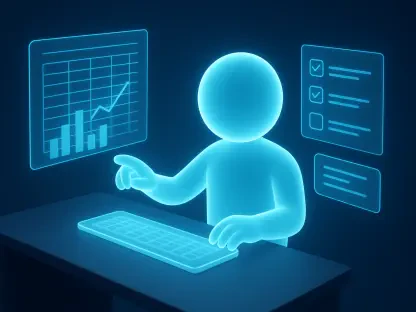

Atlassian is challenging the industry trend of headless automation by insisting that artificial intelligence must share the same workspace and context as human employees to be truly effective. In the current landscape of 2026, the obsession with background scripts and API-driven workflows has often led to a disconnect between the results produced by AI and the human teams responsible for steering projects. By introducing a “multi-player” model, the goal is to transform AI from an invisible force into a collaborative teammate that occupies the same digital rooms as its human counterparts. This strategy addresses a psychological barrier in technology adoption: the need for visibility. When an agent performs a task in a silo, it creates a “black box” effect where users are unsure of the logic or data sources being utilized. Atlassian’s model seeks to dissolve these barriers, ensuring that every manager and developer can observe and refine the AI’s contributions in real-time, fostering a deeper sense of collective ownership.
The Strategic Vision: Collaborative Intelligence
The transition toward multi-player AI agents is fundamentally driven by the realization that context is significantly more valuable than the raw intelligence of any single underlying model. While much of the industry has historically focused on whether one specific model was superior to another, the emphasis in 2026 has shifted decisively toward how these models access and utilize proprietary organizational data. Atlassian is positioning its Teamwork Graph as a strategic “moat” that protects and informs AI behavior, ensuring that agents are not merely inferring answers based on general patterns but are operating with a deep, historical understanding of the project’s unique requirements. This philosophy places a premium on the integration of human oversight, suggesting that the most successful AI implementations are those that function as a trusted, visible colleague. By fostering an environment where agents and humans share the same context, the system aims to eliminate the friction and data silos that often prevent AI from providing truly actionable insights for teams.
Shifting from Isolated Automation to Team-Based AI
The “multi-player” paradigm serves as a direct critique of the “headless” AI approach that has gained significant traction among competitors like Salesforce. While API-first, background automation can handle repetitive tasks efficiently, Atlassian maintains that “headless is brainless” when it comes to complex, context-dependent collaboration. Removing the user interface from the AI’s operation effectively severs the link between the machine’s execution and the human’s intent, leading to a loss of the subtle nuances that define professional teamwork. By embedding agents directly into the UI, teams gain a “window” into the agent’s activities, which allows for immediate feedback and correction. This visibility is not just a convenience; it is a critical safety mechanism that prevents automated systems from deviating from the project’s evolving goals. In this environment, the AI does not just present a finished product but demonstrates its progress, allowing humans to guide the creative process without having to decipher complex logs.
Maintaining Transparency within the Development Trench
Furthermore, the strategy avoids the over-centralized pitfalls often associated with the “control tower” model utilized by platforms like ServiceNow. In a control tower setup, AI agents are governed from a high-level, separate monitoring application that remains fundamentally detached from the daily “trench work” performed by software engineers and project coordinators. Atlassian’s alternative integrates governance and oversight directly into the primary tools where work is already happening, such as Jira and Confluence. This ensures that the management of AI is not an administrative burden but a natural part of the agile workflow. By keeping the AI’s activity within the same context as the team’s ongoing discussions, the platform eliminates the friction of switching between governance dashboards and production environments. This grounded approach ensures that every suggestion made by an agent is evaluated against the most current project data, making the AI’s role feel organic rather than forced or externally imposed.
Technical Frameworks for Shared Context
Supporting a vision of humanized AI requires a robust and highly adaptable technical architecture that can manage the complexities of multi-agent coordination while maintaining absolute data integrity. The integration of advanced protocols and real-time data connectors allows the platform to function as a unified “enterprise brain” that bridges the gaps between disparate departments and technical stacks. This architecture is built to evolve with the organization, progressing from 2026 to 2028 with a constant focus on scalability and the implementation of granular permission controls. By enabling agents to pull in structured data from major cloud warehouses and combine it with unstructured content from collaborative pages, the system provides a comprehensive 360-degree view of every ongoing initiative. This ensures that every automated suggestion is supported by a rich dataset, reducing the cognitive load on human teammates. The goal is to create a frictionless environment where information flow is seamless, resulting in a more cohesive relationship between people and AI.
Synchronizing Agents through the Teamwork Graph
At the core of this human-AI synergy lies the Agent Multiplayer Protocol, a sophisticated technical framework designed to synchronize the activities of various agents within the “Teamwork Graph.” This graph functions as the organization’s central nervous system, mapping the complex relationships between people, tasks, and documentation across the entire enterprise. By utilizing a shared protocol, different AI agents can communicate and collaborate without creating the data silos that typically plague large-scale automation efforts. This ensures that an agent working on a technical bug in Jira is fully aware of the architectural decisions documented in Confluence and the project timelines set by the leadership team. The expansion of this graph allows for a unified understanding of the work being performed, which is essential for maintaining consistency in high-pressure environments. As more organizations adopt these protocols, the focus shifts toward creating a seamless web of knowledge where information flows freely between human contributors and digital assistants.
Minimizing Hallucinations through Verifiable Citations
Technical precision is further enhanced by tools such as Rovo Work and Rovo Code Search, which provide agents with the ability to navigate source code at a granular, function-based level. This capability represents a significant leap from general-purpose AI models that often rely on broad inferences rather than specific data citations. When an agent is tasked with diagnosing a performance issue, it can now pinpoint the exact lines of code modified in a recent release and cross-reference them with the associated Jira tickets. This level of traceability significantly reduces the incidence of “hallucinations,” where AI might generate plausible but incorrect answers. Instead of guessing why a service is failing, the agent cites the specific commit or documentation that supports its conclusion, providing humans with a verifiable audit trail. This transition from inference to citation is vital for building institutional trust, as it allows engineers to validate AI recommendations quickly. It bridges the gap between high-level management and the deep technical realities of the codebase.
Governing AI Outputs and Bridging Data Silos
Managing the vast amounts of content generated by these agents requires a sophisticated approach to governance and security. The introduction of the Artifacts application ensures that all AI-generated outputs are stored within a secure, permissioned environment, preventing the creation of unmanaged data silos. By treating these outputs as organized enterprise assets rather than scattered flat files, organizations can maintain a clear audit trail of all AI activities. Furthermore, the integration of Secoda Connectors allows the Teamwork Graph to ingest real-time business data from platforms like Snowflake and BigQuery. This bridge between technical documentation and live business metrics enables agents to provide insights that are deeply rooted in the actual commercial performance of the company. Together, these tools form a holistic “enterprise brain” that understands both the creative intent and the measurable results of every project. This ensures that the human team remains in full control of the data, using AI to synthesize complex information into actionable strategies.
Developing a Scalable Framework for Future AI Success
The evolution of the multi-player agent model demonstrated that the most effective way to implement artificial intelligence was through deep integration rather than isolated automation. Organizations that successfully transitioned to this collaborative paradigm found that transparency and shared context were the primary drivers of technological trust and employee adoption. By rejecting the headless approach, these companies ensured that their human workforce remained the central authority in every project, with AI acting as a high-capacity assistant rather than a replacement. Leaders moved beyond the initial excitement of generative models to focus on the robust governance frameworks provided by tools like Artifacts and expanded data graphs. For those seeking to replicate this success, the next step involved a thorough audit of current data silos and a deliberate move toward a unified knowledge graph. Prioritizing platforms that offer visibility into agent actions will be essential for maintaining security and alignment. Ultimately, the focus shifted from how fast AI could work to how well it could work alongside the people who define the organization’s vision.