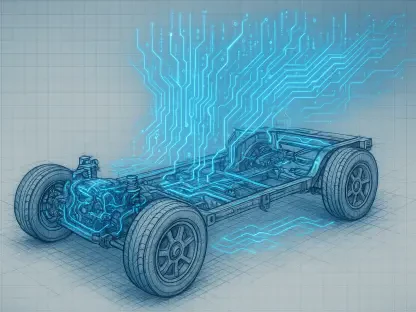

The robotics industry is moving toward a unified architecture that harmonizes AI models, sensors, and real-time control software into a single scalable system. This shift addresses the long-standing "Frankenstein approach" to robotics, where disparate components were stitched together with brittle

An atomic force microscope operates much like a high-tech record player needle, physically feeling the landscape of a sample and creating complex data that can be difficult to interpret. Traditionally, this process has demanded the constant attention of highly trained specialists who must interpret

Modern development teams are finding that a 600-line pull request generated by an AI requires significantly more scrutiny and validation than the same volume of human-written code. This troubling realization has sparked the "velocity paradox," where the sheer speed of machine-generated syntax has

The system’s mastery of the SLDBench SimpleTES task resulted in an average score increase across parallel, domain-mixture, and compute scaling categories. This milestone signals a fundamental departure from the traditional model of artificial intelligence development, where human researchers were

Strategic use of the Genie API helped Rippling bridge the gap between complex backend analytics and daily sales and marketing actions. In the current enterprise environment, the primary challenge is not the lack of information but the speed at which that information can be utilized by frontline

By doubling the Scalable Matrix Extension units in its C2-Ultra and C2-Pro cores, Arm has increased processing speeds for small language models by seventy percent. This technical milestone serves as the catalyst for a broader strategic pivot that moves the company beyond its traditional identity as