
The current global economic landscape is defined by an unprecedented influx of resources into artificial intelligence, yet the industry faces a critical juncture where speculative growth must be replaced by concrete economic output. To prevent a catastrophic burst of the AI bubble, industry leaders

M&T Bank successfully scaled its artificial intelligence capabilities to sixteen thousand employees by prioritizing a massive seven-year overhaul of its internal data infrastructure and technical staffing. This milestone serves as a definitive case study in how a traditional regional financial

Rajesh Desai, MD and CEO of Lyra, has committed to developing efficient digital solutions that address the increasing demand for secure and scalable payment systems. The Indian fintech sector is at a crossroads where simple transaction processing is no longer enough to satisfy a sophisticated

The Opus 4.7 model serves as the technological foundation for this tool, offering an advanced ability to interpret intricate details within complex user interfaces. This development marks a significant departure from traditional generative models that often struggle with the rigid requirements of
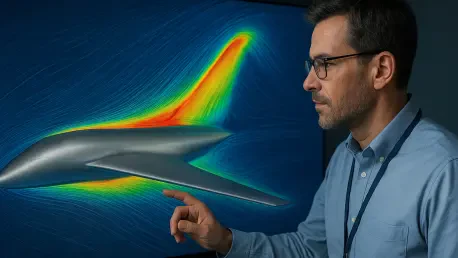
Rather than relying on fault-tolerant systems, researchers are focusing on incremental but provable structural advantages within quantum neural networks. As the demand for high-fidelity physical simulations grows in fields like aerospace engineering and climate science, traditional computational

Modern AI development has moved toward extreme billing granularity, where per-second and per-minute charges are essential for cost-efficient bursty or serverless workloads. The global demand for high-performance computing has transformed the humble Graphics Processing Unit from a niche gaming