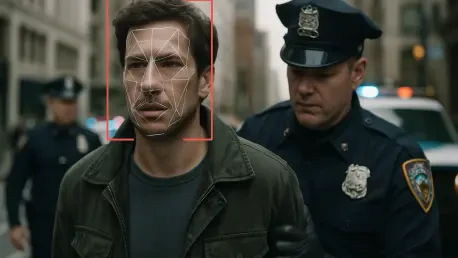

The rapid expansion of live facial recognition (LFR) technology across the United States and Europe has created a high-stakes collision between modern law enforcement efficiency and the fundamental legal protections of private citizens. As police departments transition from traditional investigative methods to real-time biometric scanning, the margin for error has narrowed significantly, leading legal experts to anticipate a substantial increase in litigation. This technological shift is no longer a localized experiment; it is becoming a standard operational procedure that impacts millions of individuals daily. However, the software powering these systems is inherently probabilistic, meaning it identifies potential matches based on mathematical likelihood rather than absolute certainty. When a system misidentifies an innocent pedestrian as a wanted fugitive, the resulting detention or arrest constitutes a direct violation of civil liberties. These inaccuracies are not merely technical glitches but represent significant legal vulnerabilities that could expose municipalities and state agencies to massive class-action lawsuits centered on the deprivation of rights.
The Widening Gap Between Innovation and Regulation
The velocity at which biometric surveillance tools are being integrated into public safety infrastructure has far outpaced the development of comprehensive legislative frameworks needed to govern their use. Law enforcement agencies often operate under a patchwork of data protection statutes and common law precedents that were never designed to address the complexities of real-time algorithmic analysis. This regulatory vacuum creates a precarious environment where the lack of clear, unified standards leads to inconsistent applications of the technology across different jurisdictions. For instance, while some departments may implement strict oversight for “watchlists,” others might use broader parameters that increase the risk of false positives. Legal scholars argue that until a formal, federal-level legal framework is established, every deployment of a mobile camera van or fixed biometric sensor remains a potential liability. The current reliance on outdated privacy laws fails to account for the unique intrusive nature of gait analysis, iris scanning, and facial mapping, leaving the door wide open for constitutional challenges.
Beyond the immediate concerns of identification accuracy, the transition toward permanent biometric monitoring raises profound questions about the future of freedom of movement and association. If citizens become aware that their every move is being cross-referenced against criminal databases in real-time, it creates a “chilling effect” that may discourage participation in public protests or religious gatherings. This sociological shift is at the heart of many brewing legal battles, as plaintiffs argue that pervasive surveillance constitutes an unreasonable search under the Fourth Amendment. The government’s intent to dramatically increase the number of mobile surveillance units—potentially quintupling the current fleet—suggests a commitment to a total-visibility policing model. However, without a robust legislative structure to mitigate rights infringements, this expansion is likely to be met with fierce resistance from civil liberties advocates. The mismatch between the state’s desire for security and the public’s right to anonymity is creating a friction point that only the court system can ultimately resolve.
Balancing Public Safety Objectives With Civil Liberties
Proponents of expanded facial recognition technology, including high-ranking government officials, often frame the rollout as a necessary evolution for maintaining public order in an increasingly complex world. The argument suggests that high-tech surveillance serves as a foundation for “true liberty” by ensuring that public spaces remain safe and that criminal elements are swiftly identified and removed from the streets. From this perspective, the technology is an essential tool for managing large-scale events, such as political rallies or major sporting fixtures, where traditional policing might struggle to identify specific threats. By automating the identification process, law enforcement can theoretically focus their resources more effectively, reacting to verified alerts rather than engaging in broad, manual sweeps. This vision of proactive policing promises a future where technology acts as a force multiplier, enhancing the overall security of the urban environment while reducing the physical presence required from officers on the ground.
In stark contrast, biometric commissioners and privacy watchdogs warn that the pursuit of absolute security through technology may come at an unacceptable cost to democratic norms. The fundamental issue is that live facial recognition functions as a predictive system, and the inherent risks of bias within these algorithms have been well-documented. If the training data for these systems is skewed, the resulting errors often disproportionately affect minority populations, leading to claims of systemic discrimination and violation of equal protection rights. When law enforcement prioritizes a national rollout over the establishment of rigorous accuracy standards, they risk alienating the very communities they intend to protect. The transition toward high-tech policing remains legally precarious because it often bypasses the public debate necessary for such a significant change in the social contract. As long as the technological implementation continues to outstrip the law, the likelihood of inconsistent mistakes across various police forces remains high, making a wave of litigation not just a possibility, but a certainty.
Future Considerations for Biometric Governance and Accountability
The resolution of these legal tensions required a fundamental shift in how biometric data is categorized and protected within the judicial system. Legislators recognized that simply appending facial recognition to existing privacy laws was insufficient for addressing the nuances of algorithmic bias and real-time tracking. Moving forward, the implementation of “privacy by design” became a mandatory standard for all vendors providing surveillance software to government entities, ensuring that audit trails were baked into the code itself. This change allowed for greater transparency, enabling independent bodies to verify the accuracy rates of police watchlists before they were deployed in high-density areas. Furthermore, the establishment of clear “red lines” regarding the use of gait analysis and emotion detection helped prevent the creep of surveillance into even more intrusive territories. These measures were essential for rebuilding public trust and ensuring that the benefits of technological advancement did not come at the expense of fundamental human dignity.
To avoid a continuous cycle of litigation, law enforcement agencies adopted comprehensive training programs that emphasized the role of human judgment as the final arbiter in any biometric match. Instead of treating software alerts as definitive proof of identity, officers were instructed to treat them as investigative leads that required secondary verification through traditional means. This hybrid approach reduced the incidence of wrongful arrests and provided a much-needed layer of accountability that was previously missing from the automated process. Additionally, the creation of a centralized oversight body with the power to decertify departments that failed to adhere to strict accuracy standards provided a powerful incentive for compliance. By shifting the focus from the quantity of surveillance to the quality and legality of its application, the legal system provided a roadmap for integrating high-tech tools into a democratic society. This proactive stance ensured that the evolution of policing remained aligned with the constitutional values that protect individual liberty against state overreach.