
The long-standing reliance on massive, centralized data centers for artificial intelligence has finally met its match as the demand for total data isolation reshapes the modern technological landscape. For several years, the most highly regulated institutions on the planet, ranging from national defense agencies to global financial powerhouses, were forced to watch the generative AI revolution from the sidelines due to legitimate fears regarding data leakage and the loss of proprietary intellectual property. These organizations operate under strict mandates that make the use of public cloud APIs a non-starter, as sending sensitive prompts or training data to a third-party server represents an unacceptable risk profile. However, a significant paradigm shift arrived with the announcement of a strategic partnership between Cirrascale Cloud Services and Google Cloud, which introduced the frontier-class Gemini model as a fully disconnected, on-premises appliance. This development effectively reverses a decade of cloud-first orthodoxy by packaging the world’s most advanced “intelligence” into a self-contained physical unit. By bringing the compute power directly to the customer’s existing data infrastructure rather than requiring the data to travel across the public internet, this solution addresses the core security concerns that have previously stifled AI adoption in the most sensitive sectors of the global economy.
The Architecture of a Digital Vault: Hardware and Software Synergy
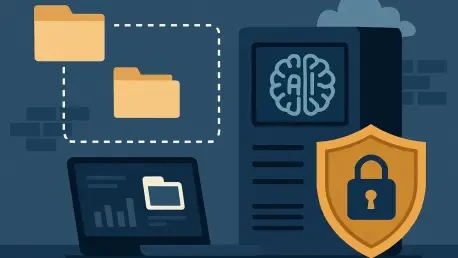
The fundamental security of this new class of air-gapped AI is rooted in a sophisticated integration of hardware and software designed to create an impenetrable digital vault within a standard server rack. This architecture relies on Google-certified hardware, typically high-performance servers manufactured by Dell that are specifically optimized to handle the intensive mathematical demands of large language model inference. To achieve the necessary processing speeds for frontier-class performance, these units are equipped with eight high-end Nvidia GPUs, providing the localized horsepower required to run complex models without any external assistance. This physical proximity to the data is the first line of defense, but the real innovation lies in the use of confidential computing environments that shield the operational processes from the underlying hardware layers. This ensures that even if a technician has physical access to the server, the data being processed remains encrypted and isolated from administrative views, providing a multi-layered defense strategy that satisfies the rigorous compliance standards of international security agencies and top-tier financial regulators.
Building on this physical foundation, the system employs a revolutionary approach to model weight protection through the use of volatile memory management. In a traditional software deployment, model weights are often stored on persistent drives, which creates a permanent target for sophisticated attackers or insider threats. In contrast, the air-gapped Gemini appliance loads its model weights entirely into volatile memory, meaning the core intelligence of the system only exists in an active, powered state. If the server loses power, is shut down for maintenance, or is physically disconnected from its environment, the model weights effectively vanish from the hardware. This design choice ensures that the provider’s most valuable intellectual property—the “crown jewels” of their AI development—cannot be extracted from a dormant machine. For the end-user, this creates a transient yet powerful environment where they can leverage top-tier AI capabilities without the risk of leaving a permanent digital footprint on the hardware that could be exploited later. This synergy between high-performance hardware and self-erasing software states represents a new benchmark for secure localized computing.
Active Deterrents: Implementing Tamper-Proof Security Mechanisms
Beyond the digital isolation of the software, these air-gapped systems incorporate advanced physical deterrents that act as a proactive defense mechanism against any form of unauthorized access. One of the most critical features described by industry experts is an operational “time bomb” designed to protect the integrity of the system’s security protocols. This mechanism is essentially a set of sensors and logic gates that constantly monitor the physical and digital health of the appliance. If the system detects an attempt to bypass the confidential computing layer or notices an unauthorized opening of the server chassis, it triggers an immediate and irreversible shutdown sequence. This response is not merely a pause in operations; it is a defensive maneuver that renders the entire machine inoperable. By prioritizing the destruction of access over the continuation of service, the system ensures that any physical breach results in a useless piece of hardware rather than a compromised intelligence asset. This extreme level of protection is what finally allowed developers to trust third-party environments with their most advanced models.
The aftermath of a triggered security violation is managed through a strict protocol of hardware reclamation and total data sanitization. Once a violation marker is logged, the appliance must typically be returned to the manufacturer or the service provider for a complete purge and factory reset. This process guarantees that no residual data from the customer’s environment can be recovered and that no malicious modifications made during a breach can persist in the system. This cyclical security model creates a high-trust environment for organizations that handle national security secrets or sensitive medical records. Because every breach is logged and results in hardware death, there is a clear and undeniable trail of accountability. This level of physical and digital consequence acts as a powerful deterrent against both external espionage and internal tampering. In a landscape where traditional software security can often be bypassed by persistent actors, the air-gapped appliance offers a definitive, physical solution that brings a “bank vault” mentality to the world of high-performance artificial intelligence.
Eliminating the Tradeoff: High-Performance Intelligence Without the Cloud
For several years, enterprise leaders faced a frustratingly binary choice that hindered their ability to compete in a rapidly evolving technological market. On one hand, they could utilize powerful public cloud APIs that offered “frontier-class” capabilities but required them to transmit proprietary business intelligence to a third-party provider’s infrastructure. On the other hand, they could host open-source models locally, which provided the necessary privacy but often lacked the reasoning capabilities, speed, and accuracy of the world’s most advanced systems. The introduction of air-gapped frontier AI models effectively eliminates this impossible tradeoff by delivering the highest level of intelligence in a completely private, localized format. This is especially vital for “agentic” AI applications, where autonomous systems are tasked with making complex decisions based on real-time proprietary data. In these scenarios, the act of “prompting” the AI is often as sensitive as the data itself, and keeping that entire cycle within the customer’s own four walls is the only way to ensure absolute operational security.
Furthermore, the shift toward on-premises appliances addresses the critical issue of performance reliability and latency consistency. Public AI APIs are notorious for experiencing “jitter,” where the time it takes to receive a response can fluctuate wildly based on global traffic demands or data center outages. For institutions running high-frequency trading algorithms or autonomous defense systems, these inconsistencies are more than just a nuisance; they are a systemic risk. An air-gapped appliance provides dedicated, predictable compute cycles that are entirely isolated from the fluctuations of the public internet. This allows organizations to build and deploy sophisticated business workflows with the guarantee that their AI will perform with the same speed and accuracy every time it is called upon. By removing the dependency on an external connection, companies gain not only absolute privacy but also a level of operational stability that was previously unattainable in the cloud-first era. This localized performance ensures that mission-critical tasks are never delayed by factors beyond the organization’s direct control.
Sovereignty and the New Neocloud: Specialized Infrastructure Solutions
The global landscape of data privacy is increasingly defined by the concept of data sovereignty, where strict national laws prohibit sensitive information from crossing borders. For many years, this created a significant barrier for organizations in regions where major cloud providers did not have a local physical presence, as utilizing advanced AI meant violating local regulations. The emergence of air-gapped AI appliances solves this legal conundrum by transforming sovereignty into a manageable product feature. Since the appliance operates in a completely disconnected state, it can be deployed in any geographic location while remaining in full compliance with the most stringent local data residency requirements. This capability is particularly transformative for government entities and healthcare providers in smaller or more regulated nations that were previously excluded from the AI revolution. By decoupling advanced intelligence from geographic infrastructure, providers are able to reach a truly global market while respecting the legal and cultural boundaries of different jurisdictions.
This technological shift has also catalyzed the rise of “neocloud” providers, which are specialized firms focusing on high-performance, private infrastructure rather than general-purpose cloud services. These providers bridge the gap between traditional hardware manufacturers and AI developers, offering a level of flexibility that mirrors the budgetary and operational needs of large-scale institutions. Instead of being locked into rigid monthly subscriptions, customers can choose from various consumption models, including seat-based licensing, token-based localized billing, or even outright hardware ownership through capital expenditure grants. This adaptability is crucial for research universities and government agencies that operate on fixed annual budgets or specific grant cycles. By offering a managed service that feels like the cloud but lives in the customer’s data center, neocloud providers are redefining the relationship between enterprises and their technology stacks. This move toward specialized, private infrastructure represents a maturation of the AI market, where the focus has shifted from “where can we run this” to “how can we run this most securely and efficiently.”
Decentralized Intelligence: The Projected Future of Enterprise Computing
As the initial wave of cloud-based AI experimentation gives way to long-term implementation, a clear trend toward decentralized intelligence is beginning to dominate the industry. Market analysts have observed that the era of universal trust in abstract cloud spaces is rapidly evolving into a preference for physical, “lockable” intelligence. It is estimated that by 2027, a significant portion of all high-tier AI training and inference will occur outside of the public cloud, marking a fundamental reversal of the trends that defined the last decade. This shift is driven by the realization that for the most sensitive workloads—such as high-stakes drug discovery, national security analysis, and private equity modeling—the risks associated with the public cloud far outweigh the convenience. The success of the air-gapped model proves that the most powerful AI systems can be miniaturized and secured for local use without sacrificing the “frontier” performance that makes them valuable. This decentralized approach ensures that intelligence is no longer a centralized commodity controlled by a few hyperscalers, but a versatile tool that can be deployed anywhere.
The transition to localized AI solutions was ultimately accelerated by the successful deployment of air-gapped frontier models in the most demanding environments on Earth. Organizations recognized that the combination of volatile memory, physical tamper-proofing, and data sovereignty compliance provided a level of security that traditional cloud environments could never match. Stakeholders in regulated industries began to prioritize the acquisition of localized compute clusters, viewing them as essential long-term assets rather than temporary services. Moving forward, the integration of specialized hardware and private AI models became the standard for any enterprise handling high-tier sensitive data. Companies that once hesitated to adopt generative AI moved decisively to implement these secure appliances, ensuring their proprietary secrets remained protected while still leveraging the competitive advantages of advanced machine intelligence. This shift solidified the role of the air-gapped server as a cornerstone of modern infrastructure, proving that true privacy and top-tier intelligence are not mutually exclusive but are instead two halves of a single, secure future.