
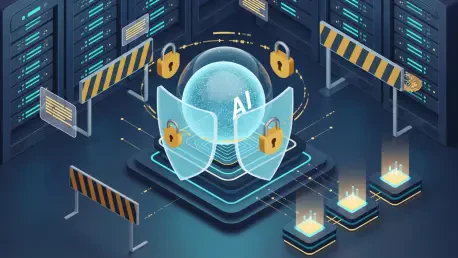
Recent security audits conducted across major financial institutions revealed that nearly forty percent of autonomous agent deployments lacked sufficient isolation from critical transaction layers. This discovery underscores a precarious shift in the corporate landscape where artificial

Laurent Giraid has spent years at the intersection of machine learning and natural language processing, witnessing the evolution of AI from simple chatbots to autonomous agents. As a technologist deeply invested in the ethical and technical boundaries of AI, he provides a unique perspective on

When a leading financial institution in Singapore recently launched its premier generative artificial intelligence assistant, the executive team expected a revolutionary shift in customer engagement and operational speed. Instead, the system frequently provided outdated regulatory advice and failed

Laurent Giraid is a visionary technologist whose work at the intersection of machine learning and natural language processing is reshaping how we view the lifecycle of artificial intelligence. With a keen eye on the ethical deployment of autonomous systems and the technical intricacies of system

The rapid democratization of generative artificial intelligence has created a scenario where workers frequently bypass official IT protocols to leverage powerful large language models for specialized tasks. While these employees often aim to enhance productivity or meet demanding deadlines, the

The realization that every rapid tap of a keyboard or pause in thought might be fuel for a corporate machine marks a new and unsettling chapter in the history of workplace surveillance and digital privacy. This massive exposure of sensitive information occurred when Meta inadvertently allowed