
A secure clinical analytics platform helps researchers translate raw data from five million patient records into tangible improvements for patient care. The collaboration between the Rush University System for Health and nference signifies a major leap in how academic medical centers leverage vast

The sheer velocity of data production in contemporary laboratories and global observation networks has pushed human cognitive capacity to its absolute limit, necessitating a new paradigm for discovery. The launch of the EOSC AIssistant on September 1, 2026, marks a critical strategic pivot toward

Weekly reporting cycles prove fundamentally incompatible with the rapid pace of customer-centric markets where localized technical glitches can result in significant revenue loss. In the sophisticated digital economy of 2026, the role of data has moved from being a passive byproduct of daily

Granting indefinite permissions creates a structural flaw that malicious actors exploit, necessitating a move toward strictly time-limited and least-privilege access models. As we navigate the complex digital environment of 2026, the traditional notion of a static network perimeter has become

Traditional machine learning systems often discard critical uncertainty data by forcing models to produce a single numerical point prediction instead of a range. As the industry moves further into 2026, this limitation has become a significant bottleneck for high-stakes applications in medicine,
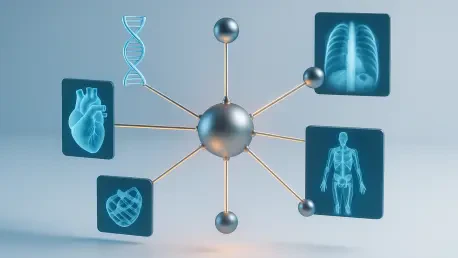
The staggering volume of medical data generated every second in modern hospitals has far outpaced the human capacity for manual analysis, creating a bottleneck that delays life-saving interventions. Unlike traditional 'one model per disease' approaches, the new Joint Lab focuses on creating