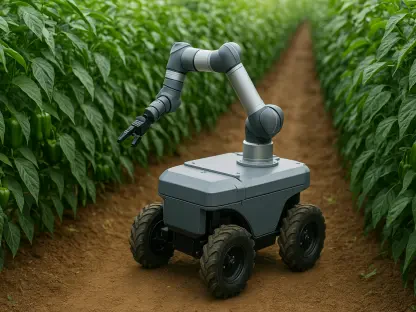

The future of business transformation depends on the ability of artificial intelligence to understand the specific nuances of every individual business domain it serves. While large language models once dominated headlines for their creative conversational abilities, the focus has shifted toward

The rapid retirement of South Korea's second baby boom generation is creating a systemic labor vacuum that threatens the survival of regional small and medium-sized manufacturing enterprises. This demographic shift has accelerated a process often referred to as the industrial hollowing out, where

A retrospective analysis of 31,394 women showed that AI could identify signs of potential malignancy in 39% of cases a full two years before they were officially diagnosed. The landscape of modern oncology is undergoing a fundamental transformation as digital detection tools begin to outperform

Realistic production data suggests that conversational AI typically resolves thirty to fifty percent of inbound calls without requiring any human intervention. This significant capability has moved artificial intelligence from the fringes of experimental pilot programs into the absolute core of

Establishing a new evaluation framework is essential for judging progress based on generalizability, reliability, and the demonstrated value a model adds to existing medical workflows. The healthcare sector is currently moving past the era of narrow artificial intelligence, where tools were

Engineering synthetic promoters with customized functions has become a reality following the deep analysis of half a million unique DNA sequences. For decades, the biological mechanisms that dictate when and where a gene should turn on remained one of the most stubborn puzzles in genomics. While