
Aluminum blocks pressed against steel rings at one thousand revolutions per minute provide a rigorous test environment for evaluating graphene-enhanced lubricants. This specific experimental setup addresses one of the most persistent challenges in modern mechanical engineering: the unpredictable
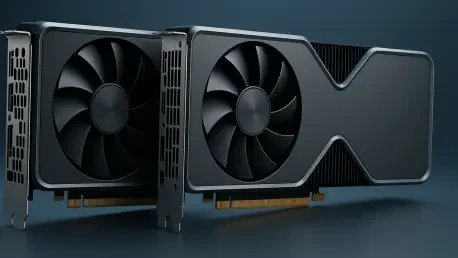
The maturation of the oneAPI software stack remains the final hurdle for Intel as it attempts to bridge the ecosystem gap with established AI hardware incumbents. As the industry gathers at the Open Compute Project Global Summit, Intel has finally pulled back the curtain on its highly anticipated

The effectiveness of synthetic medical data is validated when a classifier trained on artificial images maintains high accuracy on entirely unseen, real-world clinical scans. This principle stands at the forefront of modern oncology, where the integration of artificial intelligence is
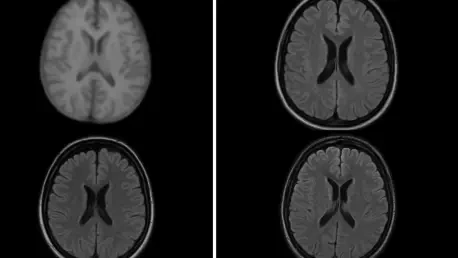
The clinical potential of artificial intelligence is currently hindered by a severe shortage of high-quality, labeled medical datasets for training diagnostic models. This scarcity often results in a "data bottleneck" that restricts the evolution of automated radiology tools, particularly during

Recent testing on the IP102 benchmark dataset revealed that graph-based deep learning achieves a 97% accuracy rate, significantly outperforming general-purpose architectures like VGG16. This breakthrough arrives at a critical juncture for global agriculture, where traditional pest management

The transition from solitary large language models toward networked ecosystems of autonomous specialized agents represents a fundamental departure from the simple prompt-and-response interfaces that initially defined the generative era. In this new paradigm, artificial intelligence is no longer a