

Across the global corporate landscape, a silent crisis known as legacy debt is currently strangling the innovation potential of established institutions in the banking and healthcare sectors. These organizations often find themselves tethered to ancient "black-box" mainframes and software

The integration of generative artificial intelligence into the modern medical landscape has transformed how hospitals operate, yet the fundamental architecture of the healthcare system remains stubbornly resistant to change. Since the initial explosion of large language models roughly three years
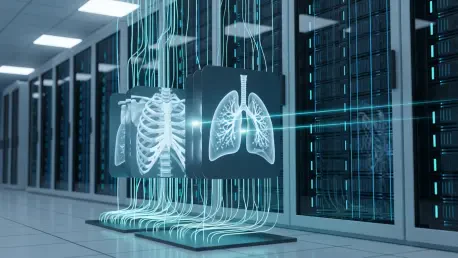
Coreline Soft has recognized that the success of medical artificial intelligence is no longer measured solely by the raw accuracy of its algorithms but by how effectively it integrates into the high-pressure environment of a hospital radiology department. Under the direction of Chief Product

Corporate boardrooms across the globe are currently grappling with a sobering reality as the initial wave of artificial intelligence enthusiasm encounters the cold, hard metrics of financial performance. While the previous twelve months were defined by a frantic rush to adopt generative models, the

The transition from a successful artificial intelligence proof of concept to a fully operational production environment remains one of the most significant hurdles for modern enterprises today. While an initial pilot might showcase impressive predictive capabilities within an isolated sandbox, the

The integration of generative artificial intelligence into clinical workflows has fundamentally altered the technological foundation of modern medicine, yet this progress coincides with a period of unprecedented hostility from global cybercriminal organizations. Recent data reveals that by the